No products in the cart.

10 Tips for Passing Your Food Handler’s Certificate Exam
Exams are stressful, and the pressure of passing may leave you feeling overwhelmed and nervous that you won’t pass, even


Every busy kitchen generates a surprising amount of airborne contaminants. In fact, commercial kitchens can release up to several pounds of grease-laden vapour each week. Adequate kitchen ventilation is not just about keeping the air clear. It is a vital safeguard for health, equipment, and compliance with strict Canadian regulations. Understanding the systems, components, and compliance requirements can mean the difference between a safe, smooth-running kitchen and an environment filled with costly hazards.
| Point | Details |
| Importance of Kitchen Ventilation | Kitchen ventilation is essential for maintaining indoor air quality and safety by removing harmful particles and odours produced during cooking. |
| Types of Ventilation Systems | There are ducted systems that expel air outside and non-vented systems that recirculate air; the choice depends on kitchen layout and ventilation needs. |
| Regulatory Compliance | Compliance with health codes and building regulations is critical for food safety, requiring proper maintenance and documentation of ventilation systems. |
| Maintenance Best Practices | Regular inspection and professional cleaning of ventilation systems are necessary to prevent hazards and ensure efficient operation. |
Kitchen ventilation is a critical system that manages indoor air quality and creates a safe, comfortable cooking environment. According to Kitchenaid, these systems play an essential role in removing smoke, steam, and cooking odours while maintaining overall air quality.
Kitchen ventilation systems operate through sophisticated mechanisms that extract potentially harmful airborne particles and regulate indoor air quality during food preparation. En Wikipedia defines a kitchen hood as a mechanical device positioned above cooking surfaces, strategically designed to evacuate and filter various combustion byproducts, including:
Grease particles
Smoke emissions
Heat and steam
Cooking fumes
The fundamental objective of kitchen ventilation extends beyond mere air circulation. These systems protect both human health and infrastructure by preventing the accumulation of potentially dangerous airborne contaminants. Professional kitchens, restaurants, and food preparation environments rely heavily on robust ventilation to maintain safety standards and compliance with health regulations.
Adequate kitchen ventilation involves more than simply installing an exhaust system. It requires strategic placement, appropriate fan power, and consistent maintenance to ensure optimal performance. Restaurant managers and food handlers must understand these core functions to create a safe, efficient cooking environment that protects workers, equipment, and overall indoor air quality.
Kitchen ventilation systems are not one-size-fits-all solutions. KitchenAid highlights that these systems can be broadly categorized into two primary types: vented (ducted) and non-vented (recirculating). Each type offers unique advantages and is designed to suit different kitchen configurations and ventilation requirements.
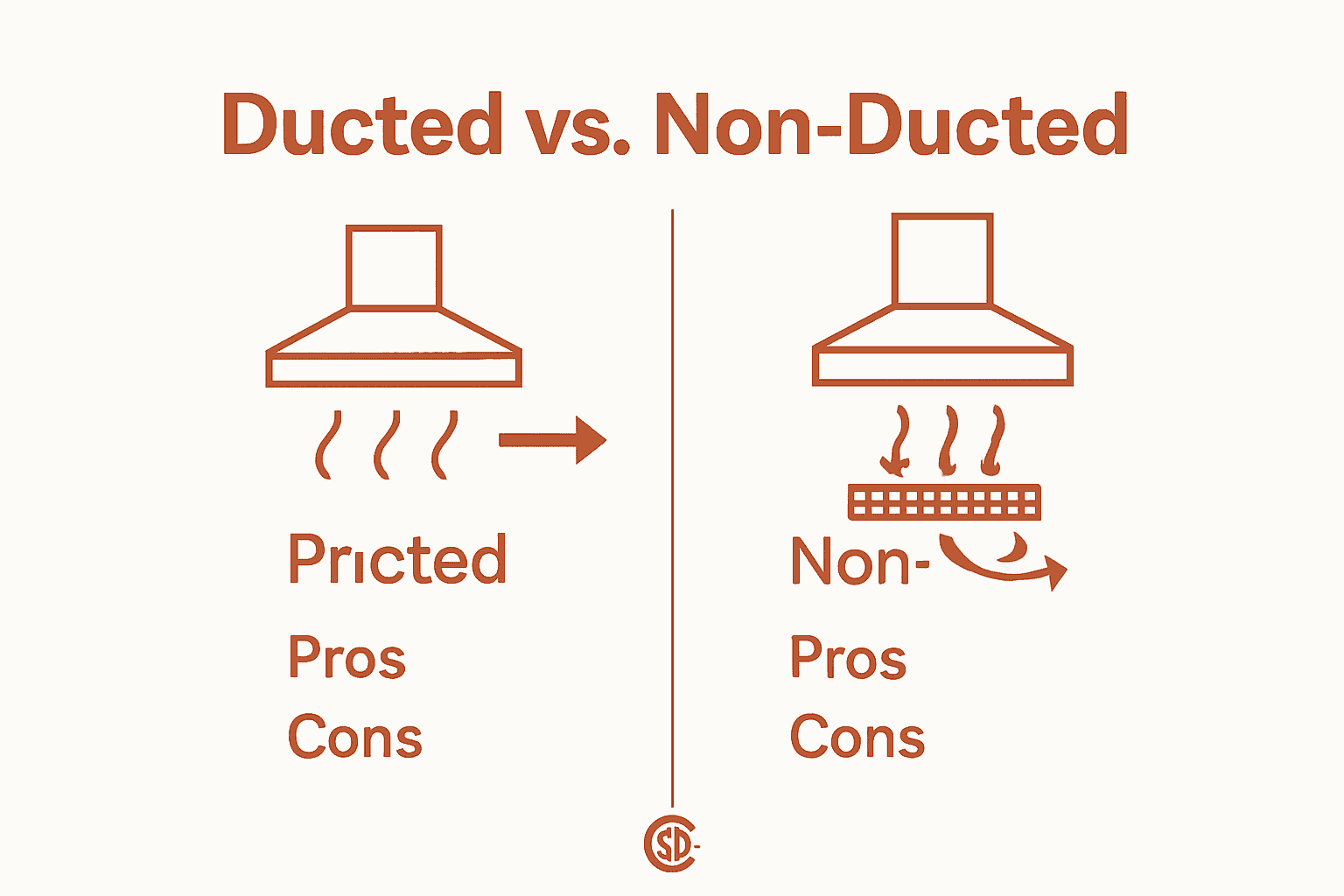
Ducted Ventilation Systems represent the most effective approach for removing cooking contaminants. According to Coast Appliances, these external venting systems completely expel air outside, ensuring maximum removal of cooking byproducts. The main configurations include:
Under-cabinet hoods: Compact systems installed beneath kitchen cabinets
Wall-mounted hoods: Larger units mounted directly on kitchen walls
Island hoods: Suspended units designed for kitchens with central cooking islands
Microwave hood combinations: Integrated solutions that combine cooking and ventilation functions
Non-vented or recirculating systems offer an alternative for spaces where external venting is challenging. These systems use advanced filtration systems to clean and redistribute air throughout the kitchen. While not as comprehensive as ducted systems, they provide essential air purification for smaller kitchens, apartments, or locations with structural limitations preventing external venting.
Selecting the appropriate ventilation system requires careful consideration of kitchen layout, cooking frequency, and specific environmental needs.
Restaurant managers and food handlers must evaluate factors such as cooking volume, types of cuisine prepared, and local building codes to determine the most suitable ventilation approach for their unique kitchen environment.
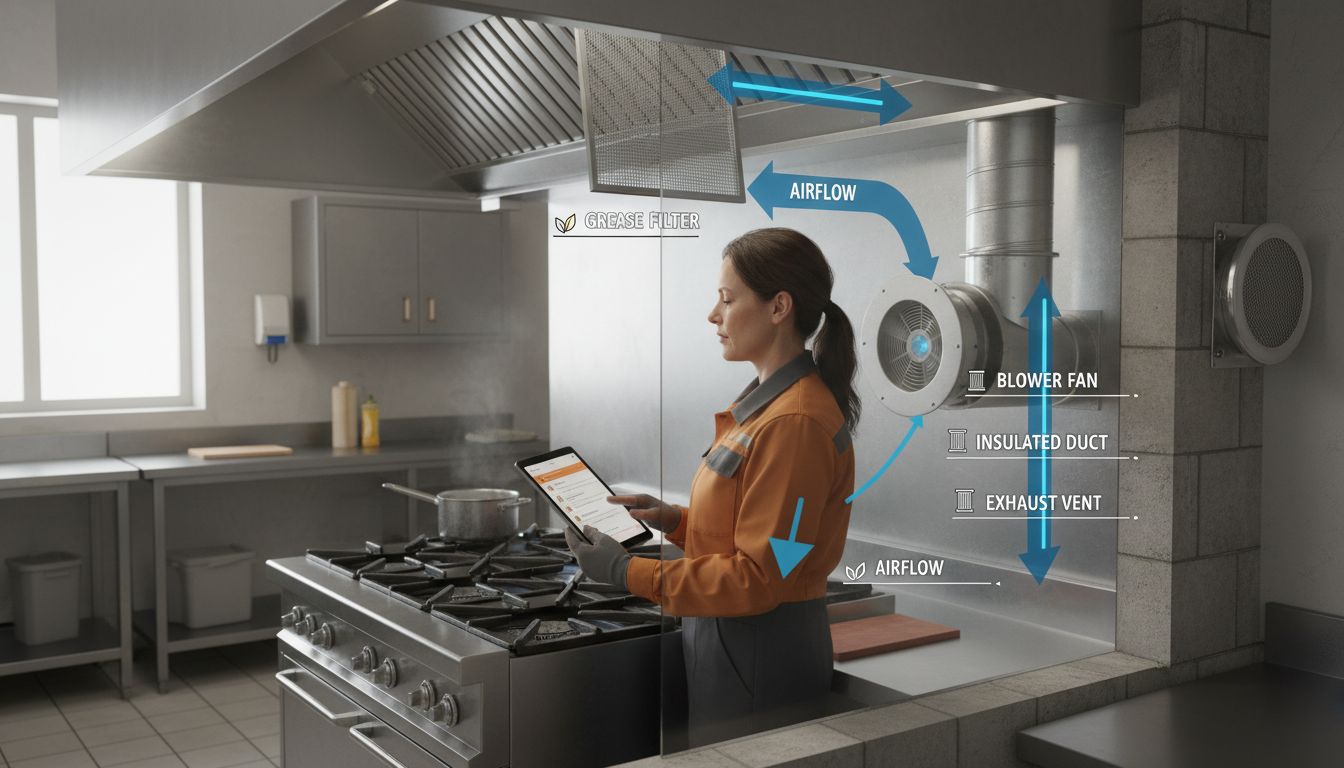
Kitchen ventilation systems are complex mechanisms designed to maintain air quality and safety during food preparation. Coast Appliances explains that an external ducted venting system comprises three critical components: a range hood, a powerful fan (blower), and dedicated ductwork that efficiently channels smoke and cooking fumes outside the building.
The filtration system plays a crucial role in managing airborne contaminants. According to En Wikipedia, most exhaust hoods incorporate a specialized grease trap that captures and removes potentially harmful particles before air is either expelled or recirculated. These filtration mechanisms are essential for:
Removing cooking grease
Capturing smoke particles
Eliminating cooking odours
Reducing potential fire hazards
Most ventilation systems operate through a systematic process of air capture and extraction. The range hood’s strategically positioned fan creates negative air pressure, drawing cooking emissions upward and through the filtration system. This mechanism ensures that heat, steam, grease, and potentially harmful combustion byproducts are efficiently removed from the cooking environment, protecting both the kitchen infrastructure and the health of food preparation personnel.
Professional kitchens require meticulous attention to ventilation performance. Restaurant managers must regularly inspect and maintain these systems, ensuring fan efficiency, checking filter conditions, and verifying that ductwork remains clear of obstructions. Understanding the intricate workings of kitchen ventilation is not just about technical knowledge – it’s a critical aspect of maintaining a safe, compliant, and productive food preparation environment.
Kitchen ventilation standards in Canada are governed by comprehensive regulatory frameworks designed to protect public health and ensure workplace safety. En Wikipedia highlights that the National Building Code of Canada serves as the foundational model for establishing minimum provisions that maintain building safety, with specific emphasis on public health, fire protection, and structural integrity.
Regulatory Compliance is crucial for food service establishments. Ontario provides specific guidance through its Maintenance Standards Regulation, which mandates that ventilation systems and associated equipment must be appropriately maintained. Key compliance requirements include:
Ensuring the proper functioning of ventilation fans
Maintaining appropriate artificial lighting levels
Meeting building code specifications for air quality
Regular inspection and maintenance of ventilation infrastructure
Professional kitchens must navigate a complex landscape of federal, provincial, and local regulations. These standards go beyond simple mechanical requirements and encompass broader public health objectives. Restaurant managers and food handlers need to understand that ventilation systems are not just technical installations but critical health infrastructure that directly affects workplace safety and food-preparation environments.
To ensure full compliance, businesses should consider obtaining a food safety certification course that provides comprehensive training on legal standards and health code requirements. This approach helps organizations not just meet minimum standards, but proactively create safe, efficient kitchen environments that protect both workers and consumers.
Maintaining kitchen ventilation systems requires a proactive and systematic approach to ensure safety and operational efficiency. Reliable Clean emphasizes that regular professional cleaning of hood and vent systems is critical to remove grease, smoke residue, and potential fire hazards that can accumulate over time.
Fire Safety Compliance is paramount for commercial kitchens. Mansil Services highlights that adherence to NFPA 96 standards is mandatory across Canada, which outlines comprehensive guidelines for ventilation system design, installation, operation, inspection, and maintenance. Key maintenance best practices include:
Conducting quarterly professional cleaning
Inspecting filters and ductwork monthly
Checking fan performance and motor conditions
Documenting all maintenance activities
Ensuring proper grease trap cleaning
Professional kitchens must implement a structured maintenance protocol that goes beyond basic cleaning. This involves creating detailed maintenance logs, training staff on proper ventilation system care, and establishing a routine inspection schedule. Regular maintenance not only prevents potential fire risks but also extends the lifespan of expensive ventilation equipment.
To support comprehensive safety practices, restaurants should consider obtaining a FoodSafe Level 1 online certification, which provides in-depth training on kitchen safety protocols and maintenance standards. This approach ensures that staff are not just maintaining equipment, but fully understanding the critical safety implications of proper kitchen ventilation management.
Kitchen ventilation compliance is a critical aspect of food service management that many establishments overlook. Mansil Services warns that failure to adhere to NFPA 96 standards can result in severe consequences, including substantial fines, failed health inspections, and potential business closure due to increased fire risks.
Compliance Pitfalls in kitchen ventilation systems often stem from common misconceptions and neglectful practices. Reliable Clean highlights the most frequent compliance errors that restaurant managers must avoid:
Inconsistent or inadequate hood cleaning schedules
Neglecting filter maintenance and replacement
Failing to document maintenance activities
Ignoring grease accumulation in ductwork
Postponing professional inspection and servicing
The financial and operational risks of non-compliance extend far beyond potential fines. Poorly maintained ventilation systems compromise workplace safety, increase energy inefficiency, and can lead to catastrophic fire incidents. Restaurant managers must adopt a proactive approach that prioritizes systematic maintenance and regular professional assessments.
To mitigate these risks, businesses should invest in comprehensive staff training through an online food safety certificate program in Canada. These certifications provide critical insights into maintenance protocols, compliance requirements, and best practices that can prevent costly errors and ensure a safe, regulatory-compliant kitchen environment.
Maintaining safe, adequate kitchen ventilation is essential to protecting your staff and meeting Canadian health and safety standards. This article highlights the challenges around proper ventilation maintenance, understanding NFPA 96 requirements, and avoiding costly compliance errors that can risk your business operations. If you manage a food service environment, your goal is clear: stay compliant, prevent fire hazards, and maintain a healthy workplace by staying up to date on ventilation systems and legal codes.

Take control of your kitchen safety today with Probe It Food Safety.ca. Our flexible, government-accredited online courses, including food handler certification and food safety fundamentals, are designed specifically for Canadian kitchens. Benefit from expert-led training that helps you master ventilation maintenance best practices and legal compliance easily at your own pace. Do not wait until an inspection or an emergency forces action. Visit Probe It Food Safety.ca now to secure your certification and safeguard your operation compliance with trusted, accessible education.
Kitchen ventilation systems are designed to remove smoke, steam, odours, and airborne contaminants from the cooking environment, thereby improving indoor air quality and ensuring a safe and comfortable cooking space.
The two primary types of kitchen ventilation systems are vented (ducted) systems, which expel air outside, and non-vented (recirculating) systems, which filter and redistribute air within the kitchen.
Kitchen ventilation works by using a range hood equipped with a powerful fan that creates negative air pressure, drawing in smoke, steam, and odours. This air is then filtered to remove contaminants before being expelled outside or recirculated.
Regular maintenance is crucial to ensure the efficient operation of kitchen ventilation systems. It helps prevent grease buildup, reduce fire hazards, maintain air quality, and ensure compliance with health regulations.
Exams are stressful, and the pressure of passing may leave you feeling overwhelmed and nervous that you won’t pass, even

Food safety is essential if you want to ensure safety and establish trust with your customers. Food handlers must be

Practicing good food safety habits is paramount to maintaining a healthy kitchen. Regardless of the size of your hotel business