No products in the cart.

10 Tips for Passing Your Food Handler’s Certificate Exam
Exams are stressful, and the pressure of passing may leave you feeling overwhelmed and nervous that you won’t pass, even


Food safety training reduces foodborne illness incidents by up to 30% in Canadian workplaces. For managers in food service and education, effective workplace training protects employees, ensures compliance, and builds safer environments. This guide explains what workplace training is, why it matters, and how to implement it effectively in your organization.
| Point | Details |
|---|---|
| Training impact | Food safety training reduces foodborne illnesses by 30% in Canadian settings. |
| Injury prevention | Comprehensive safety training cuts workplace injuries by 20% within the first year. |
| Ongoing necessity | Regular refreshers yield 40% higher compliance than one-time sessions. |
| Accreditation matters | Government-accredited courses ensure legal compliance and audit readiness. |
| Sector customization | Tailored content for food service or education maximizes safety outcomes. |
Workplace training builds employee knowledge and compliance, essential for regulated Canadian industries. It encompasses structured education programs that equip employees with skills and knowledge to perform safely and meet legal standards. For food service and education sectors, training addresses specific hazards like allergen exposure, chemical handling, and emergency response.
Canadian employers face complex regulatory requirements. Training is not a single event but a continuous process maintaining competence as regulations evolve. In highly regulated environments, training creates the foundation for safer, more productive workplaces.
Key aspects of effective workplace training include:
For managers, investing in training for non-food staff in Canada and keeping staff updated in Canadian foodservice prevents incidents and demonstrates due diligence. Understanding training certification strategies helps you select programs delivering measurable outcomes.
Canadian workplace training operates under strict legal mandates. WHMIS and Food Handler Certification are legal requirements for workplaces in relevant sectors. WHMIS training ensures employees understand hazardous materials labeling and safe handling procedures. Food Handler Certification addresses pathogen control, cross-contamination prevention, and temperature management.
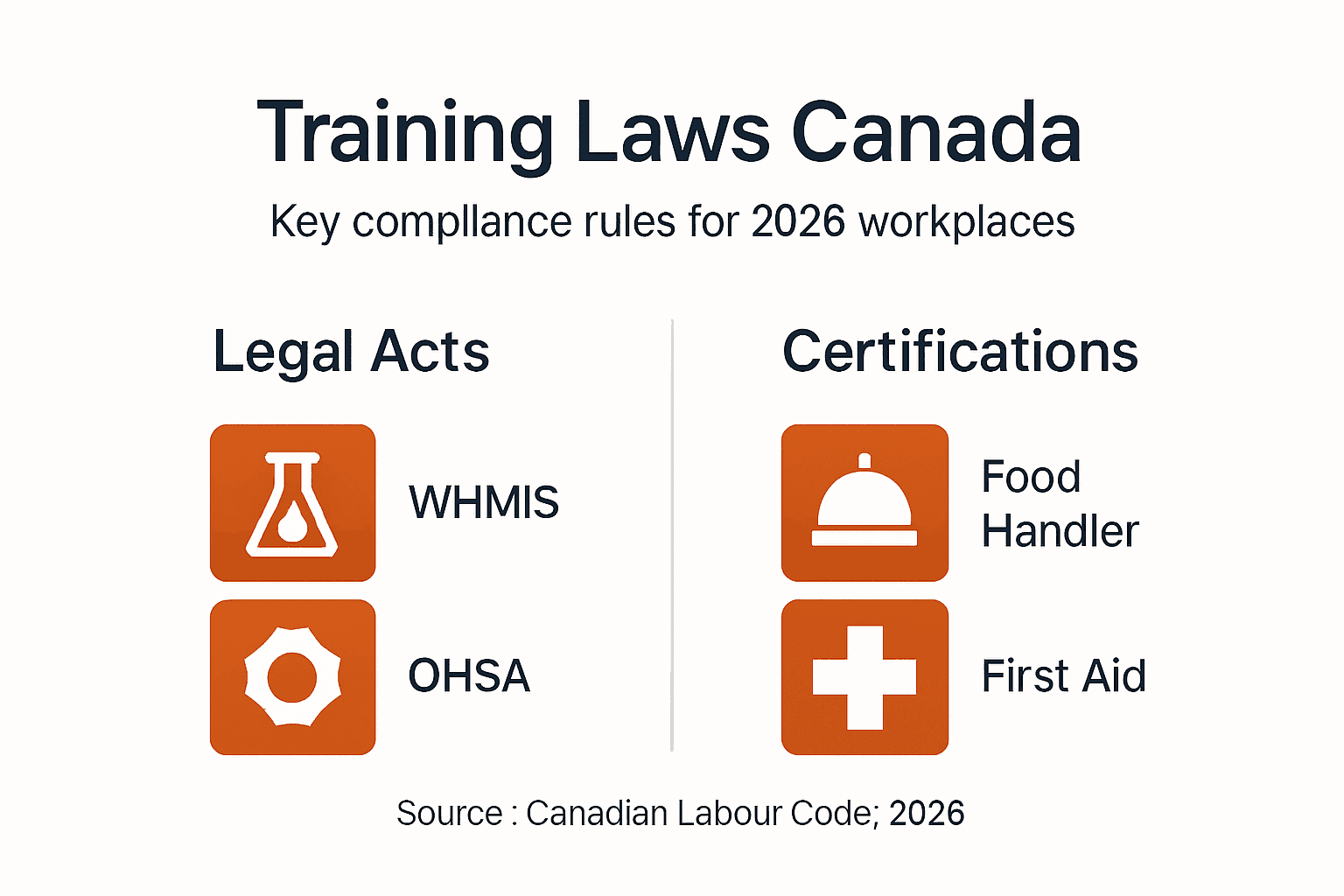
Educational institutions face additional requirements. School safety training covers emergency preparedness, child protection protocols, and facility-specific hazards. Provincial variations exist, so managers must verify local requirements.
Key regulatory elements include:
Selecting accredited programs aligned with these frameworks protects your business. Canadian workplace safety regulations provide detailed guidance. Understanding safety compliance in Canada helps you navigate complex requirements and avoid penalties.
Effective training delivers measurable safety improvements. Food safety training cuts foodborne illness incidents by 30% in Canadian food service. This reduction translates to fewer customer complaints, lower liability risks, and stronger reputations.
Comprehensive health and safety training reduces workplace injuries by 20% within the first year. Fewer injuries mean lower workers’ compensation costs, reduced absenteeism, and improved morale. Training creates a culture where employees recognize hazards and report concerns proactively.

Training Impact: By the Numbers
Proper training reduces foodborne illness by 30% and workplace injuries by 20% in Canadian settings, creating safer environments and lowering operational costs.
Beyond incident reduction, training supports compliance culture:
The importance of food safety training extends beyond legal compliance. Workplace safety training benefits include improved employee retention and customer trust. Research on safety signage and training effectiveness shows combined approaches maximize impact.
Three persistent myths undermine training effectiveness in Canadian workplaces.
Training is a one-time requirement. Many managers believe initial certification satisfies ongoing obligations. In reality, ongoing training yields 40% higher compliance than one-time sessions. Knowledge decays without reinforcement, and regulations evolve requiring updated training.
Online training is less effective than in-person sessions. This outdated view ignores evidence showing well-designed online courses achieve comparable or superior outcomes. Accessibility and flexibility of online training benefits often improve completion rates and retention.
Training alone guarantees perfect compliance. Training is essential but insufficient without enforcement and culture change. Effective programs combine education with supervision, regular audits, and leadership modeling safe behaviors.
Pro Tip: Schedule annual refreshers and leverage online platforms for accessibility. Combine training with regular safety meetings reinforcing key concepts and addressing new hazards as they emerge.
Understanding these realities helps managers design effective training strategies. Blended approaches combining online flexibility with periodic in-person reinforcement often deliver optimal results. Training must integrate into broader workplace safety systems including policies, equipment, and accountability structures.
Choosing the right training program requires systematic evaluation. Use these criteria to assess options:
| Feature | Online Accredited Training | In-Person Accredited Training |
|---|---|---|
| Flexibility | 24/7 access, self-paced | Scheduled sessions, fixed timing |
| Cost | Lower per-employee cost | Higher due to venue and instructor |
| Certification speed | Instant upon completion | Delayed processing common |
| Accessibility | Remote teams easily included | Requires physical attendance |
| Interaction | Self-directed with support | Direct instructor engagement |
Pro Tip: Always verify accreditation status directly with provincial authorities before purchasing. Some providers claim accreditation without proper authorization, risking compliance failures.
Explore comprehensive guides like food handler certification and WHMIS training to understand specific program requirements. Evaluate providers based on proven outcomes, not just marketing claims.
Effective training addresses sector-specific hazards. Food service training focuses on:
Educational sector training emphasizes:
Customization improves engagement and compliance. Employees relate better to training addressing their daily realities. Server safety training in Canada demonstrates how targeted content increases knowledge retention. Similarly, food safety courses for teachers address unique classroom food handling situations.
Tailored training leads to measurable improvements. When employees see direct relevance to their work, they apply learning more consistently. Consider safety meeting topics for schools and restaurants that reinforce sector-specific training and maintain ongoing awareness.
Successful training implementation follows a systematic approach:
Assess needs: Identify specific hazards, regulatory requirements, and knowledge gaps in your workplace. Review incident reports and inspection findings to prioritize training topics.
Select programs: Choose government-accredited online training matching your sector needs. Verify certification validity and content currency.
Implement training: Communicate expectations clearly, provide access to courses, and schedule protected time for completion. Track progress using provider dashboards.
Schedule refreshers: Establish annual or biannual refresher cycles. Keeping staff up to date prevents knowledge decay and ensures ongoing compliance.
Integrate into policies: Embed training requirements into hiring processes, performance reviews, and workplace safety policies. Make training part of organizational culture, not an isolated activity.
Online courses offer significant advantages. Immediate certification upon completion accelerates compliance. Self-paced learning accommodates diverse schedules and learning speeds. Broad accessibility includes remote workers and multi-location teams.
Pro Tip: Create regular reporting and feedback loops. Review training completion rates monthly, gather employee feedback on content relevance, and adjust programs based on emerging hazards or regulatory changes.
Workplace safety training delivers maximum value when supported by leadership commitment, adequate resources, and continuous improvement processes. Monitor safety metrics before and after training to quantify impact and justify ongoing investment.
Navigating training options feels overwhelming with countless providers claiming accreditation. Probe It Food Safety simplifies the process with carefully selected, government-accredited courses tailored for Canadian food service and educational sectors. Access flexible online training delivering instant certification and meeting all regulatory requirements.

Our platform offers specialized programs including food safety courses for teachers, online food safety courses, and comprehensive WHMIS training. All courses are designed by public health experts, ensuring content accuracy and compliance confidence. Available 24/7 with self-paced learning, Probe It Food Safety makes training accessible for busy managers and diverse teams across Canada.
Workplace training provides structured education ensuring employees meet legal compliance and safety standards. In food service and education, training focuses on food safety, emergency preparedness, and hazard awareness specific to these regulated environments.
Training should be refreshed at least annually or whenever regulations change. Ongoing updates prevent knowledge decay and maintain compliance effectiveness, with regular refreshers yielding 40% higher compliance than one-time sessions.
Canadian online training achieves equal or better retention when well-designed. Effectiveness depends on course quality and engagement methods, with online formats offering flexibility advantages that often improve completion rates.
Confirm government accreditation and legal compliance as primary criteria. Choose sector-specific content with accessible delivery methods, and ensure programs offer recognized certification and refresher options supporting ongoing compliance.
Exams are stressful, and the pressure of passing may leave you feeling overwhelmed and nervous that you won’t pass, even

Food safety is essential if you want to ensure safety and establish trust with your customers. Food handlers must be

Practicing good food safety habits is paramount to maintaining a healthy kitchen. Regardless of the size of your hotel business