No products in the cart.

10 Tips for Passing Your Food Handler’s Certificate Exam
Exams are stressful, and the pressure of passing may leave you feeling overwhelmed and nervous that you won’t pass, even


Workplace emergencies can strike any business, any time. From fire alarms to sudden medical incidents, a sharp response is the only thing standing between chaos and control. Yet nearly 30 percent of businesses admit their emergency procedures have not been updated in over a year. This means the real risk is not just the emergency itself but being caught off guard by outdated plans and unprepared teams.
| Key Point | Explanation |
| 1. Identify potential emergencies proactively | Conduct risk assessments to anticipate possible emergencies in the workplace, ensuring targeted response strategies are in place. |
| 2. Develop a clear emergency action plan | Develop a comprehensive emergency plan that outlines clear communication protocols, designated roles, and detailed response procedures for various emergency scenarios. |
| 3. Implement continuous staff training programs | Provide regular training through interactive sessions to enhance employee confidence and skills in effectively handling emergencies. |
| 4. Conduct regular emergency drills | Schedule drills to practice and assess the effectiveness of emergency plans while identifying areas for improvement. |
| 5. Periodically evaluate and update procedures | Regularly review and update emergency protocols to ensure they remain relevant and effective in response to evolving risks and regulations. |
Identifying potential workplace emergencies is the critical first step in developing robust safety protocols. This proactive approach allows organizations to anticipate risks and create targeted response strategies before incidents occur. Understanding your specific workplace environment is crucial for identifying potential emergency scenarios that could impact employee safety and operational continuity.
Workplace emergency identification begins with a comprehensive risk assessment that examines your specific operational context. For restaurants, hospitality businesses, and childcare facilities, potential emergencies might include medical incidents, fire hazards, chemical spills, severe weather events, security threats, and sudden equipment failures. Managers should conduct a detailed walkthrough of their entire facility, systematically evaluating each area for potential risk factors.
To effectively map potential emergencies, start by creating a structured assessment framework. This involves gathering input from staff at all levels, reviewing historical incident reports, and consulting industry-specific safety guidelines. Learn more about workplace safety compliance standards to ensure your assessment meets current regulatory requirements. Pay special attention to unique workplace characteristics such as kitchen equipment in restaurants, childcare safety protocols, or specific machinery in hospitality settings.
Your risk identification process should include documenting potential emergency scenarios with specific details. Consider factors such as the likelihood of occurrence, potential impact severity, and existing prevention mechanisms.
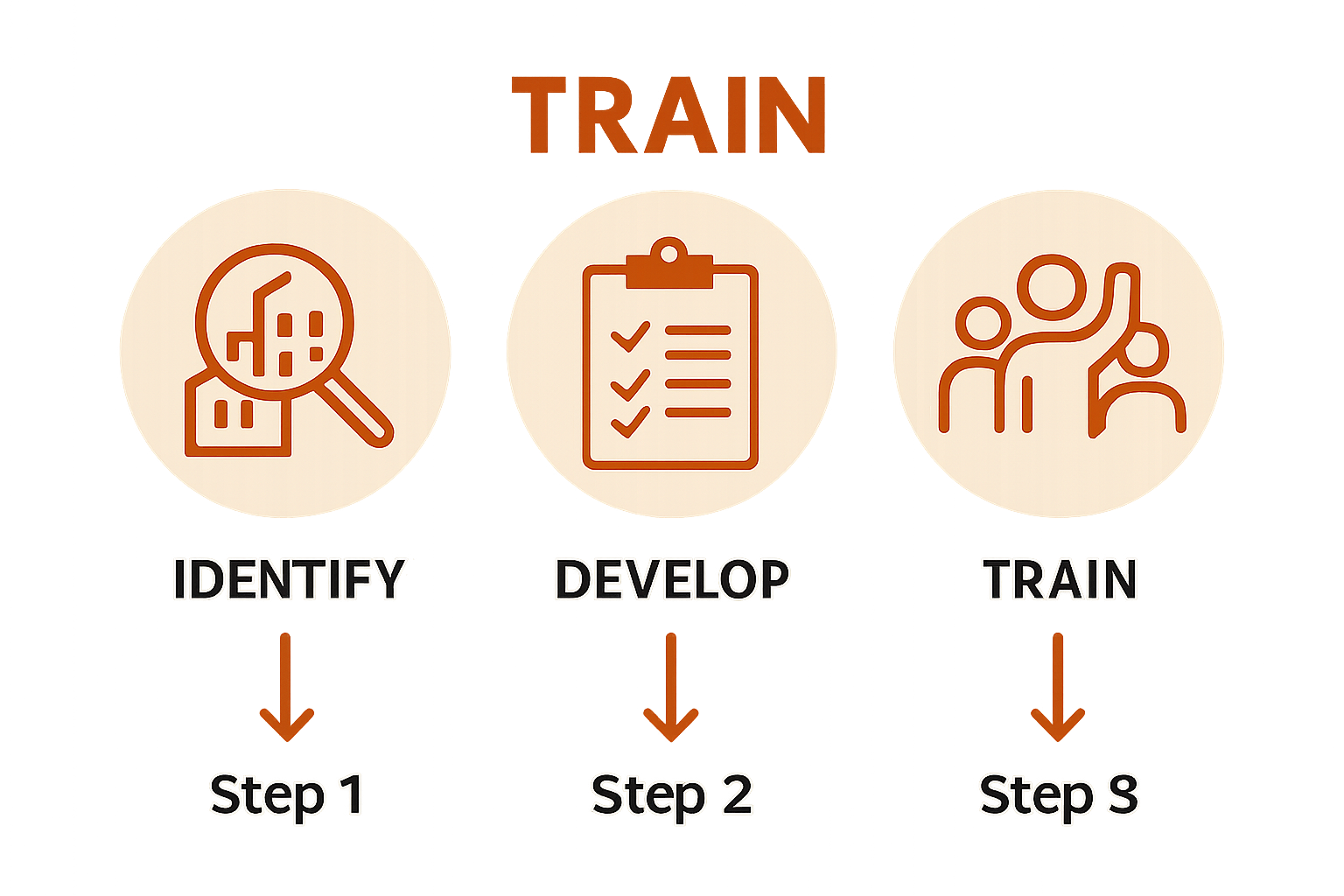 This documentation serves as a foundational reference for developing targeted emergency response procedures. Engage employees in this process through collaborative workshops, encouraging them to share insights about potential workplace risks based on their direct experience.
Verification of your emergency identification process involves several key criteria. Confirm that your assessment covers multiple emergency types, requires input from diverse staff perspectives, and provides a comprehensive view of potential workplace risks. A successful identification process will create a clear, actionable roadmap for subsequent emergency preparation and response strategies.
Here is a checklist table to help verify if your workplace emergency identification process is thorough and actionable.
| Verification Criteria | Description |
| Multiple Emergency Types Covered | Assessment includes various emergency scenarios, such as medical, fire, chemical, weather, and security threats. |
| Diverse Staff Input Involved | Includes perspectives from employees at different roles and levels. |
| Historical Incident Review | Looks at past incident reports for pattern recognition. |
| Regulatory Compliance | Assessment meets industry and government safety standards. |
| Area-Specific Risk Mapping | Considers risks tied to unique workplace areas or equipment. |
| Documentation Detailed | Scenarios are recorded with details on likelihood, severity, and prevention measures. |
| Actionable Roadmap Provided | Results in clear steps for subsequent emergency planning. |
Developing a comprehensive emergency action plan transforms your initial risk identification into a structured, actionable strategy that protects employees and ensures organizational resilience. This critical step translates potential emergency scenarios into clear, executable protocols that enable swift and coordinated responses during high-stress situations.
The emergency action plan must be meticulously crafted to address the specific risks identified in your initial workplace assessment. Begin by establishing clear communication channels and designated responsibilities for emergency response. Each team member should understand their specific role in various emergency scenarios, whether in a restaurant kitchen, childcare facility, or hospitality environment. Explore detailed workplace safety compliance guidelines to ensure your plan meets regulatory standards and best practices.
Creating a comprehensive plan requires detailed documentation that outlines precise response procedures for each potential emergency type. This includes developing step-by-step protocols for medical emergencies, fire incidents, evacuation procedures, and communication strategies. According to the Canadian Centre for Occupational Health and Safety, your plan should include clear escape routes, designated assembly points, and specific instructions for different scenarios. Visual aids like emergency maps, clearly marked exit routes, and contact information for emergency services should be prominently displayed throughout the workplace.
Effective emergency action plans demand regular review and adaptation. Schedule periodic training sessions that simulate various emergency scenarios, allowing employees to practice their designated roles and familiarize themselves with response protocols. Conduct quarterly reviews of the emergency action plan, updating procedures based on new risk assessments, staff changes, or modifications to workplace infrastructure. Encourage open feedback from employees, as their direct experience can provide valuable insights for refining emergency response strategies.
Verification of your emergency action plan involves multiple key criteria. Confirm that the plan is comprehensive, clearly communicated, easily accessible to all employees, and includes detailed procedures for various emergency scenarios. A successful strategy will demonstrate clear roles, communication pathways, and a systematic approach to managing unexpected workplace incidents with minimal disruption and maximum safety.
Training programs are the cornerstone of effective emergency preparedness, transforming theoretical knowledge into practical skills that can save lives during critical moments. By developing comprehensive staff awareness training, organizations create a proactive safety culture where every employee understands their role in emergency response and can act confidently under pressure.
Successful training programs require a multifaceted approach that goes beyond simple instructional sessions. Implement interactive and scenario-based learning experiences that simulate real-world emergencies specific to your workplace environment. Explore our guide on national food safety training programs to understand comprehensive training strategies that engage employees and reinforce critical safety protocols. Training should be tailored to your specific workplace context, whether you operate a restaurant, childcare facility, or hospitality business, ensuring that employees understand the unique emergency risks in their particular work environment.
Develop a structured training curriculum that covers multiple dimensions of emergency preparedness. This includes theoretical knowledge about potential emergency scenarios, practical response techniques, communication protocols, and psychological preparation for high-stress situations. Utilize a mix of training methods such as classroom instruction, hands-on workshops, digital learning modules, and periodic simulation exercises. Ensure that training is not a one-time event but a continuous learning process with regular refresher courses and updates to reflect evolving workplace safety standards.
Encourage active participation and create an environment where employees feel empowered to ask questions and share insights. Implement a feedback mechanism that allows staff to contribute their observations and suggestions for improving emergency response procedures. This collaborative approach not only enhances training effectiveness but also builds a sense of collective responsibility for workplace safety. Consider creating peer-support networks within your organization where more experienced employees can mentor and guide newer team members through emergency preparedness protocols.
The following table summarizes major types of training methods for emergency preparedness as outlined in the article, with their primary focus and typical use cases.
| Training Method | Focus Area | Typical Use Case |
| Classroom Instruction | Theoretical knowledge | Foundational understanding of protocols |
| Hands-on Workshops | Practical skills | Practicing response steps and procedures |
| Digital Learning Modules | Flexible learning | Self-paced refreshers on key information |
| Simulation Exercises | Realistic scenario drills | Testing reactions under pressure |
| Peer Mentoring | Knowledge sharing | New staff learning from experienced peers |
Verification of your training program’s effectiveness involves assessing employee knowledge, confidence, and practical skills. Conduct periodic skills assessments, track participation rates, and measure employee comprehension through practical and theoretical evaluations. A successful training program will demonstrate consistent employee engagement, improved emergency response capabilities, and a workplace culture that prioritizes safety and preparedness.
Emergency drills and exercises transform theoretical knowledge into practical response capabilities, bridging the gap between training and real-world emergency management. These systematic rehearsals provide organizations with critical opportunities to test emergency action plans, identify potential weaknesses, and build staff confidence in high-stress scenarios.
Designing comprehensive emergency drills requires strategic planning and the development of realistic scenarios. Create exercise scenarios that reflect the specific emergency risks identified in your workplace environment, whether in restaurants, childcare facilities, or hospitality settings. Learn more about tracking staff certifications and preparedness to ensure your drills align with professional standards and best practices. According to the Canadian Centre for Occupational Health and Safety, effective drills should simulate various types of emergencies, including medical incidents, fire scenarios, evacuation procedures, and security threats.
Implement a structured approach to emergency exercises that gradually increases complexity and challenge. Begin with basic walkthrough drills, where employees discuss and review response procedures, and then progress to more dynamic, unannounced simulations that test real-time decision-making and communication protocols. Rotate drill scenarios and timing to prevent predictability, ensuring that staff remain genuinely prepared and alert. Encourage participants to provide honest feedback after each exercise, creating a continuous improvement cycle that refines emergency response strategies.
Documentation plays a crucial role in ensuring the effectiveness of emergency drills. Develop comprehensive evaluation frameworks that assess multiple performance dimensions, including response time, communication efficiency, individual and team actions, and overall coordination. Record detailed observations, identifying specific areas of strength and opportunities for improvement. Use these insights to update training programs, revise emergency action plans, and address any skill gaps or procedural limitations discovered during the exercises.
Verification of your emergency drill program involves measuring both quantitative and qualitative outcomes. Key indicators include staff participation rates, improvement in response times, increased confidence levels, and the ability to navigate complex emergency scenarios successfully. A successful drill program will demonstrate progressive enhancement of staff preparedness, robust communication mechanisms, and a workplace culture that prioritizes proactive safety management.

Periodic evaluation and updating of emergency procedures represent the critical final stage in maintaining a dynamic and responsive safety management system. This ongoing process ensures that your workplace emergency protocols remain relevant, effective, and aligned with evolving workplace conditions, technological advancements, and regulatory requirements.
Establishing a structured review framework is crucial for a comprehensive assessment of procedures. Explore insights on critical control points to gain a deeper understanding of the strategic approach to systematic safety evaluations. According to the Occupational Safety and Health Administration, organizations should conduct thorough reviews at least annually, or immediately following any significant workplace changes such as infrastructure modifications, staffing shifts, or technological upgrades. This proactive approach enables businesses to identify and address potential vulnerabilities before they escalate into critical risks.
Develop a comprehensive evaluation methodology that encompasses multiple assessment dimensions. This includes analyzing previous emergency drill performance, reviewing incident reports, collecting staff feedback, and monitoring changes in industry safety standards. Create a collaborative review process that involves employees from different organizational levels, ensuring diverse perspectives are considered. Encourage open dialogue about potential improvements, challenges encountered during previous drills, and emerging safety concerns specific to your workplace environment.
Documentation serves as the backbone of effective procedure updates. Maintain detailed records of each review cycle, including identified improvements, implemented changes, and rationales behind modifications. Develop a transparent tracking system that enables clear communication of updates throughout the entire organization. Integrate technology solutions that will allow real-time documentation and easy access to the most current emergency procedures, ensuring all staff members can quickly reference the latest safety protocols.
Verification of your periodic evaluation process involves assessing multiple key indicators. These include the comprehensiveness of review documentation, the rate of procedural improvements implemented, staff understanding of updated protocols, and the organization’s ability to adapt to changing safety landscapes. A successful evaluation strategy will demonstrate a commitment to continuous improvement, proactive risk management, and a workplace culture that prioritizes employee safety through systematic, ongoing assessment and refinement of emergency procedures.
Every business wants to avoid the chaos and uncertainty that can come with workplace emergencies. The article you just read highlights the importance of not only identifying potential dangers but also ensuring that your entire team understands emergency procedures, from action plans to regular drills. Missing a single compliance standard or a staff member not knowing what to do in a crisis can put people and your business at risk. With new requirements and best practices evolving rapidly, keeping your safety training up to date is more important than ever.
You can take control of your workplace safety today. Probe It Food Safety.ca offers simple, online government-accredited courses, such as Food Handler Certification and WHMIS training, designed for real-world Canadian workplaces. Our flexible courses guide your team through identifying risks, developing action plans, and staying compliant—all at your own pace. Explore our workplace safety compliance resources or start your certification now to build a safer, more confident team. Why wait until an emergency exposes your gaps? Act now to protect your staff and business, and ensure you are ready for 2025 and beyond.
A workplace emergency action plan should include clear communication channels, designated responsibilities, step-by-step response procedures for different emergencies, evacuation routes, and contact information for emergency services.
Emergency drills should be conducted regularly. It is recommended to hold at least quarterly drills to ensure employees remain familiar with protocols and can effectively respond to emergencies.
Training staff on emergency procedures enhances their confidence and ability to respond effectively during an emergency, promotes a proactive safety culture, and ultimately increases workplace safety for all employees.
Emergency procedures should be regularly evaluated and updated, at least annually or following any significant changes in the workplace. This includes analyzing drill performance, collecting employee feedback, and adapting to changes in industry safety standards.
Exams are stressful, and the pressure of passing may leave you feeling overwhelmed and nervous that you won’t pass, even

Food safety is essential if you want to ensure safety and establish trust with your customers. Food handlers must be

Practicing good food safety habits is paramount to maintaining a healthy kitchen. Regardless of the size of your hotel business