No products in the cart.

10 Tips for Passing Your Food Handler’s Certificate Exam
Exams are stressful, and the pressure of passing may leave you feeling overwhelmed and nervous that you won’t pass, even


Workplace violence is not just about dramatic confrontations or shocking news headlines. Nearly 19 percent of Canadian employees report experiencing some form of workplace violence or harassment during their careers. You might expect most incidents to come from outside threats, but the reality is that coworkers and even personal relationships account for a surprising share. This flips the common idea of a safe office upside down.
| Takeaway | Explanation |
|---|---|
| Workplace violence has various forms. | It includes verbal threats, physical aggression, psychological harassment, and more harmful interactions. |
| Prevention is a legal and ethical obligation. | Organizations must comply with laws protecting employee safety, or face legal and financial consequences. |
| Workplace violence impacts productivity and morale. | Incidents can lead to absenteeism, higher turnover, and diminished trust among employees, affecting overall performance. |
| Comprehensive strategies enhance workplace safety. | Effective prevention involves clear policies, regular training, and a culture of respect to reduce risks. |
| Psychological safety is vital in prevention efforts. | Promoting open communication and support boosts employee morale and reduces workplace violence incidents. |
Workplace violence represents a serious threat to employee safety and organizational well-being. It encompasses a range of harmful behaviors that can create significant psychological and physical risks for workers across various professional settings.
Canadian Labour Code provides a comprehensive definition of workplace violence as “any action, conduct or comment that can reasonably be expected to cause offence, humiliation or physical and psychological injury to an employee.” This broad definition recognizes that violence extends beyond physical assault and includes multiple harmful interactions.
Workplace violence typically involves several critical dimensions:
Workplace violence is generally categorized into four primary types
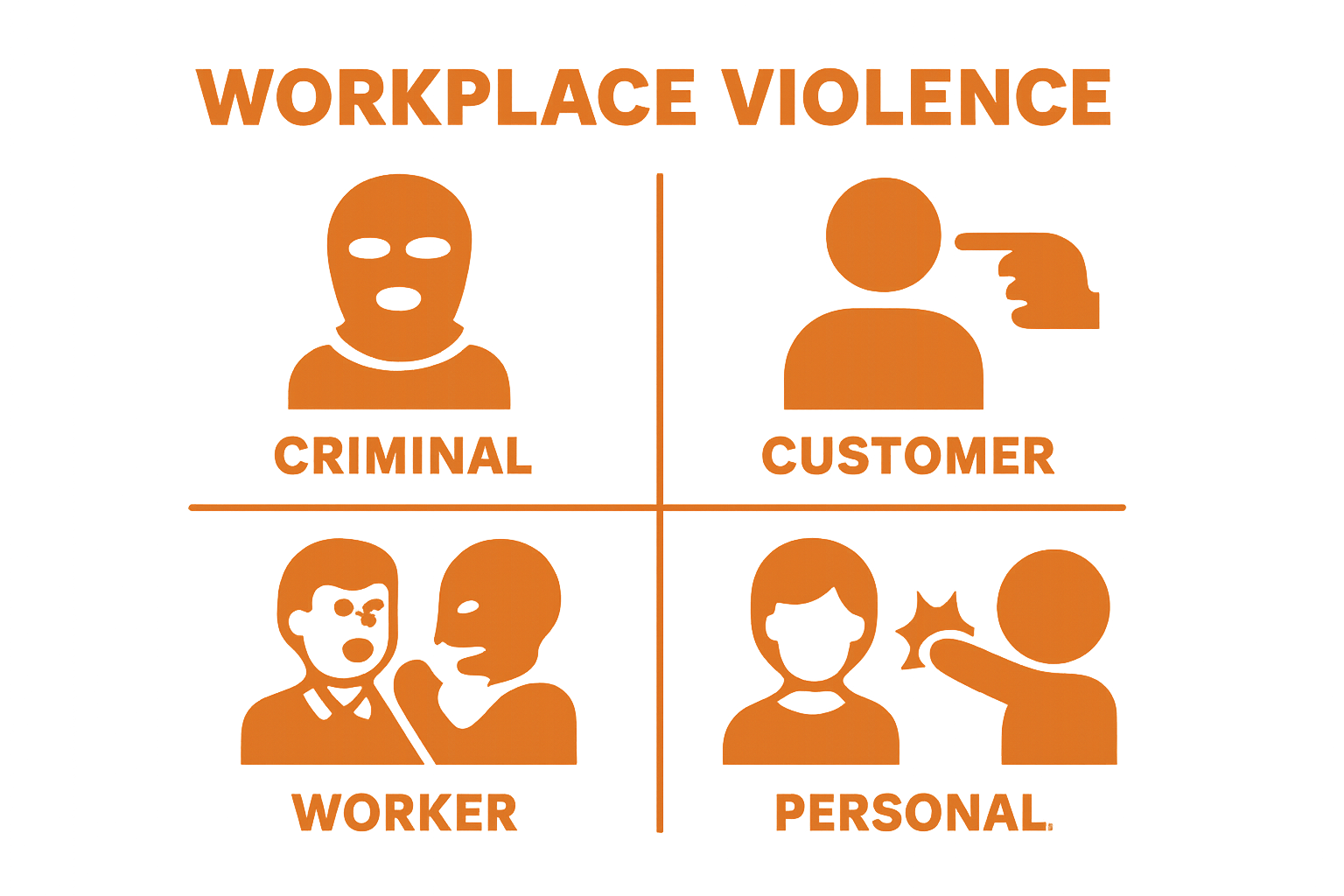 :
Workplace violence creates profound consequences beyond immediate physical harm. The psychological impact can include chronic stress, reduced productivity, increased absenteeism, and long-term mental health challenges. Employees experiencing workplace violence may suffer from anxiety, depression, and diminished professional confidence.
Recognizing and understanding these various manifestations of workplace violence is crucial for developing comprehensive prevention strategies that prioritize employee safety and organizational resilience.
Below is a table summarizing the four primary types of workplace violence, with a concise description and common examples for each.
| Type of Workplace Violence | Description | Common Examples |
|---|---|---|
| Criminal Intent | Perpetrated by individuals with no legitimate relationship to the workplace. | Robbery, vandalism, external assault |
| Customer/Client Violence | Occurs when customers, patients, or clients become aggressive toward employees. | Yelling, threats, physical attacks |
| Worker-on-Worker Violence | Involves current or former employees targeting each other. | Bullying, harassment, physical altercations |
| Personal Relationship Violence | Arises from domestic or personal relationships entering the workplace. | Stalking, assaults, threats from partners |
Workplace violence prevention transcends mere legal compliance and represents a fundamental strategy for maintaining organizational health, employee well-being, and sustained productivity. By proactively addressing potential risks, organizations can create safer, more supportive work environments that benefit both employees and the overall business ecosystem.
Canadian Centre for Occupational Health and Safety emphasizes that workplace violence prevention is not just a recommended practice but a critical legal and ethical responsibility. Organizations have a duty of care to ensure employee safety, with potential legal consequences for failing to implement adequate prevention strategies.
Key legal considerations include:
Workplace violence prevention directly influences organizational performance. Incidents of violence can lead to significant economic consequences, including:
Beyond tangible economic factors, workplace violence prevention contributes to creating a positive organizational culture. Implementing comprehensive prevention strategies demonstrates an organization’s commitment to employee well-being, which can enhance:
Effective workplace violence prevention requires a holistic approach that combines clear policies, regular training, robust reporting mechanisms, and a culture of mutual respect and understanding. By prioritizing prevention, organizations can transform potential risks into opportunities for building stronger, more resilient work environments.
Learn more about workplace safety strategies that can help create safer professional environments across various industries.
Workplace violence creates profound and multifaceted consequences that extend far beyond immediate physical harm, generating complex psychological, professional, and personal challenges for employees experiencing such traumatic incidents.
Mental Health Commission of Canada highlights that workplace violence can trigger significant mental health challenges. Employees subjected to repeated or severe workplace violence often experience:
Workplace violence substantially impacts an employee’s professional development and organizational engagement. The ripple effects can manifest through:
The consequences of workplace violence extend beyond immediate professional settings, influencing an individual’s broader life experience. These impacts can include:
These multifaceted impacts underscore the critical importance of comprehensive workplace violence prevention strategies that prioritize employee well-being and organizational safety.
The following table compares key impacts of workplace violence on employees across psychological, professional, and personal dimensions.
| Impact Dimension | Key Effects |
|---|---|
| Psychological/Emotional | Anxiety, PTSD, depression, reduced self-confidence, persistent feelings of insecurity |
| Professional | Lower productivity, absenteeism, career disruption, loss of networking opportunities |
| Personal/Social | Chronic mental health conditions, strained relationships, decreased quality of life |
Explore comprehensive workplace safety strategies to understand how organizations can support employee protection and mental health resilience.
Workplace violence prevention strategies represent a comprehensive, systematic approach to identifying, mitigating, and addressing potential risks within professional environments. These strategies go beyond reactive measures, focusing on proactive interventions that create safer, more respectful workplace cultures.
Statistics Canada highlights the critical importance of understanding workplace violence prevalence through systematic risk assessment. Effective prevention strategies begin with:
Successful workplace violence prevention involves implementing interconnected strategies that address potential risks at multiple organizational levels:
Ultimately, workplace violence prevention transcends procedural implementations. It requires a fundamental shift in organizational culture that prioritizes:
These strategies work synergistically to create environments where potential violence is anticipated, prevented, and effectively managed. The goal is not just to respond to incidents but to systematically reduce their likelihood through proactive, holistic approaches.
Discover comprehensive safety compliance strategies to enhance your organizational safety framework.
Creating a safe workplace culture requires a comprehensive approach that goes beyond traditional safety protocols, focusing on developing an environment of mutual respect, psychological safety, and proactive risk management. This holistic strategy involves intentional organizational practices that prioritize employee well-being and institutional integrity.
Canadian Human Rights Commission emphasizes the critical importance of establishing foundational principles that support a respectful and safe workplace environment:
A truly safe workplace culture extends beyond physical protection, encompassing psychological and emotional dimensions. Key elements of psychological safety include:
Safe workplace cultures are dynamic, requiring ongoing commitment to learning, improvement, and adaptation. This involves:
By implementing these strategic approaches, organizations can create environments that not only prevent workplace violence but also nurture a culture of respect, collaboration, and mutual support.

Explore team safety meeting strategies to enhance your workplace safety framework.
Workplace violence can disrupt your team, drain productivity, and create deep psychological risks. As highlighted in the article, employees need more than just words. They deserve clear training, a culture of respect, and the confidence that comes from knowing they are protected. Prevention starts with practical, accessible solutions tailored to your industry’s reality.

Take action now by empowering your staff with government-accredited training from Probe It Food Safety.ca. Our self-paced courses on workplace safety and compliance and team safety meetings are designed by public health experts to promote psychological and physical safety. Ensure your organization is compliant, proactive, and ready to prevent workplace violence. Visit Probe It Food Safety.ca to get started and give your team the protection and confidence they deserve.
Workplace violence refers to any action, conduct, or comment that can reasonably be expected to cause offense, humiliation, or physical and psychological injury to an employee. This includes verbal threats, intimidation, physical aggression, psychological harassment, and sexual harassment.
The main types of workplace violence include: 1) Criminal Intent, where violence is committed by individuals with no legitimate business relationship; 2) Customer/Client Violence, where aggressive behaviors are directed at employees by those they serve; 3) Worker-on-Worker Violence, involving harassment or assault among employees; and 4) Personal Relationship Violence, where domestic issues spill into the workplace.
Workplace violence prevention is crucial for maintaining employee safety, organizational health, and productivity. It is a legal and ethical responsibility for organizations, helping them avoid legal liabilities, reduce costs associated with violence incidents, and foster a positive workplace culture.
Organizations can implement effective workplace violence prevention strategies by conducting risk assessments, developing comprehensive policies, providing regular training, establishing clear reporting mechanisms, and promoting a culture of respect and mutual support.
Exams are stressful, and the pressure of passing may leave you feeling overwhelmed and nervous that you won’t pass, even

Food safety is essential if you want to ensure safety and establish trust with your customers. Food handlers must be

Practicing good food safety habits is paramount to maintaining a healthy kitchen. Regardless of the size of your hotel business