No products in the cart.

10 Tips for Passing Your Food Handler’s Certificate Exam
Exams are stressful, and the pressure of passing may leave you feeling overwhelmed and nervous that you won’t pass, even


Public health inspectors are on the front lines every day keeping communities safe from hidden dangers. Some handle over 150 inspections each year, covering everything from restaurants to schools. Most people think their work is all about checking kitchens for cleanliness and handing out warnings. The real story is far bigger and far more surprising. These professionals are the backbone of public wellness, preventing outbreaks and protecting entire populations before anyone knows there is a risk.
| Takeaway | Explanation |
|---|---|
| Public health inspectors prevent disease transmission. | They systematically identify and mitigate health risks in various environments to safeguard community well-being. |
| Education is a major role of inspectors. | Public health inspectors provide guidance to businesses and community members on health standards and safe practices. |
| Regulatory compliance is essential. | Inspectors enforce health and safety regulations, ensuring institutions adhere to established standards to protect public health. |
| Inspectors face significant systemic challenges. | Resource limitations and complex regulatory environments can hinder their ability to effectively perform health inspections. |
| Community resilience is reinforced by inspectors. | Their proactive strategies not only prevent immediate health risks but also contribute to long-term public health stability. |
Public health inspectors are highly trained professionals who play a critical role in protecting community health and safety by systematically identifying and mitigating potential health risks. These dedicated experts work across various environments, ensuring compliance with established health and safety regulations through comprehensive inspections and proactive interventions.
Public health inspectors function as frontline guardians of public wellness, conducting detailed examinations of facilities, practices, and environments to prevent disease transmission and maintain high standards of health and hygiene. Their professional responsibilities extend far beyond simple inspection, encompassing a sophisticated approach to risk assessment, education, and regulatory enforcement.
Their core responsibilities typically include:
According to the Public Health Agency of Canada, these professionals are instrumental in administering regulations that protect public health, safety, and security. Environmental health officers specifically work across diverse settings, performing critical assessments that range from water quality testing to food safety evaluations.
These professionals leverage their specialized training in microbiology, environmental science, and public health to identify potential risks before they become significant health threats. By combining scientific knowledge with regulatory expertise, public health inspectors create a proactive defense mechanism that safeguards community well-being.
Their work is particularly crucial in preventing widespread health issues by addressing potential problems at their source, whether that involves identifying contamination risks in food service environments, ensuring proper waste management, or evaluating environmental conditions that could compromise public health.
The responsibilities of public health inspectors span several key domains. The table below organizes their core duties and the impact each responsibility has on maintaining community wellness.
| Core Responsibility | Description | Impact on Community Wellness |
|---|---|---|
| Health & Safety Inspections | Conduct thorough evaluations of facilities and environments for compliance and safety | Prevents disease outbreaks and contamination |
| Risk Investigation & Recommendation | Identify health hazards and advise on corrective actions | Minimizes existing and potential dangers |
| Regulatory Monitoring & Compliance | Ensure adherence to local, provincial, and federal health regulations | Maintains uniform safety standards |
| Education & Guidance | Inform and train businesses and community members on health standards and best practices | Promotes a culture of health and prevention |
| Documentation & Reporting | Record inspection findings and maintain regulatory documentation | Provides evidence and tracks compliance |
| Enforcement & Corrective Action | Issue compliance notices, enforce regulations, and recommend legal action as needed | Ensures prompt resolution of violations |
Public health inspectors serve as critical guardians of community wellness, playing an indispensable role in preventing disease transmission, protecting public safety, and maintaining high standards of health across diverse environments. Their work represents a proactive approach to public health management that significantly reduces potential risks before they can escalate into broader health challenges.
Public health inspectors function as the first line of defense against potential health threats by systematically identifying and mitigating risks in various settings. Their comprehensive approach involves more than just routine inspections they actively analyze complex environmental factors that could compromise community health.
Key areas where public health inspectors make substantial contributions include:
The work of public health inspectors extends beyond immediate health protection, generating significant economic and social benefits. By preventing potential health outbreaks and ensuring compliance with safety regulations, these professionals help businesses maintain operational integrity and protect community well-being.
According to a historical analysis of public health practices, their role has been particularly crucial during emergencies, where they supervise critical infrastructure like water supplies and manage sanitation in challenging environments. These efforts not only protect immediate health but also contribute to long-term community resilience.
Moreover, public health inspectors play a vital educational role. They don’t just enforce regulations they also help businesses understand food safety standards and provide guidance on best practices. This proactive approach helps create a culture of health consciousness that extends far beyond individual inspections.
Their multifaceted role encompasses scientific expertise, regulatory knowledge, and community engagement, making them essential professionals in maintaining public health standards. By addressing potential risks systematically and comprehensively, public health inspectors create a robust protective mechanism that safeguards community wellness at multiple levels.
Public health inspectors perform complex and multifaceted roles that require extensive technical knowledge, analytical skills, and a comprehensive understanding of health regulations. Their professional responsibilities encompass a wide range of critical activities designed to protect public health and ensure safety across various community settings.
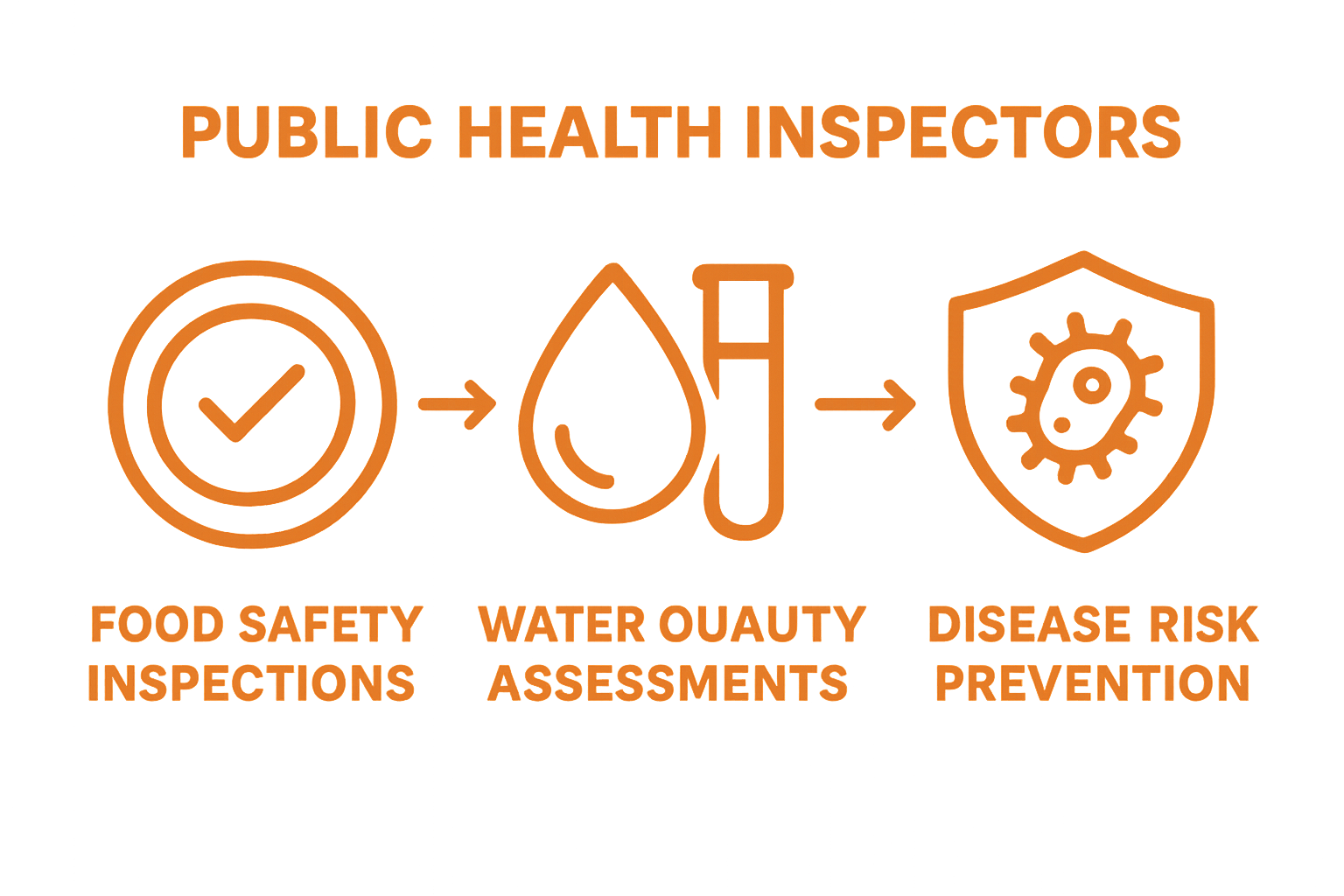
The core responsibilities of public health inspectors involve conducting systematic and thorough examinations of facilities, environments, and operational practices. These professionals utilize sophisticated assessment techniques to identify potential health risks and develop strategic intervention strategies.
Key inspection responsibilities include:
Public health inspectors serve as critical enforcers of health and safety regulations, ensuring that businesses and institutions adhere to established standards. Their role extends beyond simple observation they actively work to educate and guide organizations toward maintaining optimal health and safety practices.
Moreover, these professionals play a crucial role in understanding staff food safety responsibilities, helping organizations develop comprehensive strategies that minimize health risks. They interpret complex regulatory frameworks and translate them into actionable guidance for businesses and community stakeholders.
Their enforcement activities involve issuing compliance notices, recommending corrective actions, and when necessary, implementing legal measures to address significant health violations. This approach ensures that potential risks are mitigated promptly and effectively, protecting public health at its most fundamental level.
By combining scientific expertise, regulatory knowledge, and a proactive approach to risk management, public health inspectors create a robust system of health protection that safeguards community wellness across diverse environments.
Public health inspectors implement sophisticated strategies to safeguard community wellness through comprehensive, proactive health protection mechanisms. Their approach integrates scientific expertise, regulatory knowledge, and systematic interventions designed to prevent health risks and promote optimal community safety.
Prevention represents the cornerstone of public health inspection strategies. These professionals utilize advanced methodologies to identify and mitigate potential health hazards before they can escalate into significant community health challenges. Their monitoring efforts encompass multiple dimensions of environmental and operational health.
Key preventative monitoring strategies include:
Public health inspectors serve as critical risk managers, developing nuanced strategies that address complex health challenges across diverse community settings. They transform scientific understanding into practical intervention protocols that protect public well-being.
According to Health Canada, these professionals play a vital role in enforcing health regulations, monitoring critical infrastructure, and responding rapidly to potential health emergencies. Their work involves intricate risk assessments and strategic interventions designed to prevent disease outbreaks.
Moreover, they contribute to community health education by offering specialized training programs that empower businesses and individuals to understand and implement robust health safety practices. By translating complex regulatory requirements into actionable guidance, public health inspectors create a collaborative approach to community health protection.
Their multifaceted approach combines scientific rigor, regulatory expertise, and proactive intervention strategies.
 Through systematic monitoring, education, and enforcement, public health inspectors create a comprehensive defense mechanism that safeguards community health at multiple interconnected levels.
Public health inspectors navigate a complex professional landscape characterized by evolving health risks, regulatory complexities, and significant systemic challenges. Their work demands exceptional adaptability, resilience, and commitment to protecting community wellness under increasingly demanding circumstances.
The professional environment for public health inspectors is marked by persistent resource limitations and structural challenges that significantly impact their ability to perform comprehensive health protection duties. These constraints manifest through inadequate funding, technological gaps, and human resource shortages that compromise their effectiveness.
Key systemic challenges include:
Public health inspectors confront increasingly sophisticated health challenges that require continuous professional adaptation. According to Canadian Institutes of Health Research, significant data gaps exist in understanding and measuring public health workforce capabilities, which further complicates their professional landscape.
These professionals must continuously update their skills to address emerging threats like pandemic responses, climate change impacts on health, and technological disruptions in health monitoring. The need for ongoing education becomes critical, which is why many professionals seek additional certification opportunities to stay current with evolving health protection standards.
Moreover, public health inspectors must balance scientific rigor with practical implementation, translating complex health research into actionable community interventions. They operate at the intersection of scientific knowledge, regulatory compliance, and community education, requiring a multidimensional skill set that goes far beyond traditional inspection roles.
By persistently addressing these challenges, public health inspectors demonstrate remarkable professional resilience. Their commitment to community health remains unwavering, even when confronted with significant systemic and operational obstacles that test the boundaries of their expertise and dedication.
Public health inspectors face a distinct set of systemic and professional challenges. This table summarizes the main obstacles discussed in the article and the effects each has on the profession.
| Challenge Type | Example/Description | Impact on Inspectors and Public Health |
|---|---|---|
| Resource Limitations | Limited funding, outdated technology, workforce shortages | Reduces inspection coverage and response capacity |
| Regulatory Complexity | Navigating multilayered, evolving health regulations | Increases difficulty of maintaining compliance |
| Geographic Disparities | Uneven monitoring capacity in different regions | Leads to unequal health protection across areas |
| Professional Burnout | High demands, stress, and insufficient support | Lowers staff retention and overall effectiveness |
| Need for Ongoing Education | Adapting to new health threats, emerging risks, and technologies | Requires continual skill development |
| Data and Capability Gaps | Lack of comprehensive workforce data and performance metrics | Hinders long-term planning and risk evaluation |
If this article opened your eyes to the serious challenges public health inspectors face—like resource shortages, complex regulations, and the critical need for up-to-date training—you are not alone. Many businesses struggle with understanding detailed compliance requirements and preparing their staff for real inspection scenarios. You already know that staying ahead is essential, especially when public health is on the line.

Make your workplace safer today with Probe It Food Safety.ca. Our expert-designed, government-accredited Food Handler Certification, WHMIS, and TDG training give you and your team the practical knowledge public health inspectors expect. Get certified online, at your own pace, and receive instant proof of training—all fully supported by experienced public health professionals. Do not wait until the next inspection. Visit Probe It Food Safety.ca now to start your compliance journey and create a safer environment for everyone.
Public health inspectors are responsible for protecting community health by conducting inspections, identifying health risks, and ensuring compliance with health regulations in various environments such as restaurants, healthcare facilities, and public spaces.
Public health inspectors proactively identify potential disease transmission pathways and environmental hazards, and they educate businesses and communities on health standards and best practices to mitigate risks.
Public health inspectors conduct inspections in a wide range of places, including food service establishments, food processing facilities, schools, healthcare institutions, and public spaces, ensuring they meet health and safety regulations.
Public health inspectors encounter challenges such as limited resources, systemic constraints, emerging health threats, and the need for continuous professional development to adapt to evolving health risks.
Exams are stressful, and the pressure of passing may leave you feeling overwhelmed and nervous that you won’t pass, even

Food safety is essential if you want to ensure safety and establish trust with your customers. Food handlers must be

Practicing good food safety habits is paramount to maintaining a healthy kitchen. Regardless of the size of your hotel business