No products in the cart.

10 Tips for Passing Your Food Handler’s Certificate Exam
Exams are stressful, and the pressure of passing may leave you feeling overwhelmed and nervous that you won’t pass, even


Parent-provided food in care settings is more than just a lunchbox from home, and it shapes what children eat every single day. Think about this. Research shows that packed lunches often fall short of meeting full nutritional guidelines. That sounds risk,y but the real surprise is how thoughtful management can actually turn meal times into powerful moments for learning, cultural connection, and better eating habits.
| Takeaway | Explanation |
| Active parental involvement enhances nutrition | Parents bringing food tailored to their child’s needs improves dietary fulfillment and personalizes nutrition. |
| Safety protocols are essential in food management. | Proper food handling and temperature control are critical to prevent health risks and ensure children’s safety. |
| Clear communication fosters collaboration. | Establishing transparent dialogue between parents and caregivers ensures adequate adherence to nutritional guidelines. |
| Cultural diversity in meals should be respected. | Managing parent-provided food allows for cultural food practices while maintaining standardized nutritional requirements. |
| Structured guidelines improve eating behaviours | Implementing comprehensive food management strategies can positively influence children’s dietary habits and preferences. |
Parent-provided food in care settings is a practice in which families bring prepared meals and snacks for their children rather than relying on institutional food services. This approach involves parents packaging and delivering individual food items that meet their child’s specific dietary needs, preferences, and potential health restrictions.
In childcare environments, managing parent-provided food requires careful coordination between caregivers and families. Research on Head Start programs indicates that the source of food provision significantly influences children’s eating behaviours and nutritional intake. Parents who actively participate in their child’s meal planning contribute to more personalized, potentially healthier dietary experiences.
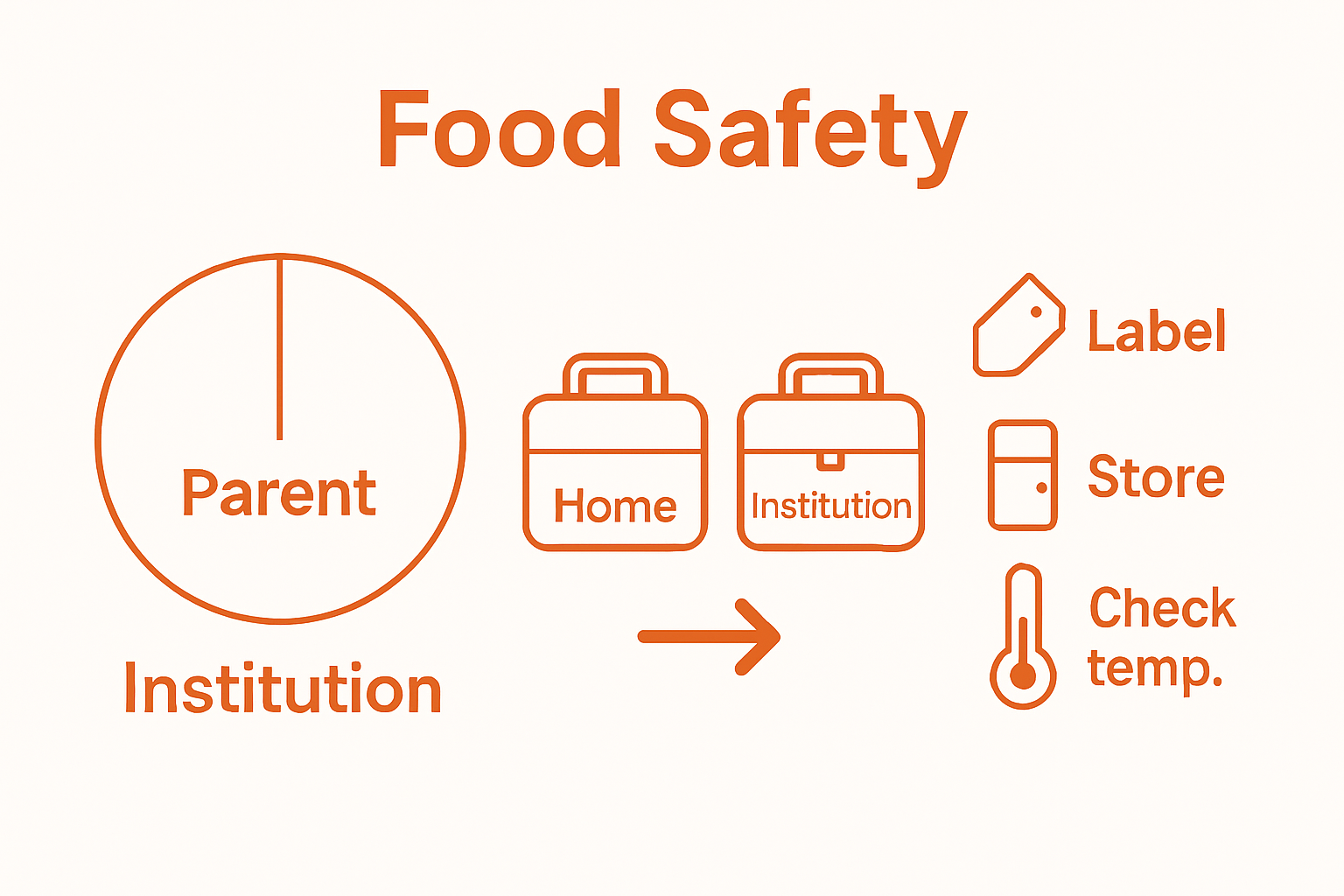
Key considerations for parent-provided food include:
Ensuring proper food safety and temperature control
Meeting nutritional balance requirements
Accommodating individual dietary restrictions or allergies
Parent-provided food offers multiple benefits beyond basic nutrition. It allows families to maintain cultural food traditions, address specific dietary needs, and remain actively involved in their child’s nutritional journey. However, care settings must establish clear guidelines to manage these food contributions effectively.
Healthcare professionals recognize that managing parent-provided food requires structured approaches. Learn more about maintaining safe food practices in care settings to help parents and caregivers collaborate more effectively.
Critical elements in managing parent-provided food include implementing robust food handling protocols, maintaining clear communication channels between parents and care providers, and establishing standardized procedures for food storage, labelling, and monitoring.
Managing parent-provided food in care settings is crucial for ensuring children’s health, safety, and nutritional well-being. These settings must navigate complex challenges related to food safety, dietary diversity, and individualized nutritional needs while maintaining a standardized environment.
Effective management of parent-provided food directly impacts children’s health outcomes. According to research published in the journal Nutrients, packed lunches often fail to meet comprehensive nutritional recommendations, underscoring the need for oversight. Care providers must carefully assess food contributions to ensure they meet minimum nutritional standards.
The following table summarizes key health and safety priorities when managing parent-provided food in care settings. This comparison highlights essential considerations for staff and caregivers to reduce risks and ensure children’s well-being.
| Health & Safety Priority | Description |
| Prevent cross-contamination | Ensure different foods do not contaminate each other |
| Monitor temperature & storage | Keep food at safe temperatures and observe storage guidelines |
| Identify & manage allergen exposure | Check for potential allergens and label foods accurately |
| Verify appropriate handling | Confirm that all food is prepared and handled safely |
Key health and safety priorities include:
Preventing cross-contamination risks
Monitoring food temperature and storage conditions
Identifying and managing potential allergen exposure
Verifying appropriate food handling practices
Parent-provided food management goes beyond basic safety protocols. It represents a critical mechanism for supporting diverse dietary needs and cultural food practices. By establishing clear guidelines, care settings can create inclusive environments that respect individual family preferences while maintaining consistent nutritional standards.
Learn how to implement comprehensive food safety protocols to support effective management of parent-provided meals. Care providers must develop systematic approaches that balance flexibility with rigorous safety standards, ensuring that every child receives nutritionally appropriate, safely prepared meals.
Ultimately, managing parent-provided food requires collaborative communication, transparent policies, and a commitment to children’s holistic nutritional development. By creating structured frameworks, care settings can transform mealtime into an opportunity for learning, cultural appreciation, and health promotion.
Nutritional standards and regulations for parent-provided food in care settings represent comprehensive guidelines designed to protect children’s health, ensure dietary quality, and promote safe eating environments. These frameworks establish critical parameters for food preparation, transportation, storage, and consumption in childcare and educational settings.
Regulatory bodies focus on creating standardized approaches that balance nutritional requirements with practical implementation. According to research from the American Academy of Pediatrics, developing effective nutrition policies requires collaboration between care providers, parents, and health professionals.
Key regulatory principles include:
Below is a table outlining foundational regulatory principles for parent-provided food in care settings. This helps clarify how each principle supports child safety and nutrition.
| Regulatory Principle | Purpose or Focus |
| Minimum nutritional content | Ensure meals meet essential dietary needs |
| Safe food handling & storage | Prevent foodborne illnesses through proper practices |
| Allergen management procedures | Protect children with allergies from accidental exposure |
| Systematic documentation | Maintain records for compliance and accountability |
Establishing minimum nutritional content requirements
Defining safe food handling and storage protocols
Creating clear allergen management procedures
Implementing systematic documentation practices
Successful nutritional regulation goes beyond creating rules. Care settings must develop comprehensive strategies that translate guidelines into actionable practices. Learn about current food safety standards for Canadian institutions to understand the evolving landscape of nutritional oversight.
Nutritional standards typically address several critical domains:
Macronutrient and micronutrient balance
Age-appropriate portion sizes
Dietary diversity and cultural considerations
Temperature control and preservation methods
Effective regulation requires ongoing education, regular assessment, and flexible approaches that accommodate individual dietary needs while maintaining consistent safety standards. Care providers must remain adaptable, continuously updating their protocols to reflect emerging nutritional research and changing healthcare recommendations.
Managing parent-provided food involves more than ensuring basic nutritional safety. It represents a complex interaction between institutional guidelines, parental preferences, and children’s evolving dietary behaviours. This management approach directly influences eating patterns, nutritional intake, and long-term health outcomes for children in care settings.
According to research in the International Journal of Environmental Research and Public Health, parent-provided food significantly impacts children’s dietary practices. Care settings play a crucial role in guiding and modifying food selection, portion sizes, and eating behaviours through structured interventions and educational approaches.
Key dietary practice considerations include:
Promoting balanced meal composition
Encouraging diverse food selections
Reducing processed food consumption
Supporting positive eating behaviours
Care settings can strategically shape dietary practices by implementing comprehensive food management strategies. Explore essential food safety training techniques to understand how institutional approaches can positively influence children’s nutritional experiences.
Institutional strategies for managing dietary practices involve:
Creating structured mealtime environments
Facilitating positive social eating experiences
Providing nutritional education to parents
Modelling healthy eating behaviours
Effective management of parent-provided food transforms meal times from mere nutritional events into opportunities for learning, cultural appreciation, and the development of lifelong healthy eating habits. By establishing clear guidelines, care settings can help children develop positive relationships with food while respecting individual family preferences and cultural backgrounds.
Effective management of parent-provided food requires a comprehensive, multifaceted approach that balances safety, nutrition, communication, and individual needs. Care settings must develop robust strategies that protect children’s health while respecting family preferences and cultural diversity.
According to research published in PubMed, successful food management hinges on establishing clear, transparent communication channels between care providers and parents. This collaborative approach ensures that nutritional guidelines are understood, respected, and consistently implemented.
Key communication considerations include:
Developing clear, accessible food policy documentation
Creating open dialogue platforms for parent feedback
Establishing transparent reporting mechanisms
Offering educational resources about nutritional best practices
Care settings must implement proactive monitoring systems that go beyond basic compliance. Learn about advanced food safety management techniques to understand comprehensive approaches to children’s nutritional oversight.
Responsive feeding practices involve:
Respecting children’s hunger and fullness cues
Avoiding food pressure or coercive feeding
Modelling positive eating behaviours
Creating supportive, relaxed eating environments
Effective food management transcends simple rule enforcement. It requires a nuanced, empathetic approach that recognizes the complex interplay between institutional guidelines, parental choices, and children’s individual nutritional needs. By fostering collaborative relationships and maintaining flexible, informed strategies, care settings can create safe, nurturing environments that support children’s holistic development.
Balancing individualized family needs with safe food handling in care settings can feel overwhelming. If you are concerned about food safety risks, allergen management, or meeting regulatory requirements for parent-provided meals, you are not alone. As this article highlights, one small mistake can affect a child’s health and your setting’s reputation. You deserve peace of mind and tools that keep everyone protected.

Ready to strengthen your team’s confidence and compliance? Discover how Probe It Food Safety.ca can help you master food safety protocols with online, government-accredited Food Handler Certification courses, available anywhere in Canada, anytime. Public health experts design our training and address challenges such as safe food storage and cross-contamination prevention, which are essential when managing parent-provided food. Get instant certification upon completion and show families you put safety first. Upgrade your training today and transform mealtime from a risk to an opportunity for growth.
Parent-provided food refers to meals and snacks that families bring from home for their children in childcare environments, catering to individual dietary needs and preferences.
Effective management is crucial to ensure children’s health and safety, preventing foodborne illness, accommodating dietary restrictions, and promoting proper nutrition.
Care settings can ensure food safety by implementing robust handling protocols, monitoring food temperature, preventing cross-contamination, and verifying allergen information.
Regulatory principles typically include establishing minimum nutritional standards, defining safe food handling procedures, and creating allergen management guidelines to maintain children’s health.
Exams are stressful, and the pressure of passing may leave you feeling overwhelmed and nervous that you won’t pass, even

Food safety is essential if you want to ensure safety and establish trust with your customers. Food handlers must be

Practicing good food safety habits is paramount to maintaining a healthy kitchen. Regardless of the size of your hotel business