No products in the cart.

10 Tips for Passing Your Food Handler’s Certificate Exam
Exams are stressful, and the pressure of passing may leave you feeling overwhelmed and nervous that you won’t pass, even


Health and safety laws in Canada do more than outline rules for workplaces. Companies with solid safety programs can cut workplace accident rates by as much as 35 percent. Most people think these laws slow business down or are just another box to check. The real surprise is that these regulations help organizations save money, boost team morale, and build trust in ways few expect.
| Takeaway | Explanation |
| Employers must ensure a safe work environment. | Employers are legally obligated to protect workers from hazards and maintain safe working conditions in the workplace. |
| Workers have the right to refuse unsafe work. | Employees can refuse tasks they believe pose a significant risk to their health and safety without facing job consequences. |
| Health and safety laws improve organizational productivity. | Implementing safety regulations can lead to reduced injuries, lower insurance costs, and enhanced overall workplace output. |
| Regular safety training is essential for compliance. | Continuous education and training are required to keep employees informed about safety protocols and emerging risks. |
| Health and safety regulations create accountability. | These laws establish clear responsibilities for employers, supervisors, and workers, fostering a collaborative safety culture. |
Health and safety laws in Canada represent a comprehensive legal framework designed to protect workers across various industries from workplace hazards and ensure safe working environments. Workplace safety compliance is a critical aspect of Canadian labour regulations that prioritizes worker protection and organizational responsibility.
Canadian health and safety laws are primarily governed by provincial and territorial legislation, with the federal government providing oversight for specific industries and federal workplaces. According to the Canadian Centre for Occupational Health and Safety, these laws establish fundamental rights and obligations for both employers and employees.
The core principles of health and safety laws in Canada typically include:
Employer’s duty to provide a safe work environment
Workers’ right to know about potential workplace hazards
Employee’s right to refuse unsafe work
Mandatory reporting and investigation of workplace incidents
Canadian health and safety laws require employers to implement comprehensive safety strategies that address multiple dimensions of workplace protection. These regulations mandate:
Risk assessment and hazard identification
Development of safety training programs
Provision of appropriate personal protective equipment
Establishment of workplace safety committees
Regular safety inspections and maintenance protocols
The Canada Labour Code, which governs federal workplaces, provides a template for worker protection that many provincial jurisdictions have adapted. These laws recognize that workplace safety is not just a legal requirement but a fundamental human right that ensures workers can perform their duties without risking their physical and mental well-being.
Health and safety laws are fundamental to creating secure, responsible, and productive work environments across various sectors in Canada. The importance of food safety training illustrates how targeted safety regulations can significantly impact organizational performance and worker well-being.
These laws serve multiple critical purposes beyond mere regulatory compliance. They represent a comprehensive approach to protecting workers, students, and organizational stakeholders from potential workplace hazards. By establishing clear guidelines and expectations, health and safety regulations create a framework that prioritizes human dignity and fosters a respectful workplace.
Key protective aspects include:
Preventing workplace injuries and potential fatalities
Establishing clear accountability for employers and employees
Creating standardized safety protocols across different industries
Providing legal mechanisms for addressing workplace safety concerns
Beyond moral imperatives, health and safety laws deliver significant economic advantages for businesses and educational institutions. Organizations that proactively implement robust safety strategies experience reduced insurance costs, decreased worker compensation claims, and improved overall productivity.
According to the Canadian Centre for Occupational Health and Safety, comprehensive safety programs can:
Reduce workplace accident rates by up to 35%
Minimize financial losses associated with workplace injuries
Enhance organizational reputation and employee recruitment potential
Create a culture of transparency and mutual respect
For schools and businesses, these laws represent more than bureaucratic requirements. They are essential tools for creating environments where individuals can learn, work, and grow without compromising their physical or mental well-being.
Health and safety laws in Canadian workplaces function through a systematic approach known as the Internal Responsibility System (IRS), which distributes safety accountability across all organizational levels. WHMIS for workers represents one critical component of this comprehensive safety framework.
The operational mechanism of workplace health and safety laws involves clear delineation of responsibilities among different workplace stakeholders. Each participant plays a specific role in maintaining a safe work environment:
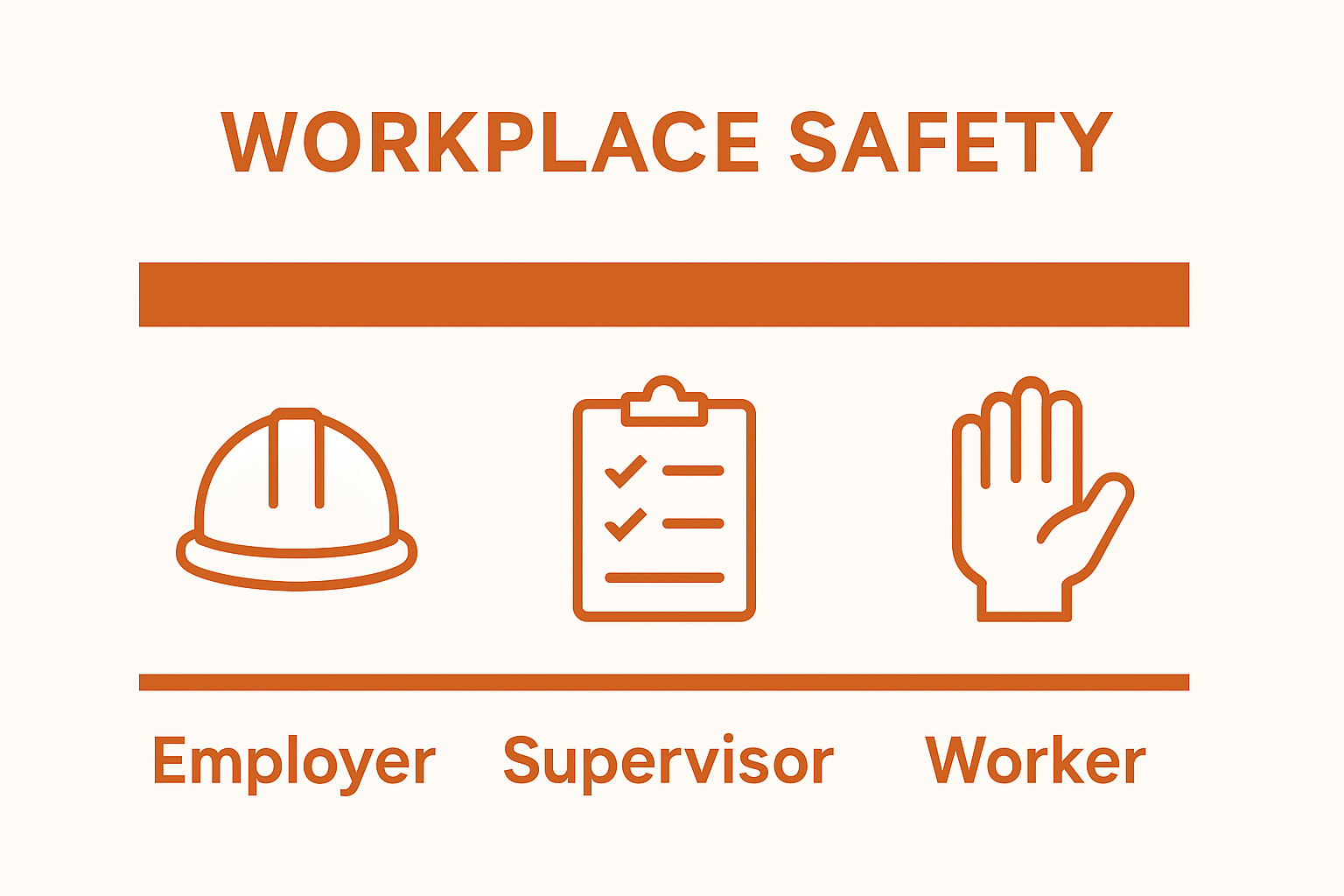
Employers: Develop comprehensive safety policies
Supervisors: Implement safety protocols and monitor compliance
Workers: Follow safety guidelines and report potential hazards
Joint Health and Safety Committees: Conduct regular workplace inspections
These interconnected responsibilities create a collaborative approach to workplace safety, ensuring that protection is not the sole responsibility of any single entity.
To clarify the roles and accountability within Canadian workplace safety, the table below organizes the primary responsibilities assigned to each key stakeholder discussed in the article.
| Role | Main Responsibilities |
| Employers | Develop and implement safety policies, provide comprehensive training, supply necessary protective equipment, and maintain a safe and secure environment. |
| Supervisors | Implement protocols, monitor compliance, and support hazard reporting |
| Workers | Follow guidelines, report hazards, and participate in training |
| Joint Health and Safety Committees | Conduct regular inspections, facilitate safety discussions, and review incidents. |
According to the Canadian Centre for Occupational Health and Safety, workplace safety laws are enforced through multiple strategies. These include:
Regular workplace inspections by authorized government representatives
Mandatory incident reporting and investigation procedures
Potential financial penalties for non-compliance
Workers’ rights to refuse unsafe work without job repercussions
Requirement for ongoing safety training and education
The primary objective of these mechanisms is not punitive but preventative, focusing on creating proactive safety cultures that minimize workplace risks and protect worker well-being. By establishing clear guidelines and accountability, health and safety laws transform workplace protection from a theoretical concept into a practical, actionable system that benefits both employers and employees.
Health and safety regulations in Canada are built upon fundamental principles that prioritize worker protection, risk management, and organizational accountability. Food safety tips for managers highlight how specific safety guidelines translate these broad concepts into practical workplace strategies.
The Canadian health and safety regulatory framework is anchored in several foundational concepts that guide workplace safety across different sectors. These principles ensure a comprehensive and proactive approach to protecting workers and creating safe working environments.
The following table summarizes the core regulatory principles that guide health and safety legislation across Canada, outlining their purpose and how they are applied in the workplace.
| Principle | Description | Application Example |
| Preventative Approach | Focuses on anticipating and mitigating risks | Conducting hazard assessments |
| Shared Responsibility | Spreads safety duties among all workplace parties | Employer and employee collaboration |
| Continuous Improvement | Updates protocols to address new risks and lessons learned | Annual training reviews |
| Comprehensive Protection | Covers physical, psychological, and environmental hazards | Addressing chemical and ergonomic risks |
Key foundational principles include:
Preventative Approach: Prioritizing hazard identification and risk mitigation
Shared Responsibility: Distributing safety accountability across all organizational levels
Continuous Improvement: Regularly updating safety protocols based on emerging risks
Comprehensive Protection: Addressing physical, psychological, and environmental workplace hazards
According to the Canadian Centre for Occupational Health and Safety, effective hazard management is a critical component of workplace safety regulations. This involves systematic processes for identifying, assessing, and controlling potential workplace risks.
Key hazard management strategies encompass:
Comprehensive workplace risk assessments
Implementation of control hierarchies (elimination, substitution, engineering controls)
Mandatory worker training and education
Detailed documentation and reporting mechanisms
Regular review and update of safety protocols
These regulatory concepts transform workplace safety from a passive compliance requirement into an active, dynamic system of protection that adapts to changing workplace environments and emerging risks.
Health and safety laws transcend theoretical frameworks, directly impacting workplace cultures, economic landscapes, and the experiences of individual workers across Canadian industries. The importance of food safety training demonstrates how specific regulatory requirements translate into tangible protection strategies.
These laws fundamentally reshape organizational environments by establishing clear expectations and creating systemic accountability. The real-world impact extends beyond mere compliance, fostering workplace cultures that prioritize human dignity and worker protection.
Key transformative effects include:
Reducing workplace injury rates
Promoting transparent communication between management and employees
Establishing standardized safety protocols
Creating psychological safety in professional environments
Empowering workers to voice potential safety concerns
According to the Canadian Centre for Occupational Health and Safety, health and safety regulations generate significant economic and social benefits. These laws do not merely represent bureaucratic requirements; they serve as critical mechanisms for protecting workers and ensuring organizational sustainability.
Broad societal implications encompass:
Reducing healthcare costs associated with workplace injuries
Minimizing worker compensation claims
Increasing overall workplace productivity
Protecting vulnerable worker populations
Establishing national standards for worker treatment
By creating comprehensive frameworks that balance legal requirements with human-centred approaches, health and safety laws represent a critical mechanism for ensuring workplace fairness, protecting individual rights, and maintaining robust economic productivity across Canadian industries.

Are you concerned about meeting strict health and safety laws in your workplace or school? Struggling with complex compliance requirements or being concerned about staying up-to-date with the latest regulations can be overwhelming. The article emphasizes the importance of workplace safety compliance, staff training, and risk management in preventing legal issues and ensuring the safety of everyone on your site. But without the right tools and resources, ensuring proper workplace safety compliance can quickly become a source of stress and uncertainty.
At Probe It Food Safety.ca, you can get instant access to flexible, government-accredited courses for Food Handler Certification, WHMIS, and more. Public health experts design our courses to help you fulfill all key obligations outlined in Canadian health and safety laws. Take control of your organization’s future. Visit our leading site to get started today and experience the relief that comes with knowing your staff are prepared and your business is compliant.
Health and safety laws in Canada require employers to conduct risk assessments, develop safety training programs, provide personal protective equipment, establish workplace safety committees, and carry out regular safety inspections.
These laws protect workers, students, and stakeholders by preventing workplace injuries, creating accountability, establishing safety protocols, and providing legal mechanisms for addressing safety concerns, all of which promote a safe environment.
The Internal Responsibility System (IRS) is a systematic approach in which all workplace stakeholders share safety accountability, ensuring that employers, supervisors, and workers collaborate to maintain a safe work environment.
Enforcement mechanisms include regular workplace inspections, mandatory incident reporting, potential financial penalties for non-compliance, workers’ rights to refuse unsafe work, and ongoing safety training requirements.
Food Safety Standards in Canada: What Restaurants and Schools Need for 2025 – Probe It Food Safety
Top Food Safety Tips for Managers: 2025 Guide for Canadian Businesses – Probe It Food Safety
Understanding Signage Health and Safety Rules – PromoSigns.co.uk
Understanding Ergonomic Furniture Regulations in South Africa – Bum Seating
Exams are stressful, and the pressure of passing may leave you feeling overwhelmed and nervous that you won’t pass, even

Food safety is essential if you want to ensure safety and establish trust with your customers. Food handlers must be

Practicing good food safety habits is paramount to maintaining a healthy kitchen. Regardless of the size of your hotel business