No products in the cart.

10 Tips for Passing Your Food Handler’s Certificate Exam
Exams are stressful, and the pressure of passing may leave you feeling overwhelmed and nervous that you won’t pass, even


Every time a kitchen knife slices vegetables or a tray passes down the cafeteria line, food contact surfaces quietly become gatekeepers of public health. Most people never guess that contaminated surfaces are linked to about 48 million cases of foodborne illness each year in the US. Surprising as it sounds, wiping a countertop is not nearly enough to break the chain of infection—what actually matters is the material, the maintenance, and knowing which hidden hazards make a clean-looking surface anything but safe.
| Takeaway | Explanation |
|---|---|
| Maintain clean food contact surfaces | Regularly clean and sanitize surfaces to prevent contamination and protect health. |
| Use appropriate materials | Choose durable, non-absorbent materials for surfaces that interact with food. |
| Implement thorough cleaning protocols | Follow a step-by-step process, including pre-cleaning, washing, rinsing, sanitizing, and drying. |
| Stay updated on regulations | Adhere to local food safety regulations and ensure compliance through regular training. |
| Understand microbial risks | Recognize how improper maintenance can lead to foodborne illnesses and other health issues. |
Food contact surfaces are any areas or equipment that directly touch food during preparation, processing, serving, or storage. These surfaces play a critical role in maintaining food safety and preventing potential contamination in hospitality and care settings. Understanding their importance is crucial for any food service professional.
In professional kitchens, restaurants, cafeterias, and care facilities, food contact surfaces include a wide range of items such as cutting boards, countertops, utensils, cooking equipment, storage containers, and food preparation tools. Choosing food-safe materials and maintaining these surfaces is essential to prevent bacterial growth and cross-contamination.
These surfaces can be made from various materials including:
Proper food contact surfaces must meet specific criteria to ensure food safety. According to research from the FDA, these surfaces should be:
By understanding and maintaining appropriate food contact surfaces, food service professionals can significantly reduce the risk of foodborne illnesses and ensure a safe dining experience for their customers.
Food contact surfaces are not just equipment components but critical barriers protecting human health from potential foodborne illnesses. Their significance extends far beyond mere functional utility, serving as the first line of defense in preventing bacterial contamination and ensuring safe food consumption.
Microorganisms can rapidly multiply on improperly maintained surfaces, transforming seemingly clean areas into potential disease vectors. Personal hygiene practices in food preparation areas play a crucial role in mitigating these risks. According to research from the Centers for Disease Control and Prevention, contaminated food contact surfaces are responsible for approximately 48 million cases of foodborne illness annually in the United States.
Key potential health risks include:
Beyond immediate health concerns, inadequate food contact surface management can have significant economic consequences. Restaurants, healthcare facilities, and food service establishments risk substantial financial losses from foodborne illness outbreaks. These can include:
Proper maintenance and understanding of food contact surfaces represent not just a health imperative but a critical business strategy in maintaining safety, trust, and operational integrity.
Food contact surfaces encompass a diverse range of materials and equipment designed to meet stringent safety and hygiene standards across various food service environments. Understanding the specific characteristics and applications of different materials is crucial for maintaining optimal food safety protocols.
Food service professionals must carefully select materials that resist bacterial growth, withstand frequent cleaning, and prevent contamination. Learn more about maintaining kitchen hygiene to complement material selection. According to research from the National Sanitation Foundation, the most prevalent materials include:
Each material offers unique advantages and potential limitations in food service settings. Professionals must consider factors such as:
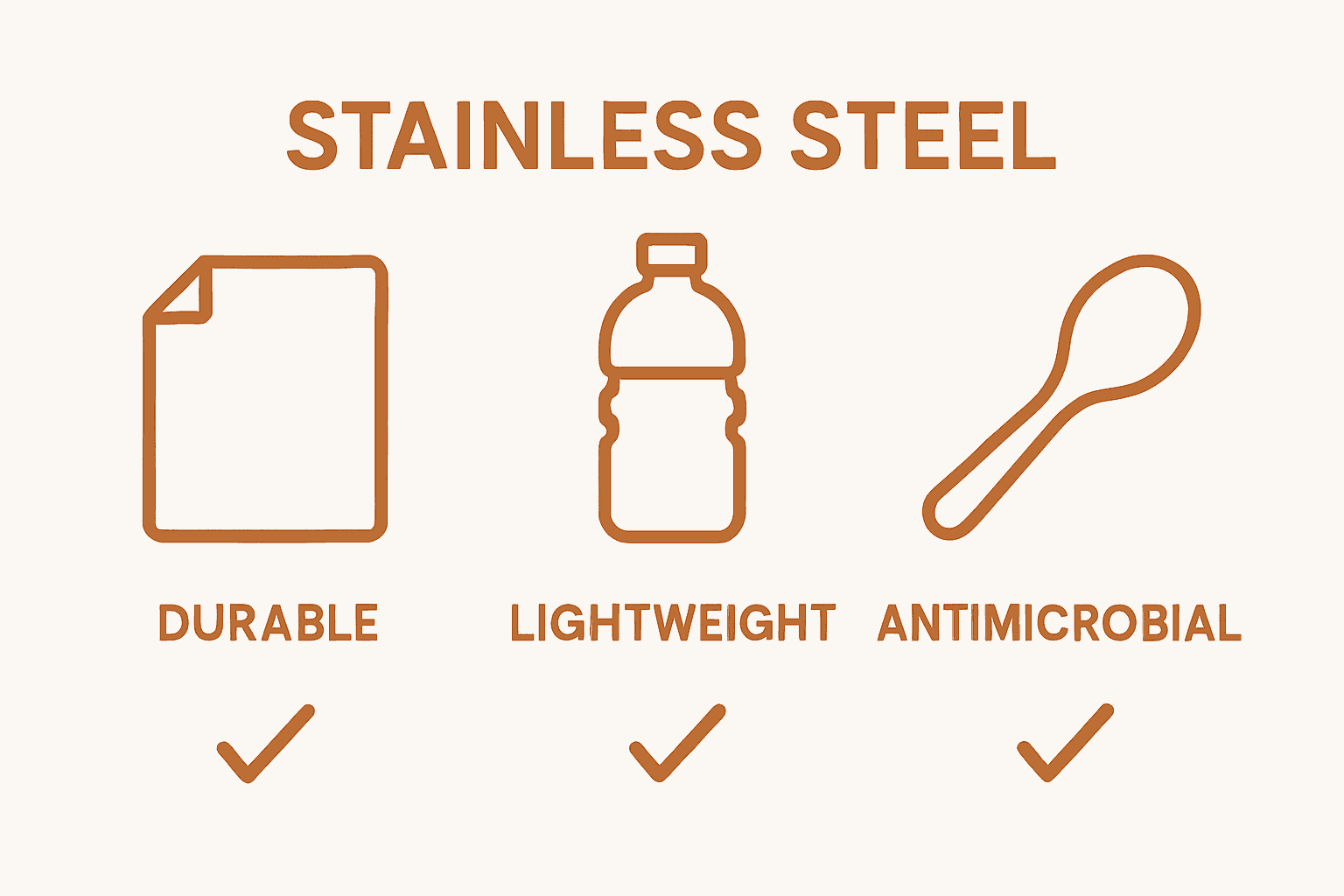
Stainless steel, for instance, remains the gold standard in commercial kitchens due to its exceptional durability and ease of sanitization.
The following table compares the most common materials used for food contact surfaces in hospitality and care settings, highlighting their key advantages and limitations for easier selection and assessment.
| Material | Advantages | Potential Limitations |
|---|---|---|
| Stainless Steel | Highly durable, easy to sanitize, corrosion-resistant | May show scratches, can be expensive |
| High-Density Polyethylene (HDPE) | Non-porous, lightweight, cost-effective | Can degrade with high heat |
| Ceramic | Non-porous, heat-resistant, non-reactive | Can chip or crack if dropped |
| Food-Grade Plastics | Lightweight, versatile, easy to clean | Can stain or scratch over time |
| Wood | Natural antimicrobial properties, traditional appearance | Absorbs moisture, can harbor bacteria if poorly maintained |
 High-density polyethylene provides excellent alternatives for cutting boards and preparation surfaces, offering lightweight and cost-effective solutions without compromising safety standards.
Food contact surface regulations represent a complex framework designed to protect public health by establishing rigorous standards for materials, design, and maintenance in food service environments. These comprehensive guidelines ensure that every surface potentially interacting with food meets stringent safety criteria.
Food safety standards in Canada are governed by multiple agencies, including the Canadian Food Inspection Agency (CFIA) and Health Canada. According to official Canadian government regulations, food contact surfaces must adhere to specific requirements that protect consumer health and prevent potential contamination.
Key regulatory requirements include:
Regulatory bodies employ multiple strategies to ensure compliance, including:
Professionals in food service must stay updated on evolving regulations, understanding that compliance is not just a legal obligation but a critical component of maintaining public health and safety standards.

Effective maintenance of food contact surfaces is a critical component of food safety, requiring systematic approaches that minimize contamination risks and ensure optimal hygiene standards.
Professional food service environments demand meticulous attention to cleaning, sanitization, and preservation of these critical surfaces.
This table outlines the essential steps for effective cleaning and sanitization of food contact surfaces, summarizing the correct order and the main goal of each stage.
| Step | Description | Purpose |
|---|---|---|
| Pre-Cleaning | Remove visible debris and food residues | Prevents buildup and prepares surface |
| Washing | Use appropriate detergents designed for specific surfaces | Removes grease, dirt, and contaminants |
| Rinsing | Eliminate all chemical cleaning agents | Prevents residue from affecting food safety |
| Sanitizing | Apply approved sanitizing solutions | Destroys remaining microorganisms |
| Drying | Ensure complete surface dryness | Prevents bacterial growth due to moisture |
Demonstrating commitment to hygiene and food safety begins with understanding comprehensive cleaning methodologies. According to research from the World Health Organization, effective surface maintenance involves multiple strategic steps:
Different food contact surfaces require tailored maintenance approaches based on their specific characteristics and potential vulnerabilities. Critical considerations include:
Professionals must recognize that proper maintenance is not a one-size-fits-all process but a nuanced approach requiring continuous learning and adaptation to evolving food safety standards.
Are you worried about the hidden risks of unclean or improperly maintained food contact surfaces? After learning how easily bacteria spreads and the importance of regulations in hospitality and care, the next step is to ensure that everyone on your team has the right knowledge to protect guests and patients. Poor surface handling can ruin your reputation, cause financial loss, and put people at risk. Food safety is not just about knowing what to do but also about staying fully compliant and up-to-date with legal requirements.

Now is the best time to take action. Choose Probe It Food Safety.ca for recognized Food Handler Certification that covers the essential food contact surface standards from industry experts. Gain instant proof of your commitment to health and safety. Get certified online, at your own pace, any time of day. Protect what matters most by visiting Probe It Food Safety.ca today and get certified right away.
Food contact surfaces are areas or equipment that directly touch food during preparation, processing, serving, or storage, including items like cutting boards, countertops, and utensils.
Food contact surfaces are critical in preventing foodborne illnesses by reducing the risk of microbial contamination. Proper management of these surfaces helps maintain hygiene and safety in food service settings.
Common materials for food contact surfaces include stainless steel, high-density polyethylene (HDPE), wood, ceramic, and specialized food-grade plastics, each offering unique advantages in terms of durability and hygiene.
Proper maintenance involves several steps: pre-cleaning to remove debris, washing with appropriate detergents, rinsing to remove chemical residues, sanitizing with approved solutions, and ensuring surfaces are completely dry to prevent bacterial growth.
Exams are stressful, and the pressure of passing may leave you feeling overwhelmed and nervous that you won’t pass, even

Food safety is essential if you want to ensure safety and establish trust with your customers. Food handlers must be

Practicing good food safety habits is paramount to maintaining a healthy kitchen. Regardless of the size of your hotel business