No products in the cart.

10 Tips for Passing Your Food Handler’s Certificate Exam
Exams are stressful, and the pressure of passing may leave you feeling overwhelmed and nervous that you won’t pass, even


Emergency food supplies might sound like something only survivalists think about, but the need is a lot closer to home than most expect. Businesses that keep a minimum 72-hour supply of emergency food can safeguard employee health and keep critical operations running even during major disruptions. The real surprise is how these supplies do much more than fill hungry stomachs and actually form a key part of a company’s entire risk management strategy.
| Takeaway | Explanation |
|---|---|
| Maintain a 72-hour supply | Prepare at least 72 hours of food to ensure access to essential nutrients during emergencies. |
| Include non-perishable foods | Focus on long-lasting items that require minimal preparation for quick access during crises. |
| Assess nutritional quality | Evaluate food supplies for balanced nutrition to support workforce health and operational capability. |
| Implement sound inventory management | Develop practices for managing food supplies to ensure accessibility and viability during emergencies. |
| Prepare for various crisis scenarios | Plan for diverse disruptions, ensuring emergency supplies are adaptable to different situations. |
Emergency food supplies are carefully curated collections of non-perishable food items and essential nutrition resources strategically prepared to sustain individuals and businesses during unexpected disruptions or crisis scenarios. The Government of Canada’s Emergency Preparedness Guide recommends maintaining a minimum 72-hour emergency food supply that can support critical nutritional needs during unforeseen events.
The fundamental objective of emergency food supplies is to provide immediate nutritional support when standard food procurement channels become unavailable or severely restricted. These supplies ensure continuous access to calories, proteins, and essential nutrients during scenarios like natural disasters, power outages, transportation disruptions, or unexpected infrastructure breakdowns. By maintaining a robust emergency food inventory, businesses can protect their workforce and maintain operational resilience.
Effective emergency food supplies typically encompass a strategic mix of nutritionally dense, long-lasting food items that meet specific preservation and accessibility criteria. Critical characteristics include:
Typical emergency food supplies for businesses might include canned proteins, dried goods, meal replacement bars, bottled water, and specialized emergency ration packets designed to provide complete nutritional support during challenging circumstances. The goal is creating a resilient food resource that can sustain personnel during short to medium-term disruptions while maintaining basic operational capabilities.
Emergency food supplies represent a critical strategic investment for businesses, serving as a fundamental component of comprehensive risk management and organizational resilience. Emergency preparedness experts at the Government of Canada emphasize that having a robust emergency food supply can significantly mitigate potential operational disruptions and protect employee welfare during unexpected crisis scenarios.
Businesses face numerous potential disruptions that could compromise standard food access and employee nutrition. Natural disasters, severe weather events, infrastructure failures, and pandemic scenarios can rapidly transform routine operations into challenging survival situations. Emergency food supplies ensure that employees remain nourished, hydrated, and capable of maintaining critical operational functions even when external food resources become unavailable. This preparedness directly supports workforce resilience, prevents productivity losses, and demonstrates an organization’s commitment to employee safety.
Comprehensive emergency food supply planning goes beyond simple nutritional considerations. It represents a sophisticated risk management strategy that addresses multiple potential scenarios. Strategic emergency food inventory management helps businesses:
By developing robust inventory management practices, businesses can create flexible, adaptable emergency response frameworks that minimize potential vulnerabilities. This approach transforms emergency preparedness from a theoretical concept into a practical, actionable organizational strategy that directly supports long-term sustainability and workforce protection.
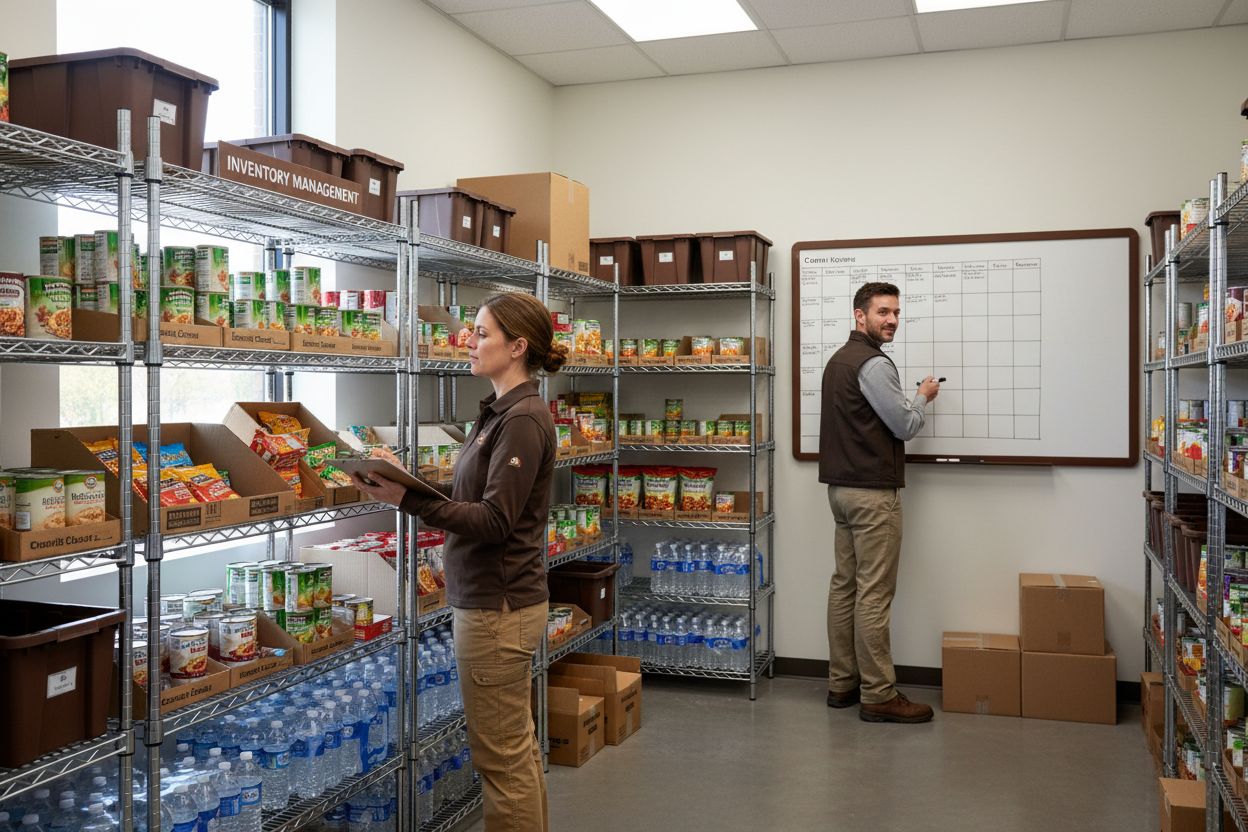
Emergency food supplies encompass a diverse range of nutritional resources designed to meet critical dietary needs during unexpected disruptions. Government preparedness guidelines recommend selecting food items that provide comprehensive nutritional support with minimal preparation requirements and extended storage capabilities.
Businesses can strategically select from multiple categories of emergency food supplies that offer reliable nutrition and extended shelf life. Shelf-stable packaged foods represent a primary emergency food strategy, including items like:
These food types provide critical advantages such as long-term storage stability, compact packaging, and minimal nutritional degradation over extended periods. Understanding best before dates becomes crucial when managing these emergency food inventories to ensure maximum nutritional value and safety.
Beyond traditional packaged foods, businesses can invest in more advanced emergency food supply systems. These specialized solutions include freeze-dried meal kits, professional emergency ration packages, and comprehensive nutrition bundles specifically designed for extended storage and rapid deployment. Advanced emergency food systems often feature:
By carefully selecting diverse emergency food supplies, businesses can create robust nutritional contingency plans that ensure workforce resilience during unexpected operational disruptions.
The following table compares the key features of traditional non-perishable packaged foods with specialized emergency food systems, helping businesses evaluate which options best suit their preparedness needs.
| Type | Shelf Life | Preparation Required | Packaging & Storage | Nutritional Completeness |
|---|---|---|---|---|
| Non-Perishable Packaged Food | 1-2 years | Minimal (ready to eat) | Compact, standard shelf storage | Varies (may require planning) |
| Specialized Emergency Systems | 5-25 years | Minimal (just add water) | Vacuum-sealed, lightweight, compact | Complete, daily requirements |

Emergency food supplies serve as a critical lifeline during unexpected disruptions, providing essential nutritional support when standard food procurement channels become compromised. The Government of Canada’s Emergency Preparedness Guidelines emphasize the importance of strategic food resource management during crisis scenarios that can rapidly transform normal operational environments.
When a crisis emerges, emergency food supplies function through a structured activation process designed to ensure rapid, efficient nutritional support. Immediate deployment protocols enable businesses to quickly transition from standard food access to emergency nutrition resources. This system involves:
The activation process focuses on maintaining workforce stability and preventing productivity losses by ensuring consistent access to essential nutrients during challenging circumstances.
Emergency food supplies operate as more than simple sustenance resources. They represent sophisticated nutritional continuity systems engineered to support human physiological requirements under extreme conditions. These supplies are strategically designed to:
By implementing comprehensive food safety protocols, businesses can ensure that emergency food supplies not only provide basic nutrition but also maintain rigorous safety standards during crisis management scenarios.
Selecting appropriate emergency food supplies requires strategic planning and comprehensive evaluation of multiple critical factors. Government emergency preparedness experts emphasize the importance of a methodical approach to building robust nutritional contingency resources that can sustain workforce resilience during unexpected disruptions.
Strategic emergency food selection demands a holistic assessment of nutritional requirements that extend beyond basic caloric intake. Businesses must evaluate food supplies based on their ability to provide comprehensive nutritional support, considering factors such as:
Nutritional quality becomes paramount in ensuring that emergency food supplies do not merely prevent hunger but actively support workforce health and operational capabilities during challenging circumstances.
Beyond nutritional considerations, businesses must thoroughly assess the practical dimensions of emergency food supply management. Critical evaluation criteria include:
By implementing robust inventory management practices, organizations can develop emergency food supply systems that remain viable, accessible, and strategically positioned for rapid deployment during crisis scenarios. The goal is creating a flexible, adaptive nutritional resource that can withstand unpredictable operational challenges while maintaining consistent quality and safety standards.
This table summarizes the critical factors businesses should consider when selecting emergency food supplies, making it easier to prioritize features during planning.
| Consideration | Explanation |
|---|---|
| Nutritional Completeness | Ensures support for health and operational capability |
| Shelf Life | Maximizes supply viability and reduces waste |
| Storage Requirements | Impacts space, climate control, and accessibility |
| Packaging Durability | Protects against spoilage and environmental degradation |
| Inventory Management | Facilitates rotation, tracking, and rapid deployment |
Unexpected emergencies put tremendous pressure on your business. As discussed in our article, gaps in emergency food supply planning can disrupt operations and put your team at risk. When nutritional continuity and crisis readiness are on the line, your business needs to go beyond just food storage—you also need compliance, confidence, and expert-trained staff. If you want to safeguard workforce resilience and ensure food safety during those critical moments, reliable training is not optional.

Make sure your team is fully prepared for any crisis. Explore the accredited food safety courses from Probe It Food Safety.ca for practical training in Food Handler Certification and more, all designed by public health experts. Get instant certification, 24/7 access, and guidance for handling food safely—especially when it matters most. Take action for your business now at Probe It Food Safety.ca and strengthen your emergency preparedness while meeting government standards.
Emergency food supplies are collections of non-perishable food items designed to provide nutrition during unexpected disruptions, such as natural disasters or infrastructure failures. They ensure access to essential nutrients when standard food sources become unavailable.
An effective emergency food supply should include non-perishable items with an extended shelf life, minimal preparation requirements, and a balanced nutritional profile. Common items include canned proteins, dried grains, meal replacement bars, and bottled water.
Emergency food supplies help maintain workforce continuity by ensuring employees have access to nourishment, hydration, and essential nutrients, even when external food sources are compromised. This preparedness prevents productivity losses and supports employee safety during disruptions.
When selecting emergency food supplies, businesses should consider nutritional comprehensiveness, shelf life, storage requirements, packaging durability, and ease of inventory management. It’s essential to ensure that the chosen items provide complete nutritional support and can be efficiently stored and deployed during a crisis.
Exams are stressful, and the pressure of passing may leave you feeling overwhelmed and nervous that you won’t pass, even

Food safety is essential if you want to ensure safety and establish trust with your customers. Food handlers must be

Practicing good food safety habits is paramount to maintaining a healthy kitchen. Regardless of the size of your hotel business