No products in the cart.

10 Tips for Passing Your Food Handler’s Certificate Exam
Exams are stressful, and the pressure of passing may leave you feeling overwhelmed and nervous that you won’t pass, even


Balancing food safety with the excitement of outdoor meals can challenge even experienced catering managers in Canadian schools and daycare centres. Outdoor settings bring unique risks, from unpredictable weather to pests and surface contaminants, making assessing the outdoor space an essential first step. This guide delivers practical steps for creating clean, compliant environments that protect children’s well-being and satisfy health regulations, so you can confidently serve meals under the open sky.
| Key Point | Explanation |
|---|---|
| 1. Assess Outdoor Space Safely | Conduct a thorough evaluation of outdoor areas to identify potential safety hazards before food service. |
| 2. Organize Sanitized Equipment | Implement strict sanitization protocols to keep cooking tools and utensils clean and prevent contamination. |
| 3. Control Food Temperatures | Use insulated containers and monitor food temperatures to ensure safety during transportation and service. |
| 4. Designate Serving Areas | Create specific zones for serving food to minimize cross-contamination and maintain cleanliness. |
| 5. Verify Health Compliance | Regularly review documentation and practices to ensure adherence to health regulations and food safety standards. |
When preparing to serve food in outdoor settings at schools and daycare facilities, your first priority is thoroughly evaluating the physical environment to ensure safety and compliance. Assessing the outdoor space requires a systematic approach that considers multiple critical factors affecting food service and child well-being.
Start by examining the child care outdoor space guidelines to understand key safety requirements. Your assessment should include:
Careful inspection helps prevent potential health risks and ensures a secure environment for food preparation and consumption. Pay special attention to surface materials, ensuring they are:
Maintaining a clean, well-designed outdoor space is fundamental to safe food service in educational settings.
These initial observations will guide your subsequent food service planning and help you create a safe, hygienic outdoor dining environment for children.
Here’s how key safety aspects differ between indoor and outdoor food service environments:
| Safety Aspect | Indoor Food Service | Outdoor Food Service |
|---|---|---|
| Surface Cleaning | Regular mopping and wiping | Requires debris removal and rinsing |
| Environmental Hazards | Controlled climate, fewer vectors | Weather and pests, more variability |
| Fencing/Barriers | Permanent physical boundaries | Portable or natural fencing options |
| Waste Management | Designated bins, enclosed space | Temporary bins, increased monitoring |
| Supervision Needs | Consistent staff presence | Extra vigilance and rotating checks |
Pro tip: Conduct a comprehensive walkthrough during different times of day to understand how environmental conditions might impact food safety and service.
Preparing for safe outdoor food service requires meticulous attention to equipment sanitization and strategic organization. Proper equipment management is critical to preventing contamination and ensuring food safety in schools and daycare settings.
Following the cleaning and sanitation guidelines from the Canadian Food Inspection Agency, your sanitization process should be comprehensive and systematic. Here are the key steps for organizing your sanitized equipment:
Ensure your sanitization method involves:
Consistent and thorough sanitization protects children from potential foodborne illnesses.
Careful organization of sanitized equipment prevents cross-contamination and maintains a hygienic outdoor food service environment.
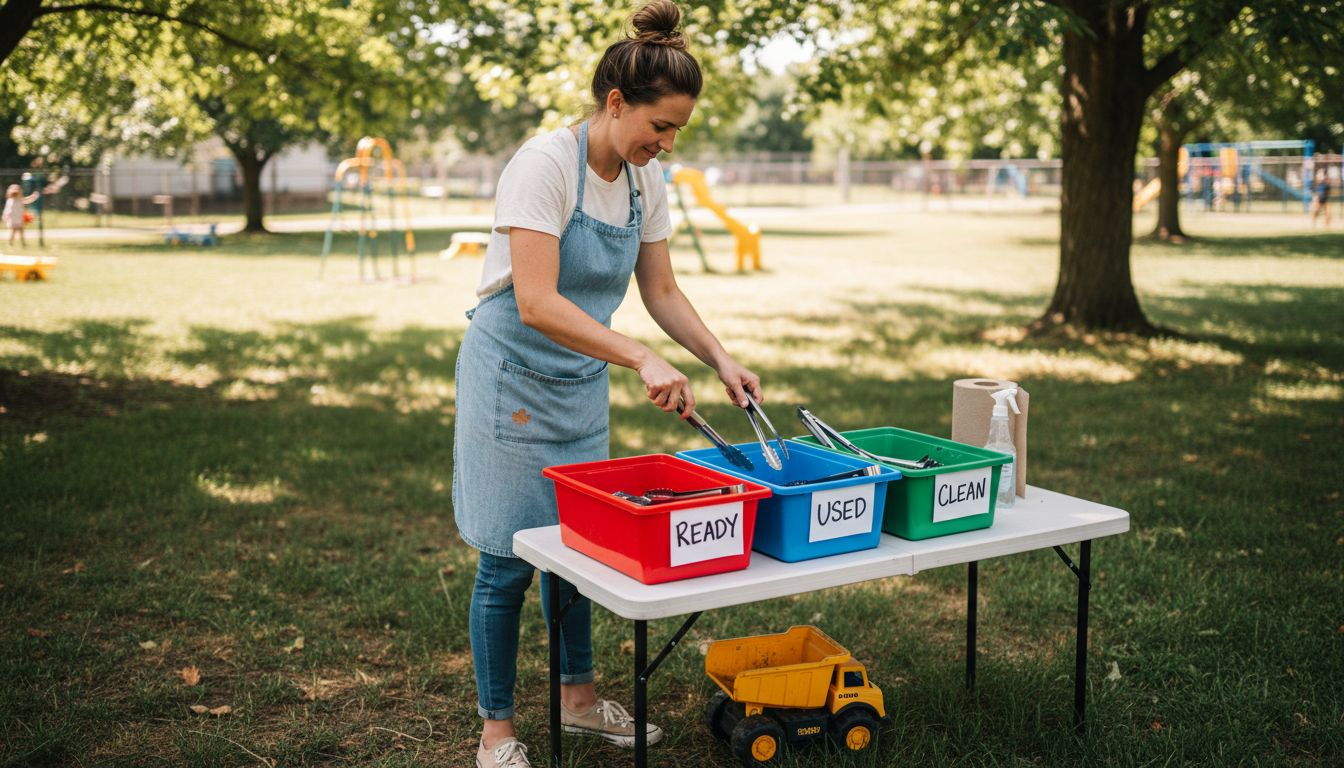
Pro tip: Create a colour-coded system for utensils and equipment to streamline sanitization and prevent accidental mixing of clean and dirty items.
Maintaining proper food temperature is critical when serving meals outdoors in schools and daycares. Safe food transportation requires strategic planning and precise temperature management to prevent foodborne illness risks.
Following the food safety guidelines for child care settings, your preparation and transportation process should address several key temperature control strategies:
Your temperature control process should include:
Keep hot foods above 60°C and cold foods below 4°C to prevent bacterial growth.
Careful temperature management protects children’s health and ensures food remains safe during outdoor service.
See how sanitization and temperature control strategies complement each other for safe food handling:
| Strategy | Benefit for Food Safety | Typical Tools Used |
|---|---|---|
| Equipment Sanitization | Minimises cross-contamination | Cleaning racks, sanitisers |
| Temperature Control | Prevents bacterial growth | Insulated containers, thermometers |
| Colour Coding | Simplifies compliance checks | Coloured markers, labelled bins |
| Record Keeping | Tracks compliance and incidents | Temperature logs, digital checklists |
Pro tip: Invest in digital food thermometers with alarm functions to instantly alert you when foods approach unsafe temperature ranges.
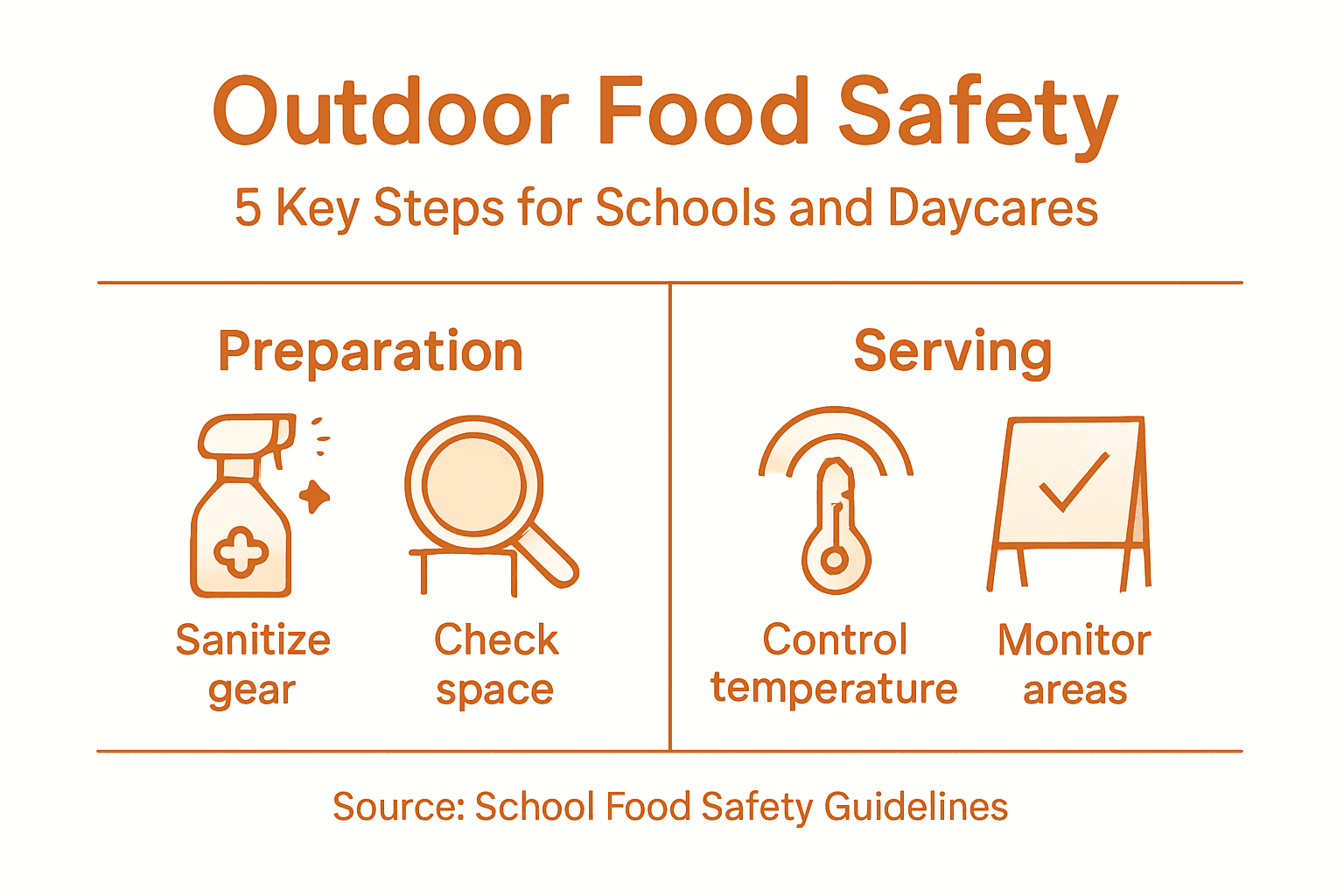
Creating a safe and hygienic outdoor food service environment requires strategic planning and continuous monitoring. Designated serving areas are critical for preventing cross-contamination and maintaining food safety standards in schools and daycare settings.
Following the food service guidelines for child care facilities, establish a clear and controlled serving space with specific cleanliness protocols:
Your serving area setup should include:
A well-designed serving area minimizes contamination risks and supports safe food distribution.
Consistent supervision and proactive cleaning are essential to maintaining a sanitary outdoor food service environment.
Pro tip: Develop a colour-coded cleaning checklist to ensure systematic and thorough area sanitization throughout the meal service.
Ensuring food safety compliance requires meticulous documentation and proactive adherence to established health standards. Regulatory verification is a critical process that protects children’s health in outdoor food service environments.
Following the food safety standards and guidelines, your compliance verification should encompass multiple key areas:
Your comprehensive compliance verification process should include:
Consistent documentation and proactive monitoring are fundamental to maintaining regulatory compliance.
Careful attention to detail and systematic tracking will help you successfully navigate health regulation requirements in outdoor food service settings.
Pro tip: Create a digital compliance checklist with automated reminders to streamline your documentation and reduce the risk of overlooking critical verification steps.
Serving food safely outdoors in schools and daycare centres comes with unique challenges like maintaining temperature control and preventing cross-contamination. Key issues such as proper equipment sanitization, designated serving areas, and compliance with health regulations demand detailed knowledge and vigilant practices. If you want to confidently address these critical points and protect the health of children in your care, gaining certified food safety expertise is essential.

Take the next step with Probe It Food Safety.ca, a trusted Canadian platform offering government-accredited, self-paced food safety courses designed by public health experts. Our flexible training ensures you learn how to manage outdoor food service risks effectively, including food handling, sanitization, and regulatory compliance. Start today and receive instant certification to demonstrate your commitment to providing a safe dining environment.
Explore our courses at Probe It Food Safety.ca now and transform your outdoor food service into a model of safety and confidence.
Start by examining the ground surface conditions, checking for potential contamination sources, and ensuring there is adequate shade and shelter. Conduct a thorough walkthrough during different times of the day to identify any environmental factors that may affect food safety.
Collect all food service utensils and clean them thoroughly. Then, use designated cleaning and sanitizing areas, applying food-safe sanitizer before air drying to prevent contamination.
Use insulated containers to keep hot foods above 60°C and cold foods below 4°C. Monitor food temperatures continuously during transport and check them before serving to mitigate the risk of foodborne illness.
Establish clear serving zones that separate food preparation from play areas, and make sure to install handwashing stations nearby. Use washable surfaces and implement immediate cleanup procedures for spills to maintain cleanliness.
Review all documentation related to food safety, conduct internal audits, and maintain accurate records of temperature logs and cleaning protocols. Implement a routine schedule for compliance checks to stay proactive about health regulation standards.
Immediately address the risk by removing any contaminated items and cleaning the affected area thoroughly. Implement a monitoring process to ensure similar risks are promptly managed in the future.
Exams are stressful, and the pressure of passing may leave you feeling overwhelmed and nervous that you won’t pass, even

Food safety is essential if you want to ensure safety and establish trust with your customers. Food handlers must be

Practicing good food safety habits is paramount to maintaining a healthy kitchen. Regardless of the size of your hotel business