No products in the cart.

10 Tips for Passing Your Food Handler’s Certificate Exam
Exams are stressful, and the pressure of passing may leave you feeling overwhelmed and nervous that you won’t pass, even


Over 90 percent of Canadian restaurant inspections cite sanitation as a key compliance issue. Cleanliness is not just about appearances in the food service industry, it directly impacts customer safety and business reputation. Understanding how sanitizers work and what Canadian regulations require can make the difference between passing inspections and facing costly closures. Discover how choosing the right sanitizer and applying it properly can help Canadian restaurants maintain the highest standards of hygiene and safety.
| Point | Details |
|---|---|
| Sanitizer Types | Canadian restaurants commonly use chlorine-based, quaternary ammonium, and iodine-based sanitizers, each with unique strengths and ideal applications. |
| Effective Application | Proper sanitizer effectiveness relies on correct concentration, contact time, and thorough surface preparation prior to application. |
| Regulatory Compliance | Adhering to Health Canada standards requires maintaining documentation of sanitization processes and verifying chemical safety data. |
| Common Mistakes | Avoiding common pitfalls, such as inadequate surface preparation and improper concentration, is crucial for ensuring food safety and hygiene. |
Sanitizers are specialized chemical agents designed to reduce microorganisms on food contact surfaces, playing a critical role in maintaining restaurant hygiene and public health safety. Sanitizers in food premises are specifically engineered to minimize microbial populations without necessarily eliminating them entirely, creating an essential layer of protection in commercial food preparation environments.
In Canadian food service settings, sanitization represents a structured process that goes beyond basic cleaning. Sanitizing agents work by chemically reducing microorganism levels to standards considered safe from a public health perspective. According to Canadian food safety regulations, these agents are typically applied after thorough surface cleaning, targeting residual microbes that could potentially contaminate food preparation areas.
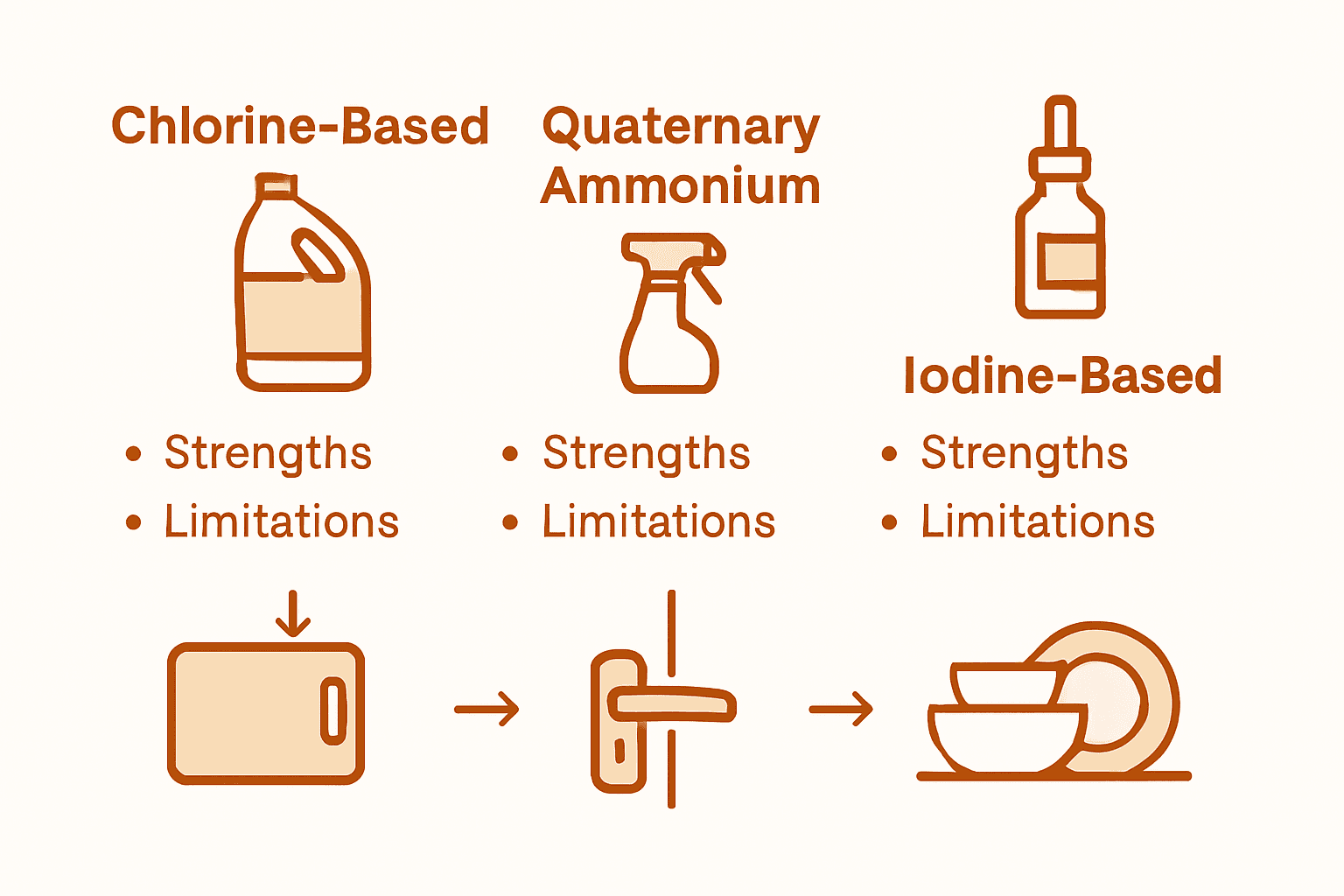
Restaurant sanitizers generally fall into three primary categories: chlorine-based, quaternary ammonium, and iodine-based solutions. Each type offers unique advantages and is selected based on specific kitchen requirements, surface materials, and food safety protocols. Chlorine solutions remain popular for their broad-spectrum antimicrobial properties, while quaternary ammonium compounds provide longer-lasting surface protection. Iodine-based sanitizers excel in environments requiring rapid microbial reduction with minimal residual effects.
Pro Tip: Sanitizer Selection: Always match your sanitizer to your specific kitchen surface and food preparation needs, ensuring compatibility with materials and maintaining appropriate concentration levels for maximum effectiveness.
Chemical sanitizers play a pivotal role in restaurant hygiene, with three primary types commonly used in Canadian food premises: chlorine-based, quaternary ammonium, and iodine-based solutions. Each sanitizer type offers distinct characteristics, effectiveness levels, and application protocols that make them suitable for specific food preparation environments.
Chlorine-based sanitizers represent the most traditional and widely used option in commercial kitchens. These solutions typically contain sodium hypochlorite and provide rapid microbial reduction across multiple surface types. According to food safety guidelines, their effectiveness depends on precise concentration management and contact time with surfaces. Quaternary ammonium compounds, often called “quats,” offer longer-lasting antimicrobial protection and work exceptionally well on non-porous surfaces like stainless steel equipment and countertops.
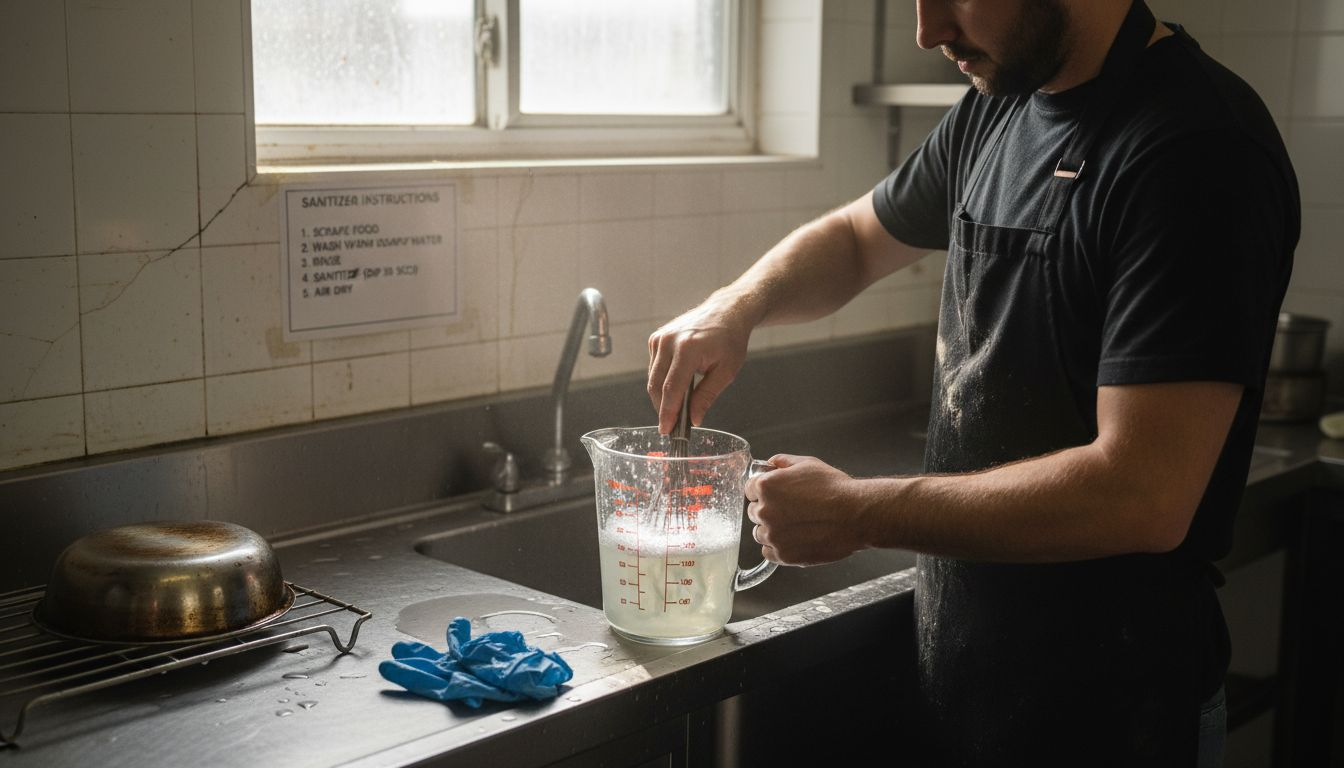
Iodine-based sanitizers distinguish themselves through rapid action and minimal residual effects, making them ideal for environments requiring quick microbial control without potential chemical buildup. These solutions are particularly effective on light-coloured surfaces and provide excellent broad-spectrum antimicrobial performance. The selection between these sanitizer types depends on multiple factors including surface material, food preparation context, regulatory requirements, and specific kitchen hygiene protocols.
Here’s a comparison of the three main sanitizer types used in Canadian restaurants:
| Sanitizer Type | Strengths | Limitations | Ideal Applications |
|---|---|---|---|
| Chlorine-based | Rapid microbial reduction | Corrosive to metals at high doses | General surfaces, cutting boards |
| Quaternary ammonium | Long-lasting surface protection | Less effective on porous surfaces | Stainless steel, countertops |
| Iodine-based | Fast action, minimal residue | Can stain light surfaces | Light-coloured, rapid turnover areas |
Pro Tip: Sanitizer Concentration: Always use calibrated measuring tools to ensure precise sanitizer dilution, as incorrect concentrations can compromise both cleaning effectiveness and potential food safety risks.
Sanitizers operate through a precise scientific process that requires meticulous application to ensure maximum microbial reduction. Effective sanitization in restaurants involves a strategic multi-step approach, beginning with thorough surface cleaning to remove visible debris and organic matter that could interfere with the sanitizer’s performance.
The effectiveness of chemical sanitizers depends on three critical factors: concentration, contact time, and surface preparation. Restaurant sanitation protocols mandate specific procedures that ensure optimal microbial reduction. This involves carefully mixing sanitizer solutions to the recommended concentration, typically verified through test strips that measure chemical strength. Different sanitizer types require unique contact times, ranging from 30 seconds to several minutes, during which the chemical must remain undisturbed on the surface to effectively eliminate potential pathogens.
Microorganism elimination occurs through chemical disruption of cellular structures. Sanitizers penetrate microbial cell walls, destroying essential proteins and metabolic processes, thereby rendering bacteria, viruses, and other microorganisms non-viable. The molecular mechanisms vary depending on the sanitizer type, with chlorine-based solutions oxidizing cellular components, quaternary ammonium compounds disrupting protein structures, and iodine-based solutions denaturing critical enzymatic functions.
Pro Tip: Sanitizer Verification: Regularly use calibrated test strips to confirm sanitizer concentration and maintain a log documenting each sanitization process, ensuring consistent and reliable food safety standards.
Food safety regulations in Canada represent a comprehensive framework designed to protect public health through rigorous oversight of chemical sanitizers used in food service environments. Health Canada regulates incidental additives, including sanitizers, ensuring that every chemical product used in food processing meets stringent safety standards outlined in the Food and Drugs Act.
The regulatory approach involves multiple layers of compliance and evaluation. Restaurant owners and food service professionals must navigate a complex landscape of requirements that mandate detailed documentation, product testing, and continuous monitoring of sanitization practices. Health Canada is actively working to harmonize biocide and sanitizer regulations, aiming to create consistent safety standards that protect consumers across different food preparation environments. This includes comprehensive assessments of chemical composition, potential interaction with food surfaces, and long-term health implications.
Key regulatory considerations include comprehensive testing protocols that evaluate sanitizer effectiveness, potential toxicological risks, and environmental impact. Manufacturers must provide extensive documentation demonstrating their products’ safety, including detailed chemical analysis, microbial reduction capabilities, and potential residual effects. Restaurants must maintain strict documentation of their sanitization processes, including product selection, concentration levels, application methods, and periodic verification of antimicrobial effectiveness.
Pro Tip: Regulatory Compliance: Maintain a dedicated compliance folder with current sanitizer safety data sheets, manufacturer certifications, and internal usage logs to demonstrate proactive adherence to Health Canada standards during potential inspections.
Sanitizer effectiveness depends critically on avoiding common mistakes that can compromise food safety and hygiene standards. Cross-contamination risks emerge when restaurants fail to implement systematic sanitization protocols, with staff often underestimating the complexity of proper chemical application and surface treatment.
Food safety guidelines recommend comprehensive equipment sanitization protocols that extend beyond simple surface wiping. Critical mistakes include inadequate surface preparation, incorrect sanitizer concentration, insufficient contact time, and neglecting specific equipment like meat slicers. Restaurants must disassemble equipment, thoroughly clean with detergent, rinse completely, apply sanitizer at precise concentrations, and allow proper air drying to prevent bacterial growth.
Personal protective equipment plays a crucial role in safe sanitizer handling. Staff must wear appropriate gloves, eye protection, and respiratory gear when mixing or applying chemical sanitizers. Improper chemical storage, mixing incompatible sanitizer types, and failing to maintain material safety data sheets represent significant operational risks. Temperature, humidity, and surface material can dramatically impact sanitizer effectiveness, requiring staff to understand nuanced application techniques specific to different environments and equipment types.
Pro Tip: Safety Protocol: Develop a comprehensive staff training program that includes hands-on demonstrations of proper sanitizer mixing, application techniques, and emergency response procedures to mitigate potential chemical handling risks.
This table summarizes essential best practices for restaurant sanitizer use:
| Practice | Why It Matters | Recommended Approach |
|---|---|---|
| Surface pre-cleaning | Improves sanitizer effectiveness | Remove debris before sanitization |
| Test strip verification | Ensures correct concentration | Test every new batch prepared |
| Documentation & logging | Aids regulatory compliance | Record concentrations, dates, staff |
| PPE during handling | Protects employee health | Use gloves and eye protection |
Choosing the right sanitizers and applying them correctly are crucial steps for Canadian restaurants to maintain safe dining environments. This article highlights challenges such as matching sanitizer types to surfaces, ensuring proper concentration, and following strict health regulations. If you want to confidently implement safe sanitizing protocols and avoid common mistakes like incorrect dilution or inadequate contact time, enhancing your food safety knowledge is essential.

Take control of your restaurant’s food safety by enrolling in the government-accredited Food Handler Certification at Probe It Food Safety.ca. Our flexible, self-paced courses are designed by public health experts to help you understand vital concepts like sanitizer types, concentration verification, and regulatory compliance. Start your training now to protect your customers and meet Health Canada standards with confidence. Visit Probe It Food Safety.ca today and earn your certification instantly.
The main types of sanitizers used in restaurants include chlorine-based solutions, quaternary ammonium compounds, and iodine-based solutions. Each type has unique properties and applications suited for different surfaces and food preparation environments.
To choose the right sanitizer, consider the specific surfaces you are sanitizing, the type of food being prepared, and the recommended application protocols for each sanitizer type. Ensure compatibility with your materials and maintain the appropriate concentration for effectiveness.
The effectiveness of sanitizers is influenced by factors such as concentration, contact time with surfaces, and the thoroughness of surface cleaning prior to sanitization. Proper dilution and application techniques are essential for achieving optimal microbial reduction.
To ensure adherence to sanitizer protocols, implement a comprehensive training program that covers proper mixing, application techniques, and safety practices. Regular documentation of sanitization processes and verification of sanitizer effectiveness can help maintain high food safety standards.
Exams are stressful, and the pressure of passing may leave you feeling overwhelmed and nervous that you won’t pass, even

Food safety is essential if you want to ensure safety and establish trust with your customers. Food handlers must be

Practicing good food safety habits is paramount to maintaining a healthy kitchen. Regardless of the size of your hotel business