No products in the cart.

10 Tips for Passing Your Food Handler’s Certificate Exam
Exams are stressful, and the pressure of passing may leave you feeling overwhelmed and nervous that you won’t pass, even


Safe cooking temperatures decide more than just how your steak turns out. Every year, up to 4 million Canadians get sick from food contaminated by bacteria multiplying in the ‘danger zone’ between 4°C and 60°C. Sounds extreme, right? Most people worry about undercooked meat, but the real trouble starts when food is held at the wrong temperature for too long. Hidden risks lurk in everyday kitchen habits, and knowing the latest guidelines could save your next meal—and your health.
| Takeaway | Explanation |
| Maintain safe food temperatures | Keep hot foods above 60°C and cold foods below 4°C to prevent bacterial growth. |
| Know critical cooking temperatures. | Ensure meats and fish reach specific internal temperatures to effectively eliminate pathogens. |
| Use reliable thermometers | Rely on digital thermometers for accurate temperature readings during food preparation and storage. |
| Implement ongoing training | Regular training sessions reinforce the importance of food temperature safety among staff. |
| Monitor and document temperatures. | Keep logs of food temperatures to ensure compliance and identify areas for improvement. |
Understanding safe food temperatures is crucial for preventing foodborne illnesses and protecting public health. Food safety is not just about cooking food thoroughly; it also involves maintaining precise temperature control throughout food preparation, storage, and serving.
Bacterial growth accelerates rapidly in what food safety experts call the “temperature danger zone.” According to Health Canada, this danger zone ranges between 4°C and 60°C (40°F to 140°F). In this temperature range, harmful bacteria can multiply quickly, potentially causing serious foodborne illnesses.
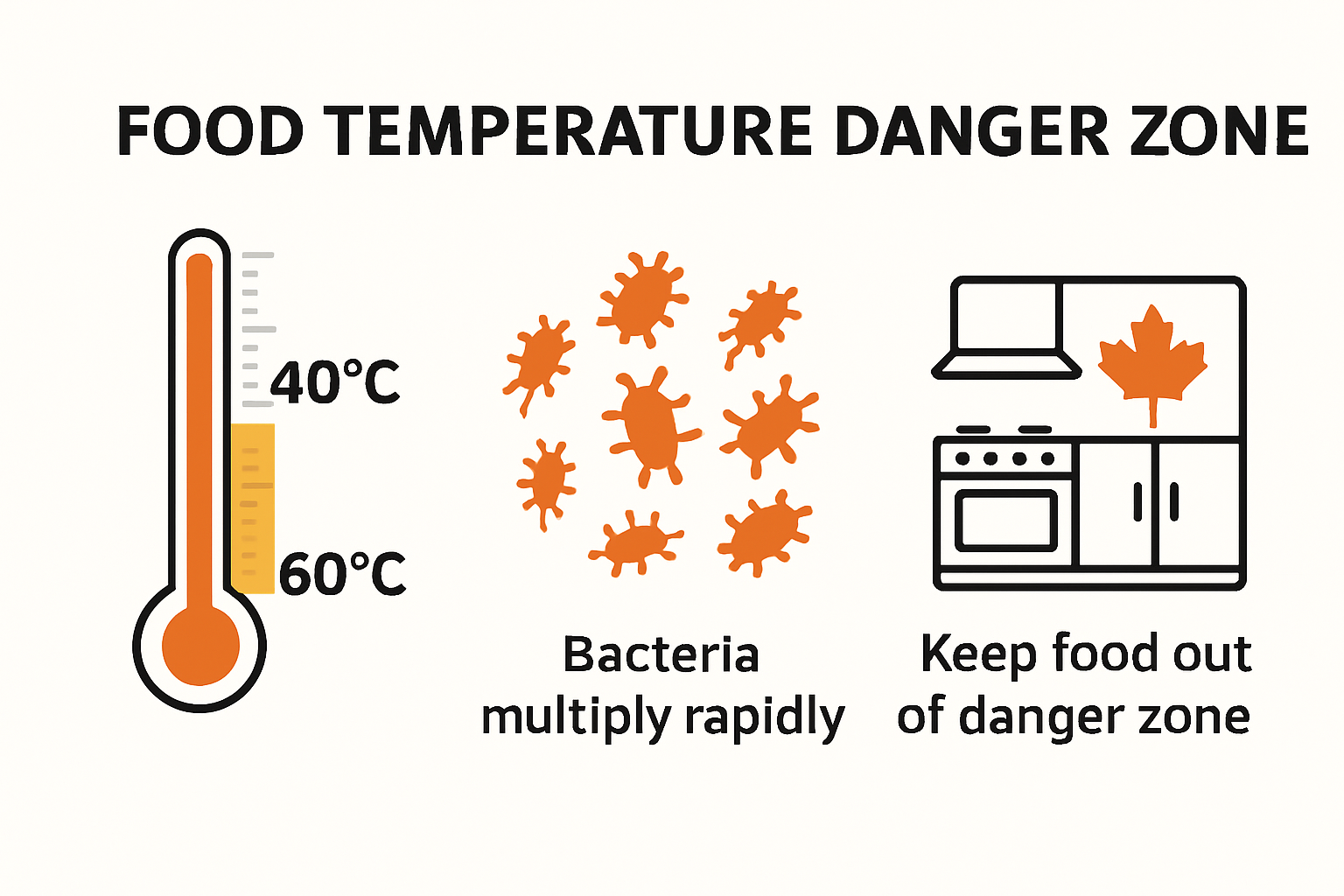
Within this range, bacteria can double in number in as little as 20 minutes. This rapid multiplication means that foods left in the danger zone for extended periods become significant health risks. Restaurants, catering services, and home kitchens must be vigilant about monitoring and controlling food temperatures to prevent bacterial growth.
Achieving the right internal food temperature is essential for killing harmful pathogens. The Public Health Agency of Canada provides specific guidelines for safe internal cooking temperatures across different food categories:
Ground Meat: Must reach 71°C (160°F) to eliminate potential bacteria
Poultry Pieces: Require a minimum internal temperature of 74°C (165°F)
Whole Poultry: Should be cooked to 85°C (185°F)
Beef, Pork, Lamb Steaks and Roasts: Recommended internal temperature of 63°C (145°F)
Fish: Must reach 70°C (158°F)
Using a reliable food thermometer is the most accurate way to confirm these temperatures. Digital instant-read thermometers provide quick and precise measurements, ensuring food safety across various cooking methods.
To help you quickly reference the recommended internal cooking temperatures for various foods, the following table organizes these guidelines in one place.
| Food Type | Minimum Internal Temperature |
| Ground Meat | 71°C (160°F) |
| Poultry Pieces | 74°C (165°F) |
| Whole Poultry | 85°C (185°F) |
| Beef, Pork, Lamb Steaks and Roasts | 63°C (145°F) |
| Fish | 70°C (158°F) |
Effective temperature management extends beyond cooking. Canada’s Food Guide recommends several key strategies:
Keep cold foods at or below 4°C (40°F)
Maintain hot foods at or above 60°C (140°F)
Use separate cutting boards for raw meats and vegetables to prevent cross-contamination
Cool hot foods rapidly and refrigerate within two hours
Reheat leftovers to at least 74°C (165°F)
By understanding and implementing these safe food temperature principles, food handlers can significantly reduce the risk of foodborne illnesses. Proper temperature control is a critical component of food safety that protects consumers and maintains the highest standards of culinary hygiene.
Food safety is paramount in high-risk environments like restaurants and daycares, where large numbers of people are served meals daily. These settings require stringent temperature-control protocols to prevent foodborne illness and protect vulnerable populations.
According to the USDA Food Safety and Inspection Service, maintaining precise food temperatures is critical for preventing bacterial growth. In restaurants and daycares, hot foods must be kept at or above 60°C (140°F), while cold foods must be kept at or below 4°C (40°F).
Hot-holding equipment such as steam tables, warming trays, and heat lamps must consistently maintain temperatures above 60°C. Similarly, refrigeration units should be consistently monitored to ensure cold foods remain below 4°C. Digital thermometers and regular temperature logging are essential practices for maintaining these critical temperature ranges.
The New York State Department of Health provides comprehensive guidelines that are equally applicable to Canadian food service environments. Different food types require specific internal cooking temperatures:
Poultry: Minimum internal temperature of 74°C (165°F)
Ground Meats: Must reach 71°C (160°F)
Beef, Pork, Veal, Lamb Steaks and Roasts: 63°C (145°F) with a three-minute rest time
Fish: Minimum 70°C (158°F)
Reheated Leftovers: Must reach 74°C (165°F)
In daycare settings, extra caution is necessary when preparing meals for young children. Staff must be thoroughly trained in food temperature protocols and use calibrated thermometers to verify food safety.
For easy comparison of internal cooking and serving temperature requirements in food service environments, see the table below.
| Food Category | Minimum Internal Temp | Special Notes |
| Poultry | 74°C (165°F) | |
| Ground Meats | 71°C (160°F) | |
| Beef, Pork, Veal, Lamb Steaks and Roasts | 63°C (145°F) | 3-minute rest time |
| Fish | 70°C (158°F) | |
| Reheated Leftovers | 74°C (165°F) |
The University of Minnesota Extension emphasizes that Time/Temperature Control for Safety (TCS) foods should not remain in the danger zone between 4°C and 60°C (40°F to 140°F) for more than four hours. This guideline is crucial for restaurants and daycares.
Implementing effective temperature control strategies involves:
Regular equipment maintenance and calibration
Staff training on temperature monitoring
Using digital thermometers with instant read capabilities
Developing clear documentation and tracking systems
Creating standardized cooling and reheating procedures
Learn more about preventing foodborne illness in food service settings. By adhering to these rigorous temperature guidelines, restaurants and daycares can significantly reduce the risk of foodborne illness and ensure the safety of their clients and children.
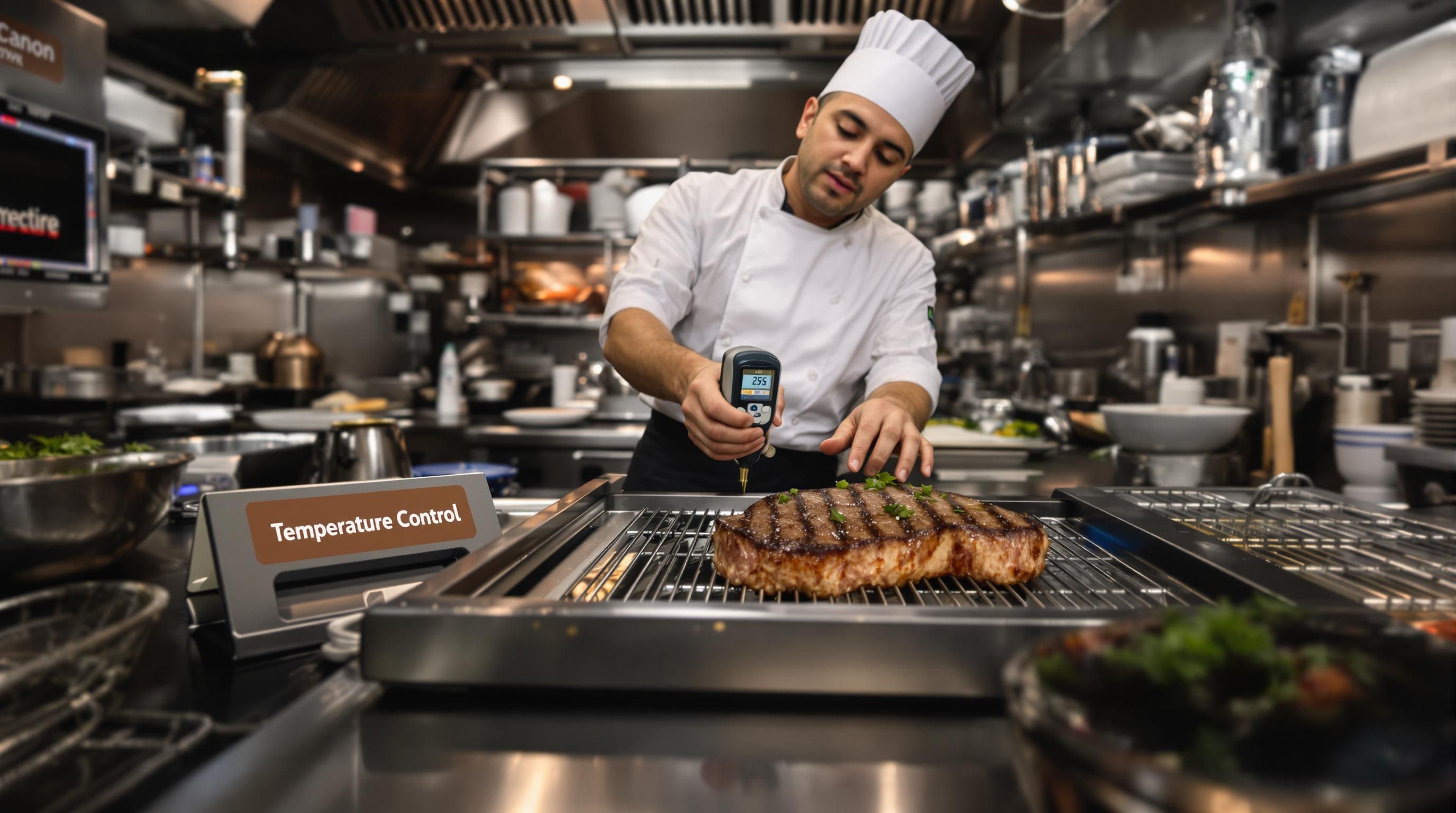
Accurate temperature monitoring is a critical component of food safety. Professional kitchens and food service establishments require reliable tools to ensure that foods are consistently kept at safe temperatures throughout preparation, cooking, and storage.
According to the USDA Food Safety and Inspection Service, several types of thermometers are essential for precise temperature tracking. Digital instant-read thermometers stand out as the most versatile and accurate tools for food safety professionals.
These digital devices offer several advantages:
Rapid temperature readings within seconds
High precision measurements
Easy-to-read digital displays
Compact and portable design
Some models with calibration features
Professional digital thermometers can measure temperatures ranging from subzero to high cooking temperatures, making them indispensable in diverse kitchen environments.
Different food preparation scenarios require specific thermometer technologies. Thermocouple thermometers provide ultra-fast readings and extreme accuracy, ideal for quick temperature checks in busy kitchens. Bimetallic-coil dial thermometers, often used in ovens, offer durability and consistent performance for longer cooking processes.
Wireless probe thermometers have gained popularity in recent years. Learn more about advanced probe thermometer technologies. These devices allow continuous temperature monitoring without repeatedly opening ovens or warming units, which can disrupt cooking temperatures.
Even the most advanced thermometer becomes unreliable if not correctly maintained. Food safety experts recommend regular calibration to ensure accuracy. The ice-point method is a standard calibration technique in which thermometers are tested in a mixture of crushed ice and water, which should read 0°C (32°F).
Key maintenance practices include:
Cleaning thermometers after each use
Storing in protective cases
Checking battery levels
Performing monthly calibration checks
Replacing batteries and devices as recommended by manufacturers
Professional kitchens should invest in multiple thermometers and train staff on proper usage and maintenance. Colour-coded thermometers can help prevent cross-contamination by designating specific tools for different food types.
By selecting appropriate temperature-monitoring tools and properly maintaining them, food service professionals can significantly enhance food safety standards and protect consumer health. Understanding the nuances of different thermometer technologies is crucial for effective temperature control in any culinary environment.
Practical food safety training is crucial for preventing foodborne illnesses and maintaining high standards in food service environments. Training teams on safe food temperatures requires a comprehensive approach that combines theoretical knowledge, practical skills, and ongoing education.
Creating a robust food temperature safety training program involves multiple strategic components. The core objective is to ensure every team member understands the critical importance of temperature control and can apply these principles consistently.
Key training program elements include:
Detailed temperature guideline documentation
Hands-on practical demonstrations
Regular assessment and skill verification
Interactive learning modules
Real-world scenario training
Explore comprehensive food safety training resources that can help managers develop effective educational strategies. Training should go beyond mere instruction and focus on building a culture of food safety awareness.
Successful temperature safety training requires engaging and interactive methodologies. Theoretical lectures alone are insufficient. Managers must implement practical, hands-on learning experiences that help staff build muscle memory and confidence in temperature-monitoring techniques.
Effective training techniques include:
Live thermometer calibration demonstrations
Role-playing food preparation scenarios
Temperature logging practice
Equipment handling workshops
Error recognition and correction exercises
Visual aids like temperature charts, infographics, and quick-reference guides can reinforce learning. Digital training platforms with interactive modules can supplement in-person training, providing flexible learning opportunities for staff.
Below is a table summarizing recommended training techniques to help reinforce safe food temperature practices among teams.
| Training Technique | Purpose |
| Live calibration demos | Teach proper thermometer usage and accuracy |
| Role-playing scenarios | Prepare for real-world food prep situations |
| Temperature logging practice | Build documentation and compliance habits |
| Equipment handling workshops | Improve confidence and proficiency with tools |
| Error recognition and correction exercises | Enable quick identification and resolution of issues |
Food temperature safety is not a one-time training event but an ongoing process of education, reinforcement, and accountability. Managers must establish systems that promote continuous learning and ensure consistent implementation of food safety protocols.
Strategies for maintaining high standards include:
Monthly temperature safety refresher courses
Regular performance evaluations
Random temperature compliance checks
Recognition programs for outstanding food safety practices
Open communication channels for safety concerns
Implementing a peer-review system that allows staff to provide constructive feedback on temperature-handling practices can foster a collaborative safety culture. Digital tracking tools can help managers monitor individual and team performance, identifying areas that require additional training or support.
By investing in comprehensive, engaging, and continuous food temperature safety training, food service managers can protect public health, minimize risks, and build a professional team committed to excellence. The key is transforming temperature safety from a compliance requirement to a fundamental aspect of professional culinary practice.
The temperature danger zone in Canada ranges from 4°C to 60°C (40°F to 140°F), where bacteria can rapidly multiply, increasing the risk of foodborne illness.
To ensure food safety, ground meat should reach 71°C (160°F), poultry pieces 74°C (165°F), whole poultry 85°C (185°F), beef, pork, lamb steaks and roasts 63°C (145°F), and fish 70°C (158°F).
To manage food temperatures effectively, keep hot foods above 60°C (140°F) and cold foods below 4°C (40°F). Use separate cutting boards for raw meats and vegetables, cool hot foods rapidly, and reheating leftovers to at least 74°C (165°F).
Digital thermometers, especially instant-read models, are recommended for their accuracy and speed. Specialized thermometer types, such as thermocouple thermometers and wireless probe thermometers, are also effective for various cooking scenarios.
Maintaining safe food temperatures is not just a kitchen best practice. It is a legal and moral responsibility. The article highlighted critical issues such as avoiding the temperature danger zone, ensuring accurate internal cooking temperatures, and the daily challenge of consistent staff training. Missing these steps can lead not only to foodborne illness but also to failed inspections and lost trust. With food safety rules constantly changing, are you sure your certification and knowledge are entirely up to date?
Get the confidence you need to safeguard every meal and every customer. Probe It Food Safety.ca offers flexible, accredited food safety training that covers real-world scenarios just like those in this guide. Instantly access self-paced courses, built by Canadian public health experts, that teach safe food storage, temperature monitoring, and practical thermometer use. Take the next step to protect your reputation and meet strict 2025 compliance standards. Visit Probe It Food Safety.ca now to earn your Food Handler Certification today and prevent costly mistakes.
Food Safety Myths and Facts: Essential Guide for Canadian Kitchens 2025 – Probe It Food Safety
How to Prevent Foodborne Illness: A 2025 Guide for Canadian Food Services – Probe It Food Safety
Food Safety Basics 2025: A Guide for Canadian Kitchens – Probe It Food Safety
Foods High Risk for Bacteria in Canada: Safety for 2025 – Probe It Food Safety
Exams are stressful, and the pressure of passing may leave you feeling overwhelmed and nervous that you won’t pass, even

Food safety is essential if you want to ensure safety and establish trust with your customers. Food handlers must be

Practicing good food safety habits is paramount to maintaining a healthy kitchen. Regardless of the size of your hotel business