No products in the cart.

10 Tips for Passing Your Food Handler’s Certificate Exam
Exams are stressful, and the pressure of passing may leave you feeling overwhelmed and nervous that you won’t pass, even


Raw eggs show up in everything from homemade mayo to desserts, tempting chefs and diners alike. However, only a tiny crack is needed for a problem, and up to 1 in 20,000 eggs can harbour Salmonella bacteria, even if they look perfectly normal. Most people think a quick sniff or glance can spot a rotten egg, but that silent threat makes food safety far trickier and pushes Canadian businesses to rethink every step of egg handling.
| Takeaway | Explanation |
| Raw eggs can harbor Salmonella. | Contaminated raw eggs can cause serious illnesses, especially for vulnerable groups. |
| Implement strict temperature controls. | Store eggs below 4°C (40°F) to inhibit bacterial growth and ensure safety. |
| Cook eggs thoroughly. | Ensure that eggs are cooked to firm yolks and whites to kill harmful bacteria. |
| Use pasteurized egg products. | Substitute raw eggs with pasteurized ones in recipes to reduce health risks. |
| Train staff on safe handling. | Regular training on egg safety protocols is essential for minimizing contamination risks. |
Raw eggs represent a significant microbiological hazard for food service businesses, presenting substantial risks to consumer health and organizational safety. The primary threat stems from potential bacterial contamination, particularly Salmonella enterica, which can cause serious foodborne illnesses.
Salmonella is the most critical pathogen associated with raw eggs. According to research published in the journal Foods, this bacteria can inhabit both the eggshell’s exterior and the egg’s interior, creating multiple potential transmission routes. The bacteria can lead to infections ranging from mild gastrointestinal symptoms to severe systemic diseases, making raw egg consumption exceptionally dangerous for vulnerable populations like children, elderly individuals, pregnant women, and those with compromised immune systems.
Microbiological studies reveal that Salmonella can survive and proliferate in eggs kept at improper temperatures. Even eggs with intact shells may harbour bacteria, so visual inspection cannot guarantee safety. Temperature control and proper handling are paramount for mitigating these risks.
Bacterial transmission through raw eggs can occur through multiple mechanisms. Direct consumption of uncooked eggs in dishes such as homemade mayonnaise, Caesar salad dressing, mousse, or raw cookie dough poses immediate exposure risks. Cross-contamination is equally problematic, where raw egg residue can transfer bacteria to cooking surfaces, utensils, and other food items.
The Canadian Food Inspection Agency emphasizes that egg producers and food service establishments must implement rigorous safety protocols. These include maintaining consistent refrigeration, preventing cross-contamination, and ensuring thorough cooking to internal temperatures that eliminate potential pathogens.
Effective risk management requires comprehensive strategies. Food handlers must understand that pasteurization, thorough cooking, and strict temperature control are essential. Eggs should be stored at temperatures below 4°C (40°F) and cooked until both yolks and whites are firm. Any recipes involving raw or undercooked eggs require special preparation, such as pasteurization.
For businesses seeking comprehensive food safety training, learn more about our food handler certification to ensure your team understands these critical prevention strategies. Proper education can significantly reduce the risk of foodborne illness transmission and protect both consumer health and business reputation.
Certain population groups face significantly higher risks when exposed to potential foodborne illnesses from raw eggs, creating complex legal and ethical responsibilities for food service businesses. Understanding these vulnerabilities and corresponding legal obligations is crucial for maintaining public health and avoiding potential legal consequences.
Some demographic groups are particularly susceptible to severe complications from foodborne pathogens. Centers for Disease Control and Prevention research identifies several high-risk populations that require special consideration:
Infants and Young Children: Immature immune systems make them highly vulnerable to serious infections.
Elderly Individuals: Weakened immune responses increase the potential severity of infections.
Pregnant Women: Potential for systemic infections that can impact maternal and fetal health.
Immunocompromised Individuals: Those with chronic illnesses or undergoing medical treatments face heightened risks.
These groups can experience more severe symptoms from Salmonella infections, including prolonged illness, hospitalization, and in rare cases, life-threatening complications. Food service establishments must implement stringent protocols to protect these vulnerable populations.
To help food businesses quickly identify and address the unique risks posed to different vulnerable populations, here is a summary table outlining high-risk groups and the reasons for their increased susceptibility to Salmonella infections from raw eggs.
| High-Risk Group | Reason for Increased Risk |
| Infants and Young Children | Immature immune systems |
| Elderly Individuals | Weakened immune responses |
| Pregnant Women | Potential systemic infections affecting the mother/fetus |
| Immunocompromised People | Heightened vulnerability due to chronic conditions |
Canadian food safety regulations impose strict requirements on businesses handling eggs and egg-based products. Health Canada mandates comprehensive risk management strategies that go beyond basic food handling practices. Businesses must:
Develop and maintain detailed food safety management plans
Implement thorough documentation of egg handling procedures
Conduct regular staff training on potential contamination risks
Establish clear protocols for preparing and serving egg-based dishes
Failing to protect vulnerable populations can result in significant legal consequences, including substantial financial penalties, potential business closure, and criminal liability in cases of severe illness or death.

Mitigating risks requires a comprehensive approach that combines education, strict protocols, and continuous monitoring. Food service businesses must:
Implement pasteurization techniques for high-risk preparations
Maintain strict temperature control during storage and preparation
Utilize separate preparation areas for eggs and other ingredients
Develop clear communication protocols about potential risks
Check out our comprehensive food handler certification to ensure your team understands the critical importance of protecting vulnerable populations. Proper training is the first line of defence against foodborne illness and in maintaining legal compliance.
Ultimately, protecting vulnerable groups is not just a legal obligation but an ethical responsibility. By understanding the unique risks associated with raw eggs and implementing rigorous safety measures, food service businesses can safeguard public health and maintain their reputation for responsible food handling.
Safe egg handling requires a comprehensive approach that minimizes bacterial contamination risks and provides practical alternatives for food service businesses. Understanding proper storage, preparation techniques, and substitution methods can significantly reduce the risk of foodborne illness.
Temperature management is critical in preventing bacterial growth. The FDA recommends maintaining eggs at consistent refrigeration temperatures below 45°F (7°C). Eggs should be stored in their original cartons on interior refrigerator shelves, not in door compartments where temperature fluctuations are more frequent. Proper refrigeration slows bacterial growth and extends the shelf life of eggs.
University of Minnesota Extension experts emphasize that eggs should never be left at room temperature for more than two hours. Commercial kitchens must implement strict temperature monitoring protocols, using calibrated thermometers and maintaining detailed logs to track refrigeration conditions.
Cooking eggs thoroughly remains the most effective way to eliminate potential pathogens. The FDA recommends cooking eggs until both yolks and whites are firm, reaching an internal temperature of 160°F (71°C). This temperature effectively kills harmful bacteria such as Salmonella.
For recipes requiring uncooked eggs, pasteurized egg products offer a safe alternative. These products undergo heat treatment that kills potential pathogens while maintaining nutritional value. Pasteurized liquid eggs, powdered eggs, and frozen egg products offer versatile solutions for a range of culinary applications.
Food service businesses can explore multiple egg alternatives that maintain recipe integrity while eliminating bacterial risks. Potential substitutes include:
The following table summarizes effective egg alternatives for businesses seeking to reduce bacterial risks while maintaining recipe performance. This can help staff quickly choose suitable substitutes for recipes that would otherwise require raw or undercooked eggs.
| Alternative Ingredient | Common Uses | Key Benefits |
| Plant-based egg replacers | Baking, savoury dishes | No Salmonella risk; similar texture |
| Mashed bananas | Sweet baked goods | Adds moisture and sweetness |
| Ground flaxseed + water | Binding in baking | Natural binder; plant-based |
| Commercial pasteurized egg products | Any recipe needing eggs | Safe from bacterial contamination |
Plant-based egg replacers: Commercial products mimicking egg properties in baking
Mashed bananas: Effective in sweet baked goods
Ground flaxseed mixed with water: Provides binding properties
Commercial pasteurized egg products: Safer versions of traditional eggs
Restaurants and food preparation facilities must train staff on these alternatives and understand their specific application contexts. Learn more about food safety protocols to ensure a comprehensive understanding of ingredient handling and substitution strategies.
Implementing these safe handling practices requires ongoing staff education, rigorous quality control, and a commitment to customer health. By adopting comprehensive egg safety strategies, food service businesses can significantly reduce contamination risks while maintaining culinary creativity and operational excellence.
Effective food safety implementation requires a comprehensive, systematic approach that addresses every aspect of egg handling and preparation. Food service businesses must develop robust protocols that minimize contamination risks and protect consumer health through strategic prevention and management techniques.
The CDC emphasizes the critical importance of facility design in preventing foodborne illness. Commercial kitchens must establish dedicated preparation zones that prevent cross-contamination, with distinct areas for raw and cooked eggs. This includes separate cutting boards, utensils, and cleaning stations designated explicitly for egg-related tasks.
Refrigeration equipment must maintain a consistent temperature between 33°F and 40°F, with digital thermometers installed to monitor conditions continuously. Regular calibration and maintenance of refrigeration units are essential to ensure accurate temperature control. Businesses should implement daily temperature logs and immediate corrective actions for any temperature fluctuations.
The USDA recommends comprehensive staff training programs that cover multiple critical aspects of egg safety. Training should include:
Proper handwashing techniques
Understanding cross-contamination risks
Recognizing signs of egg spoilage
Correct egg storage and handling procedures
Immediate reporting of potential contamination issues
Personal hygiene remains paramount. Staff must wear clean protective equipment, use disposable gloves when handling eggs, and maintain strict personal cleanliness standards. Regular health screenings and exclusion policies for employees with symptoms of illness further reduce the risk of contamination.
The FDA’s Egg Safety Final Rule mandates comprehensive documentation of food safety practices. Facilities must develop and maintain detailed record-keeping systems that track:
Egg source and procurement records
Temperature monitoring logs
Staff training certifications
Cleaning and sanitization schedules
Incident reporting and corrective action documentation
Explore our comprehensive food safety management guide to ensure your facility meets all regulatory requirements and maintains the highest standards of food safety.
Implementing robust food safety protocols is more than a regulatory requirement; it is a fundamental commitment to public health. By developing comprehensive systems that address every aspect of egg handling, food service businesses can protect consumers, minimize legal risks, and maintain their reputation for excellence and reliability.
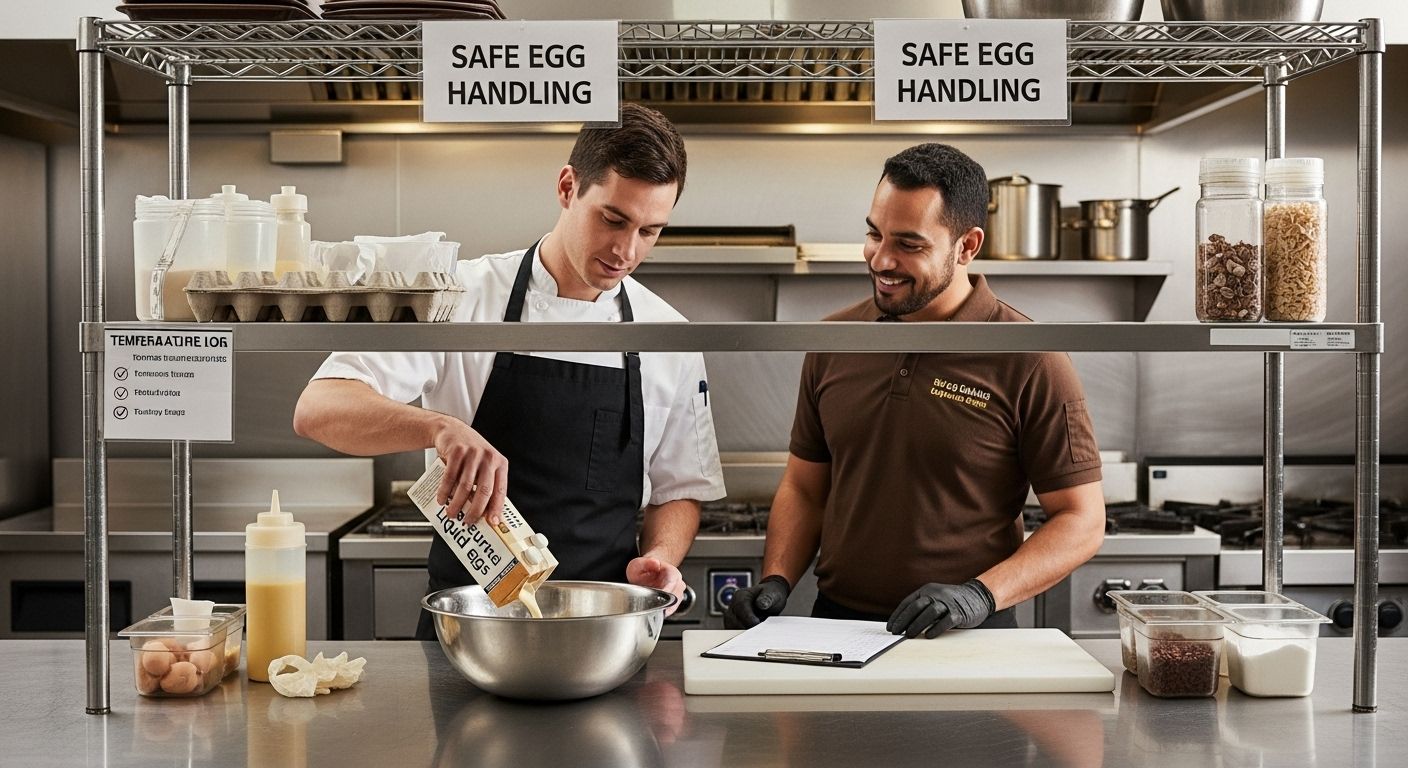
Consuming raw eggs poses health risks primarily because they may contain Salmonella bacteria, which can cause serious foodborne illnesses. These risks are particularly significant for vulnerable groups such as children, the elderly, pregnant women, and immunocompromised individuals.
To safely handle and store raw eggs, keep them refrigerated at 4°C (40°F) or below, avoid cross-contamination by using separate utensils and surfaces for raw eggs, and practice proper handwashing before and after handling raw eggs.
Alternatives to raw eggs include pasteurized egg products, plant-based egg replacers, mashed bananas, and a mixture of ground flaxseed with water. These substitutes can maintain recipe quality without the risks associated with raw egg consumption.
Eggs should be cooked to an internal temperature of 160°F (71°C), with both the yolks and whites firm, to eliminate harmful bacteria like Salmonella effectively.
Protecting your customers from the invisible dangers of raw eggs requires more than just common sense. As discussed in this article, Salmonella poses a serious threat that disregards outward appearances and puts vulnerable groups at risk. The pressure to maintain tight storage temperatures, provide staff with the proper knowledge, and keep up with Canada’s evolving regulations can be overwhelming for any business.

Now is the time to close the gaps in your food safety procedures. The government-accredited Food Handler Certification from Probe It Food Safety.ca empowers your team to manage raw egg hazards with confidence and meet the strictest compliance standards. Public health experts are available 24/7 to create our online courses, so your staff can complete training anytime. Get instant proof of certification and peace of mind that your business is ready for inspections. Make your commitment to safe, responsible food service transparent to customers and regulators. Start your training today at Probe It Food Safety.ca and turn food safety knowledge into real-world protection for your brand.
Exams are stressful, and the pressure of passing may leave you feeling overwhelmed and nervous that you won’t pass, even

Food safety is essential if you want to ensure safety and establish trust with your customers. Food handlers must be

Practicing good food safety habits is paramount to maintaining a healthy kitchen. Regardless of the size of your hotel business