No products in the cart.

10 Tips for Passing Your Food Handler’s Certificate Exam
Exams are stressful, and the pressure of passing may leave you feeling overwhelmed and nervous that you won’t pass, even


More than 60 percent of Canadian diners say they actively seek out sustainable restaurants. As public awareness grows, it is no longer enough for restaurants to simply serve delicious food. Defining effective sustainability goals has become a top priority for Canadian operators who want to balance business needs with their responsibility to the environment and communities. This article outlines practical steps for setting clear sustainability targets that can make a measurable difference.
| Point | Details |
|---|---|
| Importance of Sustainability Goals | Canadian restaurants must prioritise sustainability objectives to remain competitive and environmentally responsible. |
| Holistic Operational Practices | Effective sustainability requires integrating resource management and technological innovation throughout restaurant operations. |
| Legal Compliance and Incentives | Staying informed on evolving regulations is crucial; leveraging incentives can support sustainability investments. |
| Measuring and Communicating Success | Implementing a structured approach to track sustainability metrics fosters transparency and drives continuous improvement. |
Restaurants in Canada are increasingly recognizing the critical importance of establishing clear sustainability objectives that address environmental, social, and economic challenges. Restaurants Canada advocates for harmonized policies that support both business success and positive environmental outcomes, highlighting the growing recognition that sustainability is no longer optional but a strategic imperative.
At its core, restaurant sustainability encompasses a holistic approach that goes beyond minimizing ecological impact. This includes strategies such as reducing food waste, sourcing local and organic ingredients, implementing energy-efficient practices, managing water consumption, and creating responsible waste management systems. Sustain Ontario’s Sustainable Restaurant Working Group plays a pivotal role in bringing together diverse stakeholders to define and advance sustainability standards within the foodservice industry.
Key sustainability goals for Canadian restaurants often involve several interconnected dimensions:
Pro Tip for Sustainability Planning: Start by conducting a comprehensive sustainability audit of your restaurant’s current practices, identifying specific areas for improvement and setting measurable goals that can be tracked and communicated to staff and customers.
Here is a summary of how Canadian restaurant sustainability goals align with broader business outcomes:
| Sustainability Goal Area | Example Practice | Business Benefit |
|---|---|---|
| Energy Efficiency | Upgrade to energy-saving appliances | Lowers utility costs |
| Waste Minimization | Implement composting programmes | Reduces landfill fees |
| Local Sourcing | Buy from nearby farms | Strengthens community relationships |
| Social Responsibility | Staff sustainability training | Improves employee engagement |
| Ethical Supply Chains | Transparent sourcing policies | Enhances brand reputation |
Restaurant sustainability has evolved from a niche concept to a comprehensive strategic approach that encompasses multiple interconnected objectives. Restaurants Canada’s Sustainability Best Practices Guide offers detailed insights into the diverse goals restaurants are setting to reduce their environmental impact and promote responsible business practices.

The primary categories of sustainability goals can be broadly classified into four key dimensions: environmental conservation, economic responsibility, social impact, and operational efficiency. Environmental goals frequently include reducing greenhouse gas emissions, minimizing food waste, implementing water conservation strategies, and transitioning to renewable energy sources. LEAF’s Guide to Canada’s Greenest Restaurants highlights how leading establishments are pioneering innovative approaches to achieving these objectives.
Specific sustainability goals for restaurants typically involve:
Pro Tip for Goal Setting: Develop a structured sustainability roadmap with measurable targets, regular performance assessments, and clear accountability mechanisms to transform sustainability goals from theoretical concepts into tangible operational improvements.
Restaurants Canada’s Sustainability Best Practices Guide provides comprehensive insights into transforming restaurant operations through strategic sustainability practices. Operational sustainability goes far beyond simple environmental considerations, encompassing a holistic approach that integrates resource management, technological innovation, and systematic process improvements across all aspects of restaurant management.
Successful sustainable operational practices involve creating systematic approaches that reduce environmental impact while maintaining operational efficiency. Innovative restaurants are developing comprehensive strategies that address energy consumption, waste management, water usage, and supply chain dynamics. For instance, progressive Canadian restaurants like Bloom are pioneering transparency by displaying greenhouse gas emissions icons directly on their menus, demonstrating a commitment to environmental accountability.
Key operational practices for supporting sustainability include:
Pro Tip for Operational Sustainability: Create a dedicated sustainability coordinator role responsible for tracking, implementing, and continuously improving your restaurant’s environmental performance and operational efficiency.
The Federal Sustainable Development Strategy provides a comprehensive legal framework that significantly influences restaurant sustainability policies across Canada. Sustainability legislation represents a complex ecosystem of federal, provincial, and municipal regulations designed to guide restaurants towards more environmentally responsible practices, balancing economic viability with ecological considerations.
The legal landscape for restaurant sustainability is characterized by an evolving set of regulations that address multiple dimensions of environmental impact. Provincial and municipal governments are increasingly implementing targeted policies that mandate waste reduction, energy efficiency, and sustainable sourcing practices. Restaurants Canada advocates for harmonized legislation to reduce operational complexity and create consistent standards across different jurisdictions, recognizing that fragmented regulatory approaches can create significant challenges for multi-location restaurant businesses.
Key legal and policy considerations for restaurants include:
Pro Tip for Legal Compliance: Develop a comprehensive sustainability compliance checklist that tracks evolving regulations across different jurisdictions and proactively updates your restaurant’s operational practices to maintain legal alignment.
This table highlights key legal and policy considerations impacting restaurant sustainability across Canada:
| Legal Aspect | Typical Requirement | Potential Advantage for Restaurants |
|---|---|---|
| Waste Management Regulations | Mandated recycling and composting | Compliance avoids fines |
| Environmental Reporting | GHG and energy reporting obligations | Access to green certification |
| Health and Safety Compliance | Sustainable ingredient handling protocols | Better food safety outcomes |
| Incentive Programmes | Tax credits and grants | Supports investment in upgrades |
Measuring sustainability outcomes requires sophisticated approaches that go beyond traditional performance metrics. Progressive restaurants like Bloom are pioneering innovative tracking methods, demonstrating that transparency and data-driven analysis are critical components of meaningful sustainability efforts. Performance measurement in restaurant sustainability involves comprehensive tracking of environmental, social, and economic impacts across multiple dimensions.
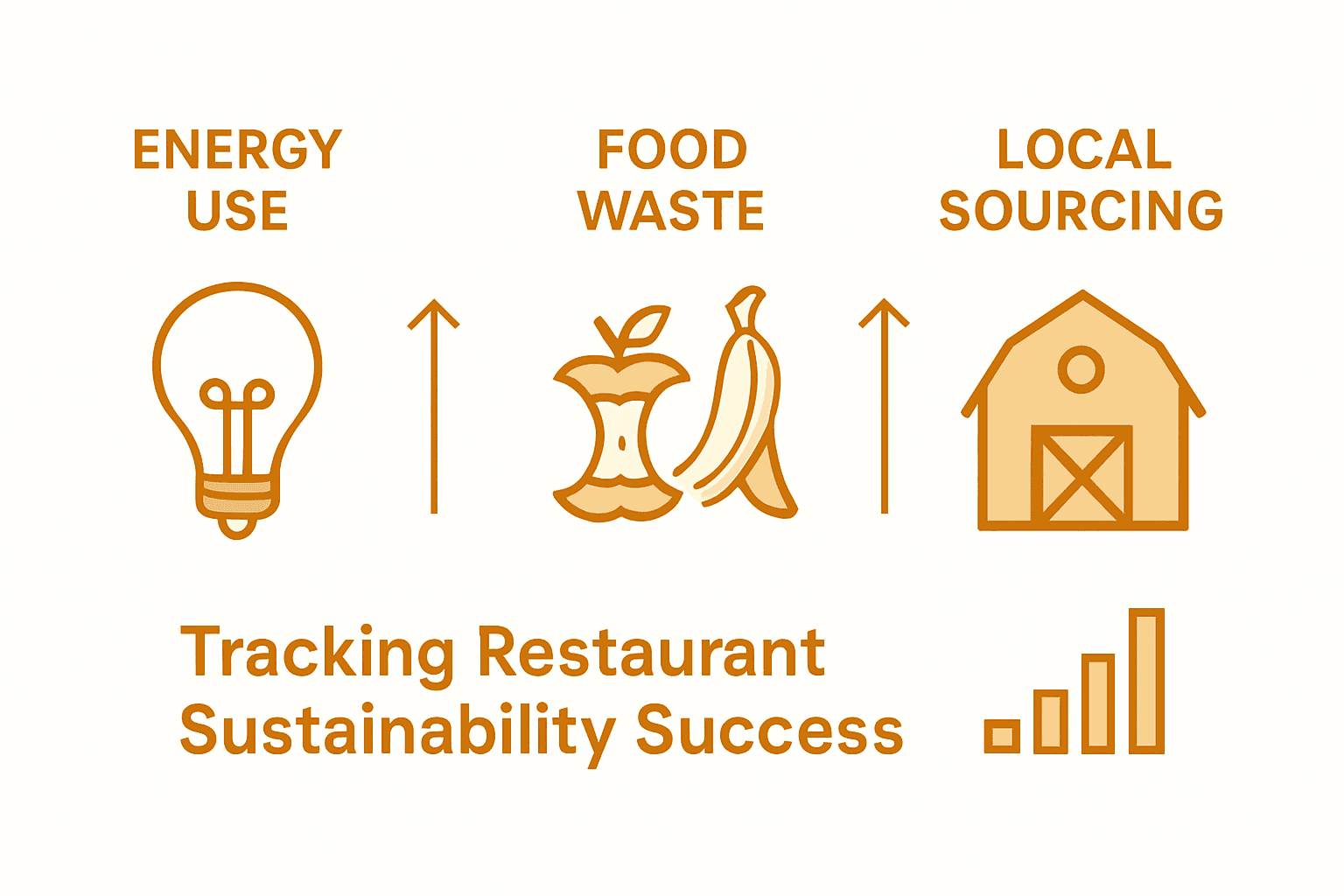
Comprehensive sustainability tracking encompasses a holistic approach that integrates quantitative and qualitative metrics. Comprehensive reports like those from Compass Canada illustrate how detailed documentation and transparent reporting can effectively communicate an organization’s sustainability journey, providing stakeholders with clear insights into progress and challenges.
Key metrics for measuring sustainability success include:
Pro Tip for Performance Tracking: Implement a standardized sustainability scorecard that provides monthly snapshot assessments, allowing your restaurant to monitor progress, identify improvement areas, and communicate achievements transparently to stakeholders.
Canadian restaurants aiming to meet their sustainability goals face challenges such as managing waste responsibly, ensuring ethical supply chains, and maintaining compliance with evolving environmental regulations. These goals require not only operational commitment but also well-trained staff equipped to uphold health and safety standards that support sustainability efforts. Key pain points include the need for comprehensive staff sustainability training, understanding legal compliance, and embedding responsible food handling practices throughout restaurant operations.

Take a proactive step today by enrolling your team in trusted, government-accredited courses that reinforce the backbone of sustainable restaurant operations. At Probe It Food Safety.ca, we offer flexible, self-paced online Food Handler Certification and other essential training designed by public health experts to help your restaurant stay compliant and environmentally responsible. Discover how accessible, affordable training can empower your staff to contribute actively to your sustainability roadmap while ensuring workplace safety. Start building stronger, greener operations now by visiting Probe It Food Safety.ca and securing your certifications today.
The main sustainability goals for restaurants typically include reducing carbon footprints, minimizing food waste, sourcing local and organic ingredients, implementing energy-efficient practices, and creating responsible waste management systems.
Restaurants can effectively measure their sustainability progress by using a standardized scorecard that tracks key metrics, including carbon footprint, waste diversion rates, energy consumption, and social impact initiatives such as community engagement and local supplier relationships.
Sustainable restaurant sourcing is important as it supports local agricultural producers, reduces environmental impact through responsible ingredient choices, and promotes transparent supply chains, which enhance the restaurant’s brand reputation and community relations.
Operational practices supporting restaurant sustainability include investing in energy-efficient kitchen equipment, implementing comprehensive recycling and composting programs, providing staff sustainability training, and integrating technology for resource optimization.
Exams are stressful, and the pressure of passing may leave you feeling overwhelmed and nervous that you won’t pass, even

Food safety is essential if you want to ensure safety and establish trust with your customers. Food handlers must be

Practicing good food safety habits is paramount to maintaining a healthy kitchen. Regardless of the size of your hotel business