No products in the cart.

10 Tips for Passing Your Food Handler’s Certificate Exam
Exams are stressful, and the pressure of passing may leave you feeling overwhelmed and nervous that you won’t pass, even


Did you know that over 29,000 food samples were tested by the Canadian Food Inspection Agency from 2020 to 2024, with a 99.34 percent satisfactory rate? Food safety affects everyone who eats out, sends kids to daycare, or orders takeout. Understanding public health inspection results allows you to see how restaurants and food businesses actually perform when it comes to protecting your health and safety.
| Point | Details |
| Public Health Inspections | Public health inspections are essential for ensuring food safety, involving rigorous evaluations of food handling practices, hygiene, and compliance with regulations. |
| Transparency and Access | Inspection results are publicly accessible, enabling consumers to make informed choices about dining establishments and highlighting the importance of food safety practices. |
| Inspection Types and Scoring | Different inspection types serve specific purposes, utilizing various scoring methods, including demerit point systems and risk classifications, to evaluate compliance and prioritize health risks. |
| Consequences of Inspection Outcomes | Poor inspection results can lead to operational restrictions, financial penalties, and damage to public reputation, influencing the sustainability of food service businesses, including restaurants and daycares. |
Public health inspection results are critical documents that provide transparent insights into the food safety practices of restaurants, food service establishments, and other businesses handling food products. Learn more about the role of public health inspectors who conduct these vital assessments that help protect public health and ensure safe dining experiences.
According to Health Canada’s inspection framework, these inspection reports document compliance with food safety standards and identify potential risks or infractions during on-site evaluations. Typically, inspectors assess various critical areas such as food handling practices, equipment cleanliness, temperature control, personal hygiene, and overall sanitation protocols. Each inspection generates a detailed report that assigns demerit points or categorizes findings based on their potential health risk level.
Most Canadian jurisdictions make these inspection results publicly accessible, offering transparency that allows consumers to make informed dining choices. In Ontario, for instance, food premises inspection reports are posted online and remain available for two years, reflecting the conditions observed during the specific inspection. These reports provide crucial information about a food service establishment’s commitment to maintaining high food safety standards and protecting public health.

Key aspects of public health inspection results typically include:
Detailed assessment of food handling practices
Identification of critical and minor infractions
Recommendations for corrective actions
Risk classification of potential health hazards
Compliance status with local health regulations
Public health inspections are not a one-size-fits-all process. Learn about health inspector frequently asked questions to understand the nuanced approaches used by different jurisdictions in evaluating food safety standards. According to research from Ontario’s food safety regulations, inspections can be categorized into several distinct types, each serving a specific purpose in maintaining public health.
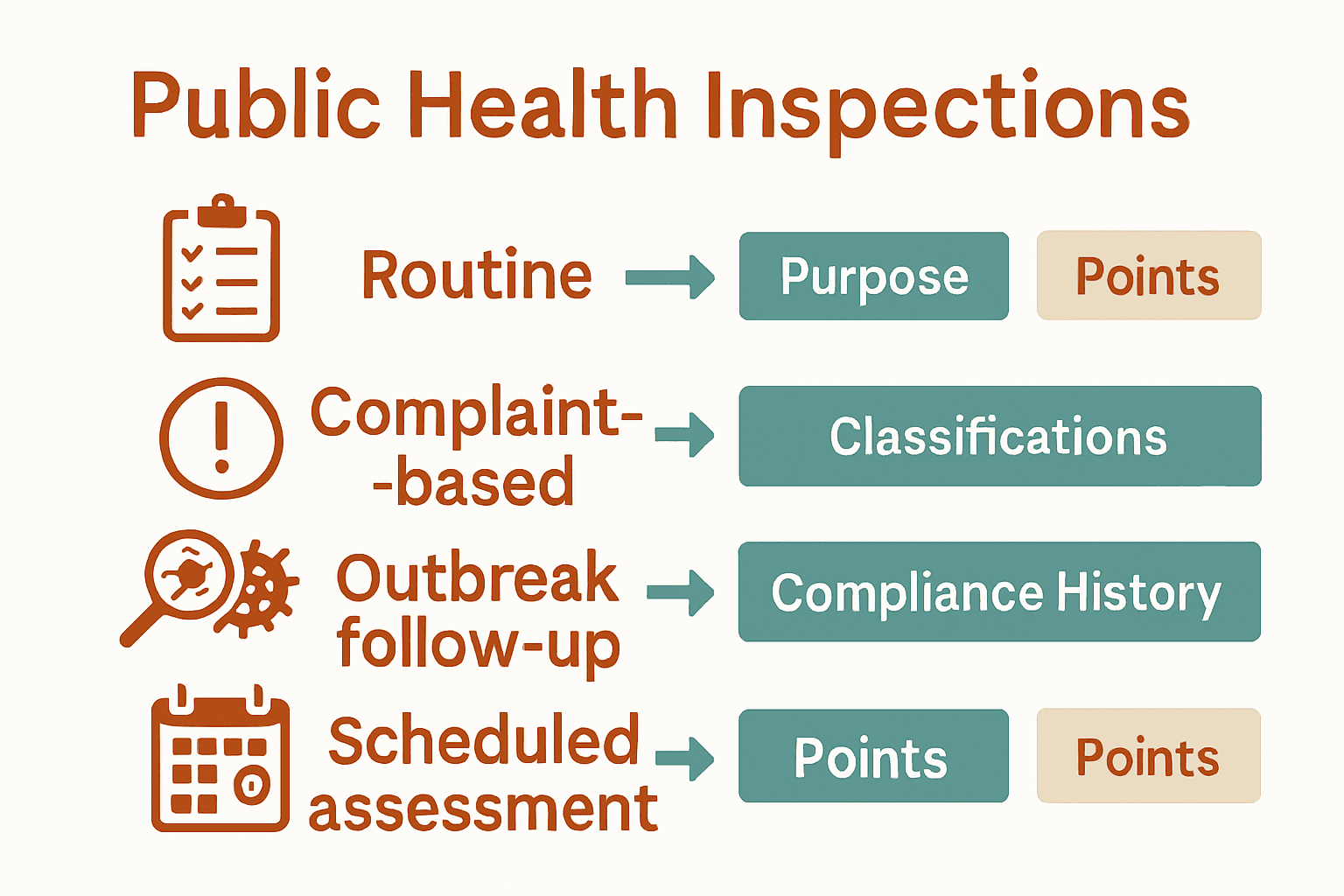
According to Ontario’s Food Premises Regulation (O. Reg. 493/17), inspection types typically include routine inspections, complaint-based investigations, outbreak follow-ups, and scheduled assessments. Routine inspections are proactive evaluations conducted at regular intervals, while complaint-based inspections are triggered by specific consumer or stakeholder reports about potential health concerns. Outbreak follow-up inspections occur in response to confirmed foodborne illness incidents, ensuring immediate corrective actions are implemented.
Scoring methods vary across Canadian jurisdictions, with many adopting sophisticated risk-based assessment frameworks. In New Brunswick, for instance, food premises receive color-coded ratings that consider multiple factors including food types, handling methods, compliance history, and management practices. These nuanced scoring systems allow inspectors to tailor their approach, focusing more intensively on higher-risk establishments while providing appropriate guidance for those maintaining consistently high standards.
Key characteristics of inspection scoring typically include:
Here’s a comparison of common public health inspection types and scoring methods in Canada:
| Inspection Type | Purpose | Scoring Method |
| Routine | Regular preventive check | Demerit points Risk classification |
| Complaint-Based | Investigate consumer or stakeholder concerns | Severity-based scoring |
| Outbreak Follow-Up | Address confirmed illness events | Immediate risk assessment |
| Scheduled Assessment | Compliance verification on set timetable | Compliance history tracking |
 |
Demerit point systems
Color-coded risk classifications
Weighted scoring based on violation severity
Compliance history tracking
Immediate and long-term risk assessment protocols
Learn about our comprehensive food safety standards to understand the critical elements of public health inspections. The inspection process for food establishments is a comprehensive and systematic approach designed to ensure public health and safety through rigorous evaluation of food handling practices, facility conditions, and compliance with established regulations.
According to the Canadian Food Inspection Agency (CFIA), public health inspectors conduct both scheduled and unannounced inspections of food establishments. These evaluations are thorough and may include examining food samples, reviewing critical documentation such as food handler certificates and temperature logs, and assessing overall hygiene and sanitation practices. From 2020 to 2024, the CFIA tested over 29,000 food samples, with an impressive 99.34% satisfactory result rate, demonstrating the effectiveness of these systematic inspection protocols.
The inspection process typically involves multiple stages, beginning with an initial comprehensive review of the establishment’s food safety practices. Inspectors meticulously examine various critical control points, including food storage temperatures, personal hygiene protocols, equipment cleanliness, and potential cross-contamination risks. They will often request to see food handler certifications, review recent internal audit records, and conduct on-the-spot assessments of food preparation and storage areas.
Key components of a typical food establishment inspection include:
Verification of food handler certification
Temperature monitoring of refrigeration and cooking equipment
Assessment of personal hygiene practices
Evaluation of cleaning and sanitization procedures
Documentation and record-keeping review
Identification of potential health risk areas
Learn about workplace safety compliance for food service businesses to understand the critical legal frameworks governing food safety. Legal requirements in the food service industry are comprehensive regulations designed to protect public health, ensuring that establishments maintain rigorous standards of food handling, hygiene, and safety.
According to Ontario’s Health Protection and Promotion Act and Food Premises Regulation (O. Reg. 493/17), food establishments must comply with multiple critical legal standards. These include maintaining detailed sanitation logs, ensuring all food handlers are certified, implementing robust allergen management protocols, and keeping comprehensive recordkeeping systems. Importantly, these regulations empower public health inspectors with significant enforcement capabilities, including the authority to issue compliance orders, impose substantial fines, or even temporarily close premises for serious violations.
The Canadian Food Inspection Agency’s (CFIA) Compliance and Enforcement Policy establishes a structured approach to food safety regulation. This policy creates a continuum of enforcement strategies ranging from educational promotion to direct regulatory intervention. When inspections reveal non-compliance, a graduated response mechanism is triggered, allowing establishments opportunities to correct deficiencies while maintaining strict accountability for public health protection.
Key legal compliance requirements typically include:
Mandatory food handler certifications
Comprehensive temperature monitoring protocols
Detailed sanitation and hygiene documentation
Allergen management and disclosure procedures
Regular internal auditing and self-assessment
Immediate reporting of potential health risks
Learn about the importance of food safety training in 2025 to understand the critical implications of public health inspection results. Inspection outcomes carry significant consequences for restaurants and daycares, directly impacting their operational reputation, public trust, and potential financial sustainability.
Licensed child care centres and nurseries are subject to the same rigorous inspection regimes as restaurants, with their inspection reports publicly posted. This transparency means that every inspection result can dramatically influence public perception and institutional credibility. The 2023 Calgary E. coli outbreak, which occurred in multiple daycares and was linked to contaminated food preparation, starkly illustrates the potentially devastating consequences of inspection failures, especially in settings serving vulnerable populations like young children.
For both restaurants and daycares, public health inspection results can trigger immediate and long-term repercussions. Poor inspection scores might lead to mandatory staff retraining, temporary closure, substantial financial penalties, or complete loss of operating licenses. Moreover, these results are typically accessible to the public, which can rapidly impact consumer confidence, potentially causing significant reputational damage and economic loss.
Key implications of inspection results include:
Immediate operational restrictions
Mandatory corrective action plans
Potential financial penalties
Public reputation management challenges
Risk of temporary or permanent closure
Required staff retraining and certification
Understanding public health inspection results can feel overwhelming, especially when your reputation and compliance are at stake. This article highlights how critical it is for restaurants, daycares, and other food businesses to not only interpret inspection outcomes but also implement immediate corrective actions and maintain detailed records. Falling short in food handler certification or up-to-date training puts your operation at risk of costly closures, financial penalties, and serious reputational harm. Probe It Food Safety.ca understands the pressure you face to protect your customers and staff while navigating Canadian food safety laws.

Act today to turn these challenges into peace of mind. Probe It Food Safety.ca offers affordable, government-accredited food handler certification and workplace safety courses you can complete online at your own pace. Get instant proof of compliance and help your team exceed inspection expectations. Start your certification now and protect what matters most—your business, your reputation, and your community. If you want to learn more about how our courses directly support health inspection readiness, explore our recent article on food safety standards in Canada.
Public health inspection results provide insights into food safety practices in restaurants and food establishments by documenting compliance with food safety standards and identifying potential health risks.
Inspections for food establishments include routine inspections, complaint-based investigations, outbreak follow-ups, and scheduled assessments, each serving different purposes for maintaining food safety.
Public health inspection results are scored using methods such as demerit points, color-coded risk classifications, and compliance history tracking, allowing inspectors to evaluate and categorize establishments based on their food safety practices.
Food establishments must comply with legal standards such as maintaining sanitation logs, ensuring certified food handlers, implementing allergen management protocols, and keeping comprehensive recordkeeping systems to protect public health.
Exams are stressful, and the pressure of passing may leave you feeling overwhelmed and nervous that you won’t pass, even

Food safety is essential if you want to ensure safety and establish trust with your customers. Food handlers must be

Practicing good food safety habits is paramount to maintaining a healthy kitchen. Regardless of the size of your hotel business