No products in the cart.

10 Tips for Passing Your Food Handler’s Certificate Exam
Exams are stressful, and the pressure of passing may leave you feeling overwhelmed and nervous that you won’t pass, even


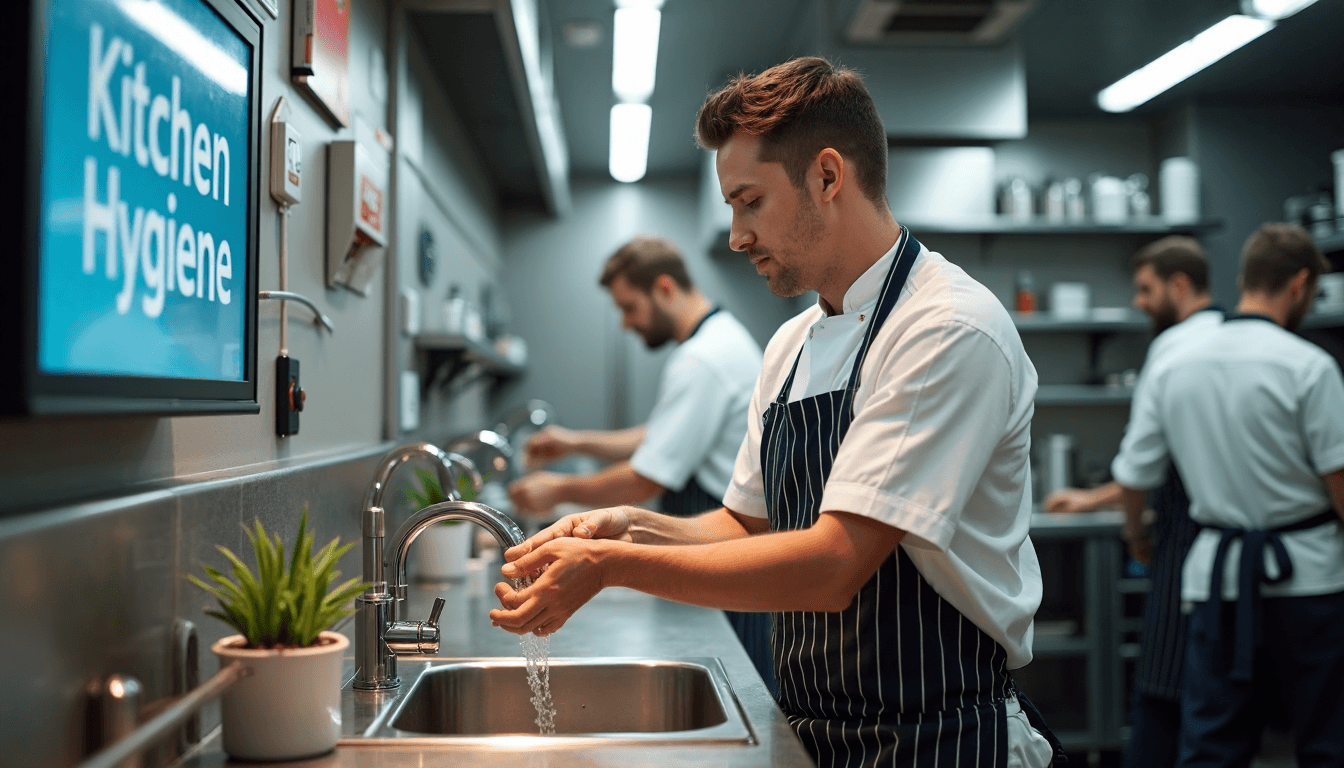
Canada faces a staggering reality when it comes to food safety. Microbiological contamination causes up to four million cases of foodborne illness every year in this country. You might think the real enemy hides in complicated cleaning processes or rare regulatory loopholes. The truth is much simpler and more personal. Most kitchen hazards start with everyday hygiene slipups, right at the fingertips of food service staff. Here is what really sets the safest kitchens apart.
| Takeaway | Explanation |
|---|---|
| Rigorous Hand Hygiene is Essential | Staff must wash hands thoroughly and frequently using proper techniques, especially before handling food, after using the restroom, and after touching potentially contaminated surfaces. |
| Cross-Contamination Risks Must be Mitigated | Implementing comprehensive training programs is critical to prevent cross-contamination, such as ensuring proper sanitization of surfaces and utensils between food types. |
| Health Monitoring is a Priority | Staff should report any symptoms of illness immediately to supervisors to prevent pathogen transmission and maintain workplace health. |
| Comprehensive Training and Compliance Monitoring are Key | Effective hygiene policy implementation relies on ongoing staff training and robust monitoring systems to ensure adherence to hygiene standards across food service environments. |
| Adaptive Learning and Continuous Improvement | Food service organizations must continuously update training programs and practices to reflect new research, technology, and regulatory changes, fostering a culture of hygiene responsibility. |
In the complex ecosystem of Canadian food services, understanding and mitigating personal hygiene risks is paramount to preventing foodborne illness and maintaining public health standards. Kitchen environments present multiple potential pathways for contamination, requiring rigorous attention and proactive management.

Microbiological hazards represent the most significant risk in kitchen settings. According to Canadian Centre for Occupational Health and Safety, pathogens like Salmonella, Listeria, and E. coli can rapidly proliferate in improper food handling conditions. These microorganisms pose serious health risks and have been responsible for numerous food recalls across Canada.
Recent data reveals that microbiological contamination contributes to up to four million cases of foodborne illness annually, underscoring the critical importance of stringent personal hygiene practices. Food service professionals must understand that even minimal lapses in hygiene can trigger widespread health emergencies.
Cross-contamination emerges as another significant risk factor in kitchen environments. This occurs when harmful bacteria are unintentionally transferred between food items, surfaces, and equipment through improper handling techniques. Common scenarios include using the same cutting board for raw meats and vegetables without proper sanitization or failing to wash hands between different food preparation tasks.
Key cross-contamination risks include:
Professional kitchens must implement comprehensive training programs that emphasize meticulous personal hygiene protocols. Learn more about food safety best practices to minimize these risks effectively.
Beyond microbial threats, environmental conditions significantly impact kitchen hygiene. Factors such as temperature control, humidity, and worker health status play crucial roles in maintaining safe food preparation environments. Research indicates that workers experiencing any symptoms of illness should be immediately removed from food preparation areas to prevent potential pathogen transmission.
Temperature abuse represents another critical risk. Foods maintained at incorrect temperatures create ideal breeding grounds for harmful bacteria. Kitchen staff must consistently monitor and record food temperatures, ensuring they remain within safe ranges throughout storage, preparation, and service.
Understanding these key hygiene risks demands continuous education, vigilant monitoring, and a proactive approach to personal and environmental sanitation in Canadian food service settings. By recognizing potential contamination pathways and implementing robust preventive strategies, food service professionals can significantly reduce the likelihood of foodborne illness outbreaks.
Personal hygiene represents the cornerstone of food safety in professional kitchen environments. Canadian food service professionals must adhere to comprehensive standards that go far beyond basic cleanliness, creating a systematic approach to preventing contamination and protecting public health.
Hand hygiene emerges as the most critical component of personal hygiene in food service settings. According to the Canadian Centre for Occupational Health and Safety, staff must wash hands thoroughly and frequently, using proper techniques that eliminate potential pathogens. This involves using warm water, antibacterial soap, and scrubbing for at least 20 seconds, paying special attention to areas often overlooked like fingernails, between fingers, and wrist areas.
Critical hand washing moments include:
Additionally, hand sanitizing stations should be strategically placed throughout kitchen work areas, providing backup protection when immediate handwashing is not possible.

Proper personal grooming extends beyond hand hygiene. Research indicates that staff appearance directly impacts food safety standards. Kitchen professionals must maintain impeccable personal presentation, including:
Protective clothing serves as a critical barrier between potential contaminants and food products. Explore our comprehensive guide on kitchen attire to understand the nuanced requirements for professional food service environments.
Health status monitoring represents another crucial aspect of personal hygiene in professional kitchens. Staff members experiencing any symptoms of illness must immediately report these to supervisors and refrain from food handling activities. This proactive approach prevents potential pathogen transmission and protects both workplace and customer health.
Management must establish clear protocols for:
By implementing these rigorous personal hygiene practices, Canadian food service professionals create a multilayered defense against potential contamination risks. Continuous training, strict adherence to protocols, and a culture of personal responsibility form the foundation of safe food preparation environments.
Establishing comprehensive and enforceable hygiene policies represents a critical foundation for maintaining food safety standards in Canadian restaurants and educational institutions. These policies must transcend mere guidelines, becoming integrated systems that protect public health through systematic approaches and consistent implementation.
Successful hygiene policy implementation begins with creating robust, clear, and actionable documentation. The Safe Food for Canadians Regulations mandate that food service environments develop a Preventive Control Plan (PCP) that outlines specific hygiene protocols. These plans must detail expectations for staff behavior, sanitation procedures, and monitoring mechanisms.
Key components of an effective hygiene framework include:
Discover strategies for demonstrating hygiene commitment that go beyond basic compliance and build customer trust.
According to the Canadian Centre for Occupational Health and Safety, effective policy implementation requires comprehensive staff training programs. These programs must do more than simply communicate rules they must create a culture of understanding and personal responsibility.
Training modules should incorporate:
Restaurants and schools must view training as an ongoing process, not a one time event. Regular refresher courses and periodic skill evaluations ensure that hygiene standards remain current and top of mind for all staff members.
Implementing hygiene policies demands robust monitoring and accountability mechanisms. Management must establish clear systems for tracking adherence, addressing potential violations, and maintaining documentation that demonstrates ongoing compliance.
Research indicates that successful implementation requires:
These strategies transform hygiene policies from abstract guidelines into living, breathing systems that actively protect public health. By creating comprehensive frameworks, investing in continuous education, and establishing clear accountability, Canadian restaurants and schools can develop environments where hygiene is not just a requirement but a fundamental organizational value.
The ultimate goal transcends mere compliance it involves cultivating a culture where every team member understands their critical role in maintaining safe, healthy food preparation environments.
Sustaining robust personal hygiene standards in food service environments requires more than initial training it demands a comprehensive, dynamic approach to continuous learning and systematic performance monitoring. Canadian food service professionals must develop sophisticated strategies that transform hygiene protocols from theoretical guidelines into practical, consistently applied practices.
The Safe Food for Canadians Regulations mandate comprehensive training programs that go beyond basic instruction. Effective training must incorporate multifaceted learning approaches that engage staff through interactive, practical experiences. Comprehensive employee training represents the foundational element of sustainable food safety management.
Training programs should integrate:
The goal is not merely knowledge transfer but behavioral transformation. Training must cultivate a cultural understanding where hygiene becomes an instinctive professional practice, not just a compliance requirement.
According to the Canadian Centre for Occupational Health and Safety, effective monitoring involves systematic observation, documentation, and responsive intervention. Management must establish clear performance metrics that quantifiably measure adherence to hygiene standards.
Key monitoring strategies include:
Learn about preventing common food handler mistakes to understand potential pitfalls in maintaining consistent hygiene practices.
Successful hygiene management is not static but a dynamic, evolving process. Training programs must continuously adapt to emerging research, technological advancements, and changing regulatory landscapes. Food service organizations should view hygiene training as an ongoing investment in public health and organizational excellence.
Continuous improvement requires:
By implementing a holistic approach that combines structured training, rigorous monitoring, and adaptive learning strategies, Canadian food service professionals can create sustainable hygiene practices that protect public health, maintain organizational reputation, and drive operational excellence. The ultimate objective transcends mere regulatory compliance it involves cultivating a profound organizational culture where personal hygiene is recognized as a fundamental professional responsibility.
Staff in Canadian kitchens should prioritize rigorous hand hygiene, maintain proper personal grooming, wear protective attire, and promptly report any illness to prevent foodborne illnesses.
Kitchen staff should wash their hands thoroughly and frequently, especially before handling food, after using the restroom, and after touching potentially contaminated surfaces.
Cross-contamination occurs when harmful bacteria are transferred between food items, surfaces, or equipment. It can be prevented by using separate cutting boards for raw meats and vegetables, thorough hand washing between tasks, and proper sanitization of utensils.
Health monitoring ensures that any staff member exhibiting symptoms of illness can be promptly removed from food handling areas, thereby reducing the risk of pathogen transmission and protecting both workplace and customer health.
Every year, millions of foodborne illnesses in Canada can be traced back to simple hygiene lapses and cross-contamination in kitchens. If you feel overwhelmed by the responsibility of keeping your team safe while meeting strict government standards, you’re not alone. The article you just read covered critical tactics like thorough hand hygiene, health monitoring, and continuous staff education. These are the same challenges that Probe It Food Safety.ca is dedicated to helping you solve—so you never have to face them unprepared.

Set your business up for lasting success and peace of mind. With Probe It Food Safety.ca’s online, government-accredited food safety courses, you get flexible, expert-backed training trusted across Canada. Empower every team member to master hygiene standards and earn certification anytime. Visit Probe It Food Safety.ca now and join the thousands of Canadian kitchens making food safety second nature.
WHMIS requirements evolve. This guide reflects the rules as of June 2026, and our team reviews the content when federal and provincial authorities update their requirements. Spot a change before we did? Email us at info@probeit.ca and our team will review it.
This guide simplifies complex rules for educational purposes. It does not replace the Hazardous Products Act, its Regulations, or provincial occupational health and safety requirements, and employers remain responsible for their own compliance. Always verify final requirements against the current official text.
Exams are stressful, and the pressure of passing may leave you feeling overwhelmed and nervous that you won’t pass, even

Food safety is essential if you want to ensure safety and establish trust with your customers. Food handlers must be

Practicing good food safety habits is paramount to maintaining a healthy kitchen. Regardless of the size of your hotel business