No products in the cart.

10 Tips for Passing Your Food Handler’s Certificate Exam
Exams are stressful, and the pressure of passing may leave you feeling overwhelmed and nervous that you won’t pass, even


About one in five Canadian children arrives at school hungry every day. Meeting this urgent need requires more than good intentions. Schools must implement precise food delivery systems that safeguard health and support learning. With clear steps for choosing trusted suppliers and enforcing strict food safety, this guide gives administrators the tools to build a reliable, high-quality meal program that delivers real results across Canadian educational settings.
| Key Point | Explanation |
|---|---|
| 1. Establish clear food delivery protocols | Designate a specific entrance and staff member to ensure efficient and safe food deliveries in schools. |
| 2. Select accredited food suppliers | Conduct thorough evaluations and background checks to ensure food suppliers adhere to health and safety standards. |
| 3. Implement safe food receiving procedures | Check temperatures and packaging integrity immediately upon delivery to maintain food safety. |
| 4. Monitor food quality continuously | Regularly perform temperature checks, sanitization, and surprise inspections to ensure compliance with safety standards. |
| 5. Review and improve delivery performance | Regularly track and analyse delivery timeliness and quality to identify areas for improvement in the nutrition program. |
Establishing robust food delivery protocols ensures safe and timely meal service for students. School administrators must create a systematic approach that guarantees food arrives efficiently while maintaining strict safety standards.
Begin by designating a specific entrance and staff member responsible for receiving food deliveries. According to the Breakfast Club of Canada’s guidelines for school food delivery, schools should maintain clear access to delivery doors and have trained personnel ready to receive and store food promptly. This means creating a detailed workflow that covers every stage of food arrival.
Key protocol elements should include:
Communication remains critical. The Food Sharing Project emphasizes coordinating delivery logistics to minimise disruptions and maintain a smooth nutrition program. Schools should develop backup plans for potential delivery delays caused by traffic, weather, or unexpected challenges.
A proactive approach prevents last minute complications. By implementing clear, consistent protocols, schools transform food delivery from a potential logistical challenge into a seamless, reliable process that supports student nutrition and wellbeing.
Selecting reliable food suppliers requires a strategic approach that guarantees student safety and nutritional quality. School administrators must thoroughly evaluate potential vendors to ensure they meet rigorous health and safety standards.
Start by conducting comprehensive background checks on potential food suppliers. According to the Simcoe Muskoka District Health Unit’s guidelines for food service providers, schools must ensure suppliers comply with specific nutritional guidelines and policies set by local school boards. This means verifying each supplier’s credentials and ability to meet established food safety regulations.
Key evaluation criteria should include:
Request comprehensive documentation from potential suppliers that demonstrates their commitment to food safety. This includes detailed records of their food handling procedures, temperature control methods, and staff training protocols. Consider conducting site visits to inspect their facilities and understand their operational standards.
School nutrition programs succeed when they partner with suppliers who prioritize safety, quality, and reliability. By implementing a rigorous selection process, you protect student health and create a dependable food service ecosystem that supports educational environments.
Establishing robust receiving and storage protocols is crucial for maintaining food safety and preventing potential health risks in school nutrition programs. School staff must develop a comprehensive system that guarantees proper food handling from the moment deliveries arrive until meal preparation.
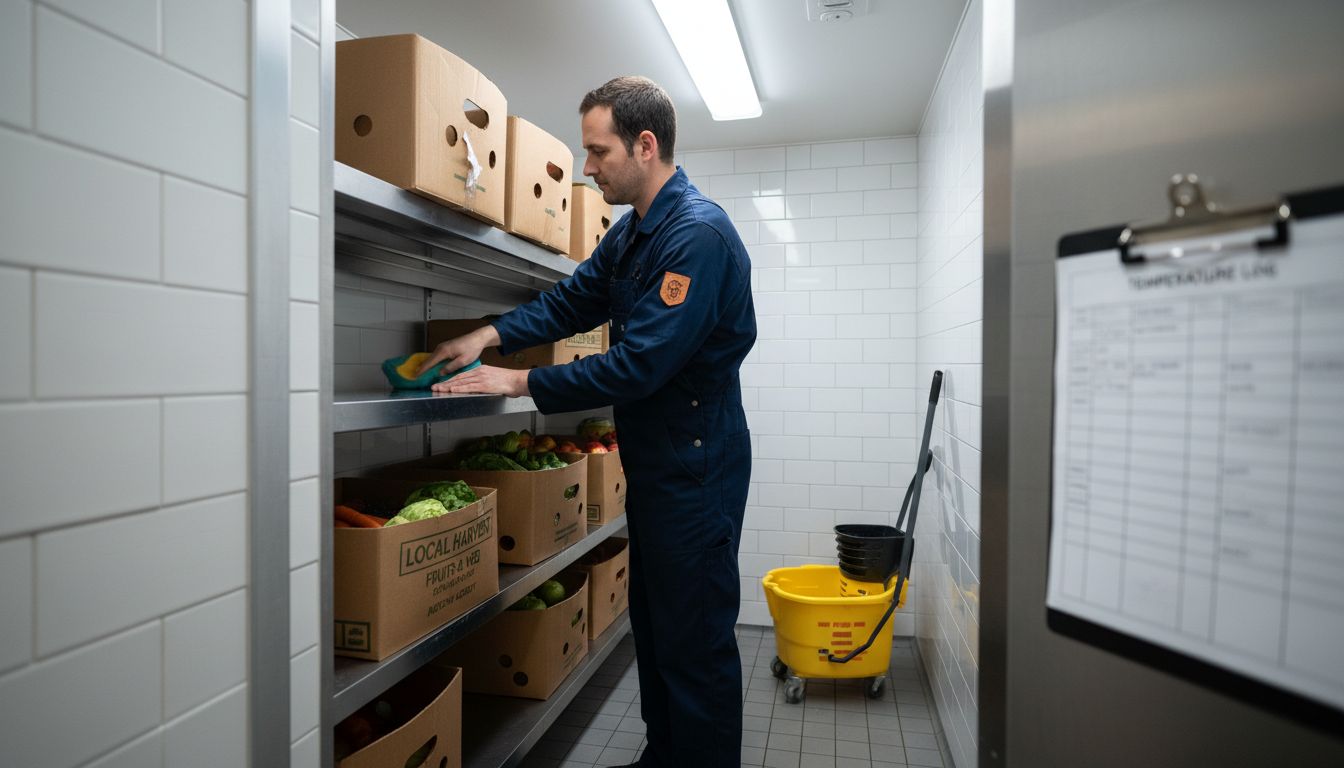
The School Meal and School Nutrition Program Handbook provides essential food safety guidelines, emphasizing critical practices like maintaining refrigeration temperatures and using separate food preparation surfaces. This means creating a structured approach that covers every aspect of food management.
Key safe receiving and storage procedures should include:
The Simcoe Muskoka District Health Unit recommends rigorous sanitization and pest control measures to complement food storage protocols. This involves regular cleaning of storage areas, implementing strict equipment sanitation procedures, and maintaining comprehensive records of all food safety actions.
Successful food safety in schools requires continuous vigilance and systematic approaches. By implementing these detailed receiving and storage procedures, schools can create a safe nutritional environment that protects student health and builds trust with parents and community members.
Monitoring food quality and safety standards is a critical responsibility for school nutrition programs that directly impacts student health and wellbeing. School administrators must develop comprehensive tracking systems that ensure consistent adherence to strict food safety protocols.
The Simcoe Muskoka District Health Unit provides detailed guidelines for maintaining a clean and safe food preparation environment, emphasizing the importance of rigorous cleaning, sanitization, and equipment management. This means creating a structured approach that goes beyond basic compliance and focuses on proactive food safety management.
Key monitoring procedures should include:
The School Meal and School Nutrition Program Handbook underscores the necessity of FOODSAFE certification for all food service operators, highlighting the critical role of professional training in maintaining high safety standards. This certification ensures staff understand provincial regulations and best practices in food handling.
Successful food safety monitoring requires consistent attention, professional training, and a culture of accountability. By implementing these comprehensive standards, schools can create a safe nutritional environment that protects students and builds confidence among parents and community members.
Regularly reviewing and refining food delivery practices is essential for maintaining an efficient and responsive school nutrition program. School administrators must develop a systematic approach to evaluating delivery performance and making continuous improvements.
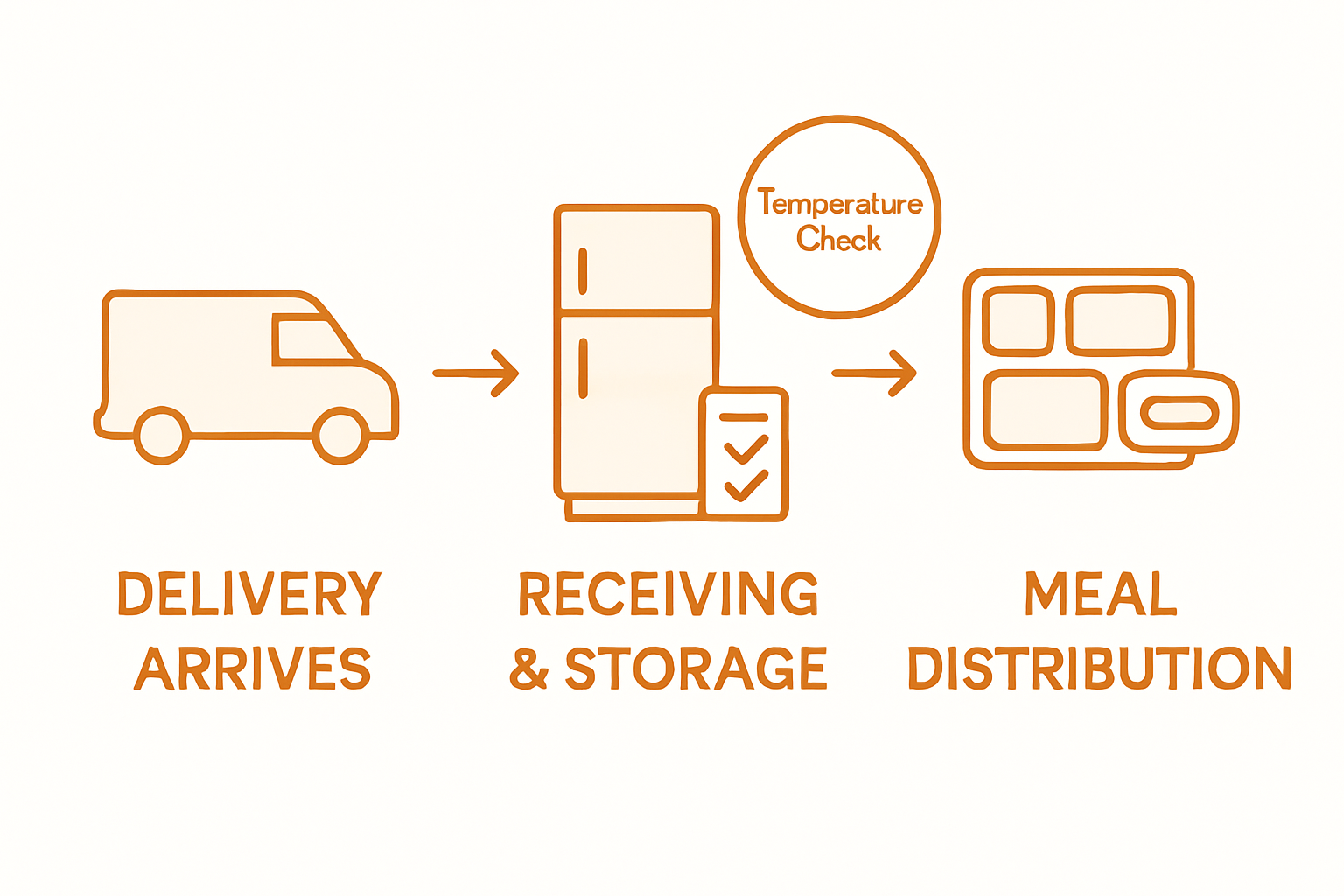
The Breakfast Club of Canada recommends establishing flexible systems for managing food deliveries, emphasizing the importance of adapting to unexpected challenges and maintaining consistent food service. This means creating a dynamic review process that goes beyond simple record keeping.
Key performance review strategies should include:
The Food Sharing Project supports comprehensive monthly reporting to help schools systematically track their nutrition program performance. These detailed reports provide valuable insights into meal service effectiveness and operational efficiency.
Successful performance reviews require a proactive mindset and commitment to continuous improvement. By implementing thorough evaluation processes, schools can enhance their food delivery systems, optimize resource allocation, and ultimately provide better nutritional support for students.
Managing food delivery in schools demands attention to detail, from establishing strict receiving protocols to selecting trusted suppliers who meet rigorous safety standards. The challenge lies in maintaining consistent food safety practices such as daily temperature checks, packaging integrity inspections, and professional training like FOODSAFE certification to protect student health and well-being.

Elevate your school’s nutrition program with trusted training solutions from Probe It Food Safety.ca. Our government-accredited Food Handler Certification and food safety courses provide flexible, self-paced learning designed by public health experts in Canada. Act now to empower your staff with critical knowledge for safe food handling and delivery. Visit Probe It Food Safety.ca and secure instant certification that supports your school’s commitment to safe, timely meals and compliance with health regulations.
Schools can ensure safe food delivery by establishing clear protocols that include designated staff, confirmed delivery times, and temperature checks upon arrival. Implement a workflow that includes documenting the condition of the food immediately upon delivery to maintain safety standards.
To select reliable food suppliers, schools should assess their Food Handler Certification, recent health inspection reports, and their history of food quality. Conduct thorough background checks and request documentation that shows compliance with health regulations and nutritional guidelines.
For effective food receiving and storage, schools should immediately check temperatures, verify packaging integrity, and ensure perishable items are stored at 4°C or below within 30 minutes of arrival. Implement colour-coded systems for food preparation to prevent cross-contamination.
Schools should implement daily temperature checks for stored foods, conduct regular equipment sanitization, and track food storage duration. Additionally, maintaining logs of food safety inspections and corrective actions helps build a culture of accountability within the food service program.
Regular reviews of food delivery performance are crucial for identifying areas of improvement and ensuring a responsive nutrition program. Track delivery timeliness and collect feedback from staff to enhance service reliability and student satisfaction.
Effective communication regarding food delivery logistics includes coordinating with staff responsible for receiving food to ensure minimal disruption. Establish clear lines of communication for reporting delays or issues and have backup plans in place to adapt to unforeseen challenges.
Exams are stressful, and the pressure of passing may leave you feeling overwhelmed and nervous that you won’t pass, even

Food safety is essential if you want to ensure safety and establish trust with your customers. Food handlers must be

Practicing good food safety habits is paramount to maintaining a healthy kitchen. Regardless of the size of your hotel business