No products in the cart.

10 Tips for Passing Your Food Handler’s Certificate Exam
Exams are stressful, and the pressure of passing may leave you feeling overwhelmed and nervous that you won’t pass, even


Recent studies show that nearly 30 percent of Canadian restaurants struggle to keep staff fully updated on safety protocols. In an industry where one missed update can jeopardize public health and legal compliance, staying informed is not optional. This overview highlights how strategic communication and modern training tools can help Canadian food safety managers create reliable staff update systems, minimizing risk while supporting ongoing professional growth.
| Point | Details |
|---|---|
| Effective Communication is Essential | Establish structured communication protocols to keep staff informed about updates in regulations and operational expectations. |
| Training and Certification are Crucial | Regular training sessions and mandatory certification renewals, such as the Food Handlers Certificate and WHMIS Certificate, are essential for compliance and safety standards. |
| Leverage Digital Tools | Utilize digital training platforms to improve accessibility and flexibility in staff training while enabling real-time progress tracking. |
| Focus on Continuous Learning | Create a culture of ongoing professional development through consistent feedback and alignment of training objectives with organizational goals. |
Effective staff update protocols represent a critical foundation for maintaining quality and safety standards in Canadian foodservice operations. These structured communication strategies ensure that every team member remains informed about current regulations, training requirements, and operational expectations. Workforce adjustment guidelines from the National Joint Council provide a comprehensive framework for implementing systematic staff update processes.
In the dynamic foodservice environment, update protocols typically encompass several key components. These include regular training sessions, mandatory certification renewals like Food Handlers Certificate and WHMIS Certificate, periodic skills assessments, and structured communication channels. Restaurants must develop clear mechanisms to disseminate important information rapidly and consistently across all staff levels, ensuring everyone understands current health, safety, and performance standards.
Establishing a robust protocol requires strategic planning and consistent execution. This involves creating standardized documentation processes, scheduling mandatory training intervals, tracking individual certification statuses, and implementing digital platforms for real-time communication. Canadian food safety resources recommend developing a comprehensive tracking system that monitors each employee’s training progression and compliance requirements.
Pro tip: Implement a digital dashboard that provides real-time updates on staff certifications and training progress to streamline your compliance management.
Canadian foodservice operations rely on diverse training and communication methods to ensure staff remain well-informed and competent. Restaurant training approaches emphasize flexible learning strategies that accommodate different employee skill levels and learning preferences. These methods range from traditional in-person workshops to digital platforms, allowing restaurants to create comprehensive and adaptable training ecosystems.

Key training methodologies include hands-on practical sessions, online learning modules, interactive workshops, and mentorship programs. In-house training typically covers critical areas such as Food Handlers Certificate requirements, WHMIS Certificate protocols, and specific operational procedures unique to each restaurant. Multimedia resources like instructional videos, digital manuals, and interactive simulations provide additional support for visual and kinesthetic learners, ensuring information is absorbed effectively.
Effective training principles recommend implementing multi-channel communication strategies. This involves creating feedback mechanisms, conducting regular skills assessments, and developing personalized learning pathways. Restaurants can leverage digital platforms to track individual progress, schedule mandatory training sessions, and provide real-time updates on certification requirements and industry standards.
Here’s a summary of how different training methods serve Canadian foodservice operations:
| Method | Best For | Common Tools |
|---|---|---|
| Hands-on Training | Skills practice | In-person sessions |
| Online Modules | Flexible learning | E-learning platforms |
| Interactive Workshops | Team building | Simulations, group tasks |
| Mentorship Programs | Individualized development | Peer coaching |
Pro tip: Develop a blended learning approach that combines digital modules with hands-on training to maximize knowledge retention and engagement.
Canadian foodservice operations must navigate a complex landscape of legal and regulatory requirements designed to ensure public health and safety. Safe Food for Canadians Regulations provide a comprehensive framework that mandates strict standards for food handling, staff training, and operational protocols. These regulations represent a critical foundation for maintaining food safety and quality across the foodservice industry.
Key regulatory requirements include mandatory certifications such as the Food Handlers Certificate and WHMIS Certificate, which demonstrate an employee’s understanding of critical safety protocols. Restaurants must maintain detailed documentation of staff training, including proof of certification, skills assessments, and ongoing professional development. Canadian Food Inspection Agency guidelines emphasize the importance of comprehensive staff training programs that cover food safety, hygiene standards, and proper handling procedures.
Compliance involves more than just obtaining certificates. Foodservice establishments must implement robust systems for tracking employee credentials, conducting regular skills assessments, and ensuring continuous education. This includes maintaining up-to-date training records, implementing standardized operational procedures, and creating a culture of ongoing learning and safety awareness. Restaurants must be prepared for potential inspections and demonstrate a proactive approach to meeting legal requirements through comprehensive staff development and documentation.
Pro tip: Create a digital tracking system that automatically monitors certification expiration dates and sends automated reminders for required recertification.
Digital technologies have revolutionized training approaches in Canadian foodservice, offering unprecedented flexibility and accessibility for staff development. Modern digital training technologies enable restaurants to overcome traditional training limitations, providing interactive and engaging learning experiences that adapt to individual staff needs and learning styles.
Key digital training tools include comprehensive e-learning platforms, interactive multimedia modules, and virtual simulation environments. These technologies support critical certification processes like Food Handlers Certificate and WHMIS Certificate training, allowing staff to complete mandatory requirements efficiently. Multimedia resources such as video tutorials, interactive quizzes, and scenario-based learning modules help reinforce complex safety protocols and operational procedures more effectively than traditional classroom-based training.
Food safety training resources demonstrate the potential of digital platforms to create scalable, consistent training experiences across diverse foodservice environments. Advanced digital tools now offer features like real-time progress tracking, personalized learning pathways, and instant certification verification. These technologies not only streamline training processes but also ensure that staff remain continuously updated on the latest industry standards and regulatory requirements.
The table below compares key digital training tools and their business impact:
| Tool Type | Main Advantage | Business Impact |
|---|---|---|
| E-learning Platforms | Anytime, anywhere access | Consistent staff training |
| Interactive Quizzes | Engaging assessments | Identifies weak areas |
| Virtual Simulations | Real-world scenarios | Safer skill application |
| Mobile Learning Apps | On-the-go access | Higher completion rates |
Pro tip: Select digital training platforms that offer mobile compatibility and offline access to maximize learning flexibility for your staff.
Training initiative challenges demonstrate that most failures stem from systemic issues rather than individual employee limitations. Successful staff development in Canadian foodservice requires a holistic approach that goes beyond simple certification processes like Food Handlers Certificate and WHMIS Certificate training, addressing deeper organizational learning dynamics.
Common pitfalls include inconsistent implementation, lack of managerial support, and insufficient follow-up mechanisms. Restaurants often invest in initial training but fail to create environments that reinforce new skills. Effective strategies involve creating structured feedback loops, providing ongoing mentorship, and aligning training objectives with broader organizational goals. This means moving beyond checklist compliance to developing a genuine culture of continuous learning and professional growth.
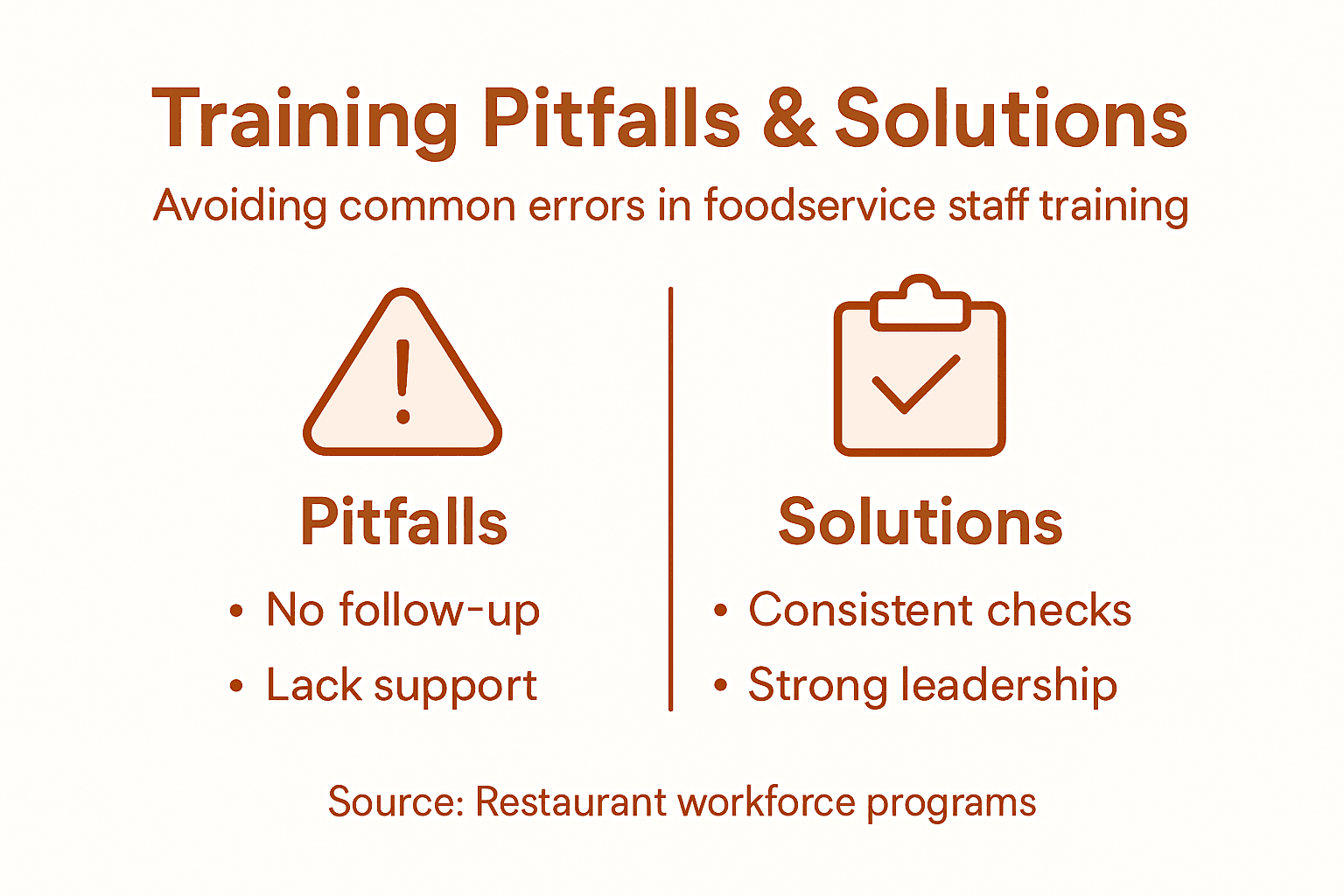
Restaurant workforce development programs highlight the importance of sustained support and strategic skill development. Successful organizations integrate training into their core operational strategies, using techniques like peer mentoring, performance-linked learning pathways, and regular skills assessments. By creating clear connections between training, career progression, and workplace incentives, restaurants can transform mandatory certifications from bureaucratic requirements into meaningful professional development opportunities.
Pro tip: Design training programs with built-in accountability measures that link skill acquisition directly to performance evaluations and career advancement opportunities.
Keeping your foodservice staff up to date is essential to meet key challenges such as managing certification renewals like the Food Handlers Certificate and WHMIS Certificate and ensuring consistent training across your team. The article highlights how gaps in communication and tracking can affect compliance and workplace safety. If you want to eliminate those pain points and implement robust staff update protocols that align with Canadian legal and regulatory standards take control with flexible, government-accredited courses.
Discover how Probe It Food Safety.ca offers self-paced, accessible training solutions designed by public health experts to support ongoing staff development and certification management. Act now to provide your team with instant certification and real-time assurance of compliance. Visit Probe It Food Safety.ca today and empower your restaurant operations while securing workplace safety through trusted online training.
Staff update protocols are structured communication strategies that ensure team members are informed about regulations, training requirements, and operational expectations in the foodservice environment.
Regular training is crucial for maintaining quality and safety standards. It helps staff remain compliant with current health codes, understand food handling protocols, and stay updated on operational procedures, including the renewal of certifications like the Food Handlers Certificate and WHMIS Certificate.
Digital tools such as e-learning platforms, interactive quizzes, and virtual simulations provide flexible, engaging training experiences that can be tailored to individual staff needs, ensuring consistent and effective learning and compliance across foodservice operations.
Common pitfalls include inconsistent training implementation, lack of managerial support, and insufficient follow-up. Addressing these issues through structured feedback, ongoing mentorship, and aligning training with organizational goals can enhance staff development and skill retention.
Exams are stressful, and the pressure of passing may leave you feeling overwhelmed and nervous that you won’t pass, even

Food safety is essential if you want to ensure safety and establish trust with your customers. Food handlers must be

Practicing good food safety habits is paramount to maintaining a healthy kitchen. Regardless of the size of your hotel business