No products in the cart.


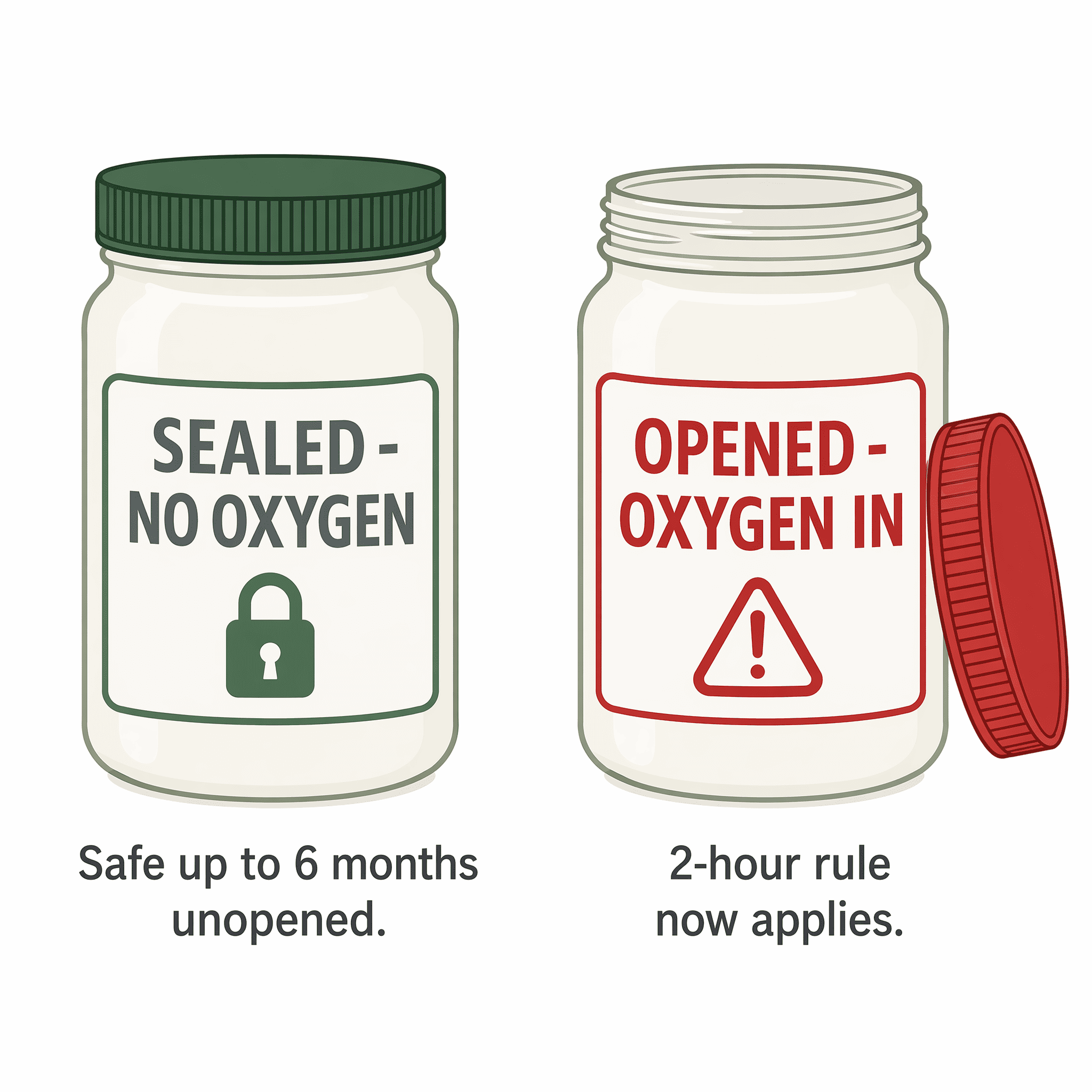
Once you open a jar of mayonnaise, the same 2-hour rule applies to it as any other hazardous food. Mayonnaise is made with eggs, and eggs are high in protein and moisture, which makes any food mixture containing them potentially hazardous. An unopened jar is different. It can sit safely in your cupboard for up to 6 months, but that protection disappears the moment you break the seal.
Eggs are the reason. Eggs are high-protein foods with a lot of moisture, which officially makes them potentially hazardous foods. Any food mixture that contains eggs, such as mayonnaise, automatically becomes hazardous. Hazardous foods provide the perfect environment for harmful bacteria to grow, multiply, and make people sick.
A potentially hazardous food is legally defined as any food in a form or state that can support the rapid growth of infectious or toxin-producing micro-organisms, which is why it requires strict time and temperature control to remain safe.
Because it is packaged with zero oxygen. Commercially packaged and canned foods are sealed perfectly in factories to prevent bacterial growth. There is a specific type of harmful bacteria called aerobic bacteria, and, like humans, they need oxygen to live, breathe, and grow. When mayonnaise is sealed in a jar on the grocery store shelf, there is no oxygen inside, so there is no bacterial growth, and the mayonnaise can safely sit in your cupboard for up to 6 months.
The moment you buy it, take it home, and open the lid, you introduce oxygen into the jar. Suddenly the bacteria have everything they need to wake up: protein from the eggs, moisture, and now oxygen. From that point on, the strict 2-hour rule applies, and once opened and refrigerated, the jar stays safe for 1 to 2 months before it should be thrown out.
The 2-hour rule is one of the most important laws in food safety. Under Ontario's food safety regulations, potentially hazardous foods may be left out at room temperature for up to 2 hours. Once those two hours are up, the food is no longer safe to eat and must be thrown away.
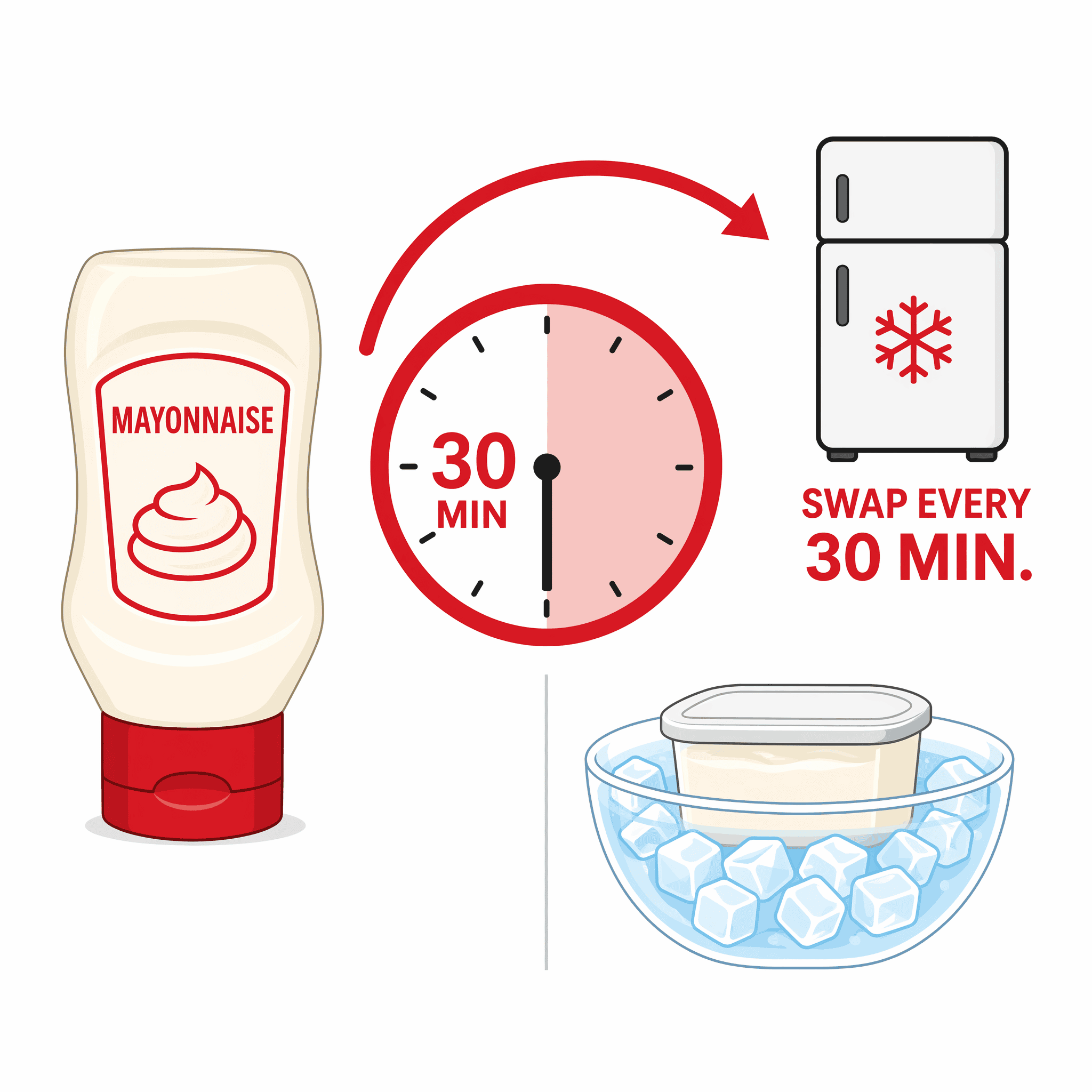
You might wonder how hot dog stands, burger shops, and sandwich counters leave mayonnaise out for customers all day without breaking the rule. The answer is that they do not leave it out all day. Smart businesses rotate their ingredients in and out of the fridge every 30 minutes, using a method called small batches.
Instead of putting a large jar of mayonnaise on the counter, a food worker puts out a small squeeze bottle and keeps the main supply pre-chilled in the fridge. Every 30 minutes, the warm bottle is swapped for a fresh cold one, so the mayonnaise never actually reaches the 2-hour limit. Some businesses instead pack the bottom of the mayonnaise container in a deep ice bath to keep it cold while it sits on the counter. This kind of time and temperature control is exactly what a food handlers certificate course trains food workers to do correctly.
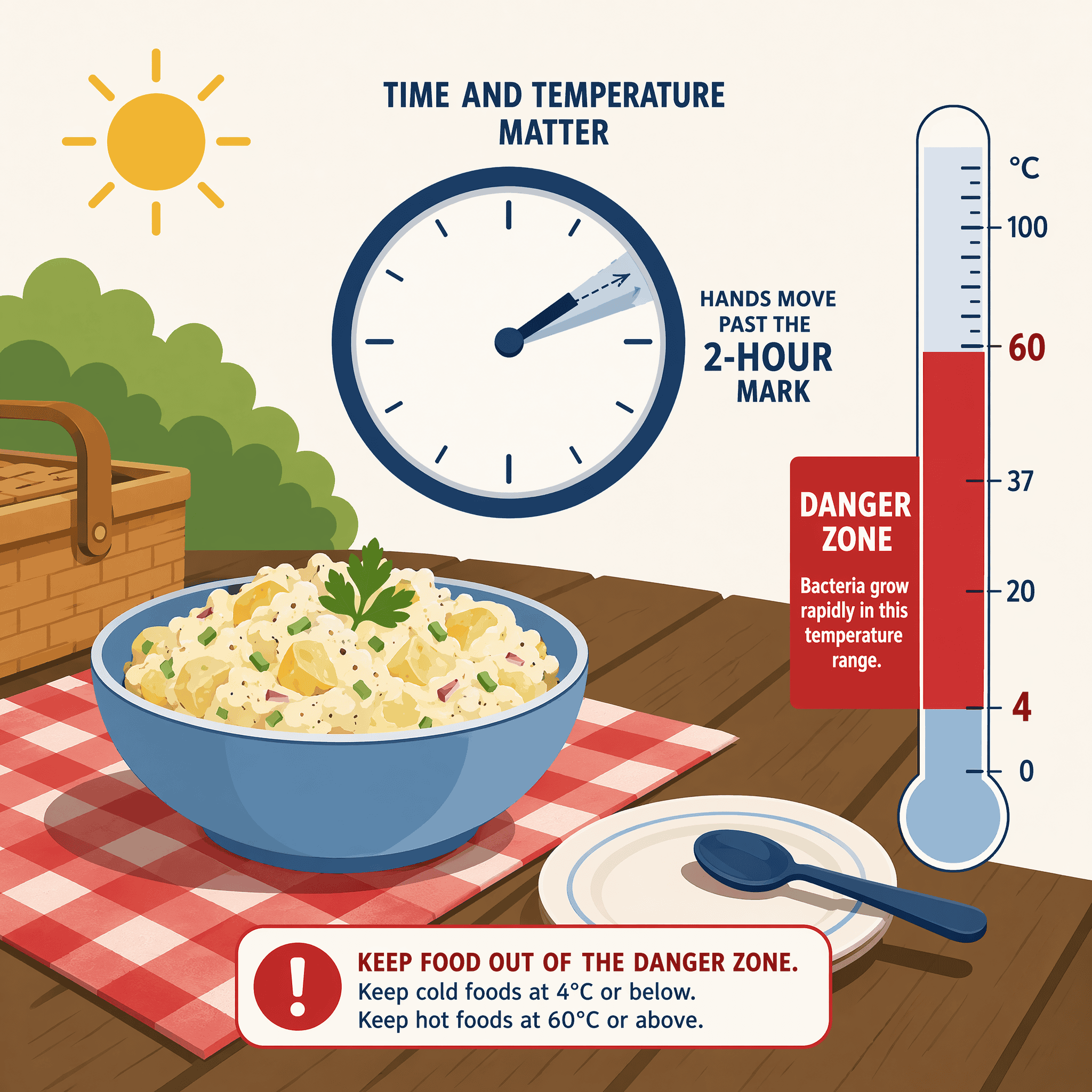
The Danger Zone is the temperature range between 4°C and 60°C (40°F and 140°F). When an open jar of mayonnaise sits on a kitchen counter or a picnic table, it falls squarely within this zone.
Inside the Danger Zone, bacteria are very comfortable. They grow fastest at 37°C, the same as normal human body temperature. Bacteria reproduce by dividing themselves in half, and in the Danger Zone, they double their numbers every 10 to 20 minutes. Starting from one bacterial cell, you have two after 20 minutes, four after 40 minutes, and eight after an hour. Because they double so quickly, bacteria reach dangerous levels in a very short time. The 2-hour limit exists because two hours is generally too short for the bacteria to multiply enough to cause harm, but past that point, the bacterial count is too high, and the food is unsafe.
Eating mayonnaise that has been sitting out for more than two hours puts you at risk of food poisoning. The most common symptoms are severe stomach cramps, nausea, vomiting, diarrhea, and fever, and depending on the type of bacteria, these symptoms can start anywhere from 30 minutes to 72 hours after eating.
One of the biggest risks is intoxication from bacteria like Staphylococcus aureus, which not only multiply in warm food but also produce toxic waste products as they grow. This toxin cannot be destroyed by heat. Even if you cooked the warm mayonnaise at a high temperature, the bacteria might die, but the toxin would remain, and you would still get sick. This is why throwing out temperature-abused food is the only safe option, and reheating is never a fix per Health Canada's food safety guidance.
Tap each scenario to reveal what actually happens.
Get your Food Handler Certificate 100% online in as little as 6 hours. Registration takes 30 seconds.
Register NowPick an answer to see if you got it right, plus a quick explanation.
1. Why does an unopened jar of commercial mayonnaise sit safely on a grocery store shelf for months?
2. What is the Temperature Danger Zone where bacteria multiply the fastest?
3. Under Ontario food safety rules, what is the maximum time opened mayonnaise can sit out at room temperature?
4. If mayonnaise is left in the Danger Zone, how quickly do the bacteria double their numbers?
Mayonnaise follows the same 2-hour rule as every hazardous food. See the full breakdown or check another food:
Once you open a jar and keep it refrigerated at 4°C or below, it stays safe for 1 to 2 months. This is different from the 2-hour rule, which applies only while it is sitting out at room temperature.
No. If it has been sitting out for more than 2 hours, including overnight, it must be thrown out. Refrigeration only slows bacteria; it does not kill bacteria that have already grown, so chilling it again does not make it safe.
Because of the eggs. Eggs are high in moisture and protein, which meets the legal definition of a potentially hazardous food. Any mixture containing eggs, including mayonnaise, is treated the same way.
No. Some bacteria, such as Staphylococcus aureus, produce toxins as they grow, and heat does not destroy them. Even if the bacteria are killed by cooking, the toxin can remain and still make you sick.
100% online. Done in as little as 6 hours. Valid 5 years across Canada.
Register Now