No products in the cart.

10 Tips for Passing Your Food Handler’s Certificate Exam
Exams are stressful, and the pressure of passing may leave you feeling overwhelmed and nervous that you won’t pass, even


Over half of Canadian hospitality businesses now adopt sustainable initiatives to meet rising consumer expectations. As environmental awareness shapes the choices of diners and families, hospitality providers across Canada are rethinking their operations from the ground up. This overview sheds light on how local sourcing, innovative technologies, and green certifications are redefining sustainability for Canadian restaurants and daycares.
| Point | Details |
|---|---|
| Sustainability as a Competitive Advantage | Canadian hospitality businesses embracing sustainable practices like local sourcing and circular economy principles position themselves favourably in the eyes of eco-conscious consumers. |
| Technological Innovations | The implementation of intelligent technologies, including building management systems and AI-driven waste reduction, is critical for improving operational efficiency and lowering environmental impact. |
| Green Certification Importance | Attaining prestigious green certification not only demonstrates environmental commitment but also provides businesses with frameworks to enhance their operational practices and compliance with regulations. |
| Energy and Water Efficiency | Investing in energy and water efficiency innovations is essential for reducing resource consumption and operational costs, ultimately benefiting business sustainability. |
The hospitality industry is experiencing a profound transformation driven by environmental consciousness and innovative practices. Circular economy principles are reshaping how restaurants and daycares approach sustainability, moving beyond traditional waste management towards holistic, regenerative strategies.
Key sustainability trends are emerging that go far beyond simple recycling. Urban farming initiatives are gaining momentum, allowing hospitality businesses to integrate local biodiversity directly into their operations. These approaches might include rooftop gardens, vertical growing systems, and partnerships with local agricultural producers to reduce transportation emissions and support regional food ecosystems.
Technological innovations are also driving significant sustainability improvements. Solar panel adoption represents a critical strategy for reducing carbon footprints, enabling businesses to generate clean energy and decrease reliance on traditional power grids. Zero-waste practices like comprehensive composting programs are becoming standard, with forward-thinking establishments implementing rigorous waste sorting and reduction protocols that transform potential garbage into valuable resources.
For Canadian restaurants and daycares, embracing these sustainability trends isn’t just an environmental imperative – it’s a competitive advantage. Consumers increasingly support businesses demonstrating genuine commitment to ecological responsibility. By integrating circular economy principles, leveraging technological solutions, and reimagining waste as a potential resource, hospitality organisations can create more resilient, efficient, and environmentally conscious operations.
The Canadian hospitality sector is undergoing a remarkable transformation through strategic local sourcing practices that prioritize regional economic sustainability and environmental responsibility. Canadian hospitality operators are increasingly curating menus with locally sourced ingredients, recognising that consumer preferences are shifting towards fresher, more transparent dining experiences that support local producers.
Circular economy principles are revolutionising how restaurants and daycares approach resource management. Innovative circular practices demonstrate significant potential for reducing waste and generating economic benefits, particularly in sectors like personal protective equipment (PPE) processing. By reimagining waste streams as valuable resources, businesses can create closed-loop systems that minimise environmental impact while generating potential revenue streams.

Local sourcing extends beyond mere ingredient procurement. It represents a comprehensive approach to sustainable operations that involves building robust relationships with regional farmers, suppliers, and producers. This strategy not only reduces transportation emissions but also strengthens local food ecosystems, creates jobs, and provides guests with authentic, high-quality dining experiences that reflect regional culinary traditions.
For Canadian restaurants and daycares, embracing local sourcing and circular practices is no longer optional. These approaches represent a strategic advantage that aligns environmental stewardship with economic resilience. By implementing intelligent sourcing strategies, reducing waste, and creating regenerative business models, hospitality organisations can differentiate themselves in an increasingly competitive marketplace while contributing to broader sustainability goals.
The hospitality industry is pioneering transformative approaches to energy and water management that go far beyond traditional conservation methods. Canadian operators are embracing cutting-edge technologies like LED lighting, motion sensors, and low-flow water fixtures to dramatically reduce resource consumption and operational costs.
Intelligent building management systems are revolutionising how restaurants and daycares monitor and optimise their energy usage. These advanced systems integrate real-time sensors, predictive analytics, and automated controls to create dynamic environments that adjust lighting, heating, and cooling based on occupancy and specific operational needs. By implementing such technologies, businesses can achieve significant reductions in energy waste while maintaining optimal comfort and functionality.
Water efficiency innovations are equally critical in sustainable hospitality operations. Advanced filtration systems, greywater recycling technologies, and precision irrigation methods are enabling businesses to minimise water consumption without compromising hygiene or operational quality. These strategies not only reduce environmental impact but also generate substantial cost savings, creating a compelling business case for sustainable infrastructure investments.
For Canadian restaurants and daycares, embracing energy and water efficiency is no longer optional – it’s a strategic imperative. By investing in intelligent technologies, implementing comprehensive monitoring systems, and fostering a culture of resource consciousness, hospitality organisations can simultaneously reduce their environmental footprint, lower operational expenses, and demonstrate corporate responsibility to increasingly eco-aware consumers.
Innovative technologies are transforming how Canadian restaurants and daycares approach waste management and resource conservation. Institutions like Algonquin College are pioneering advanced waste processing technologies, such as biodigesters that convert food waste into greywater, dramatically reducing landfill contributions and methane emissions while creating valuable secondary resources.
Tech-driven strategies for waste reduction extend beyond traditional recycling methods. Artificial intelligence and machine learning algorithms are now being deployed to analyse waste streams, predict consumption patterns, and optimize ingredient procurement. These intelligent systems help businesses minimize food waste by providing precise insights into inventory management, portion control, and purchasing strategies, ultimately reducing both environmental impact and operational costs.
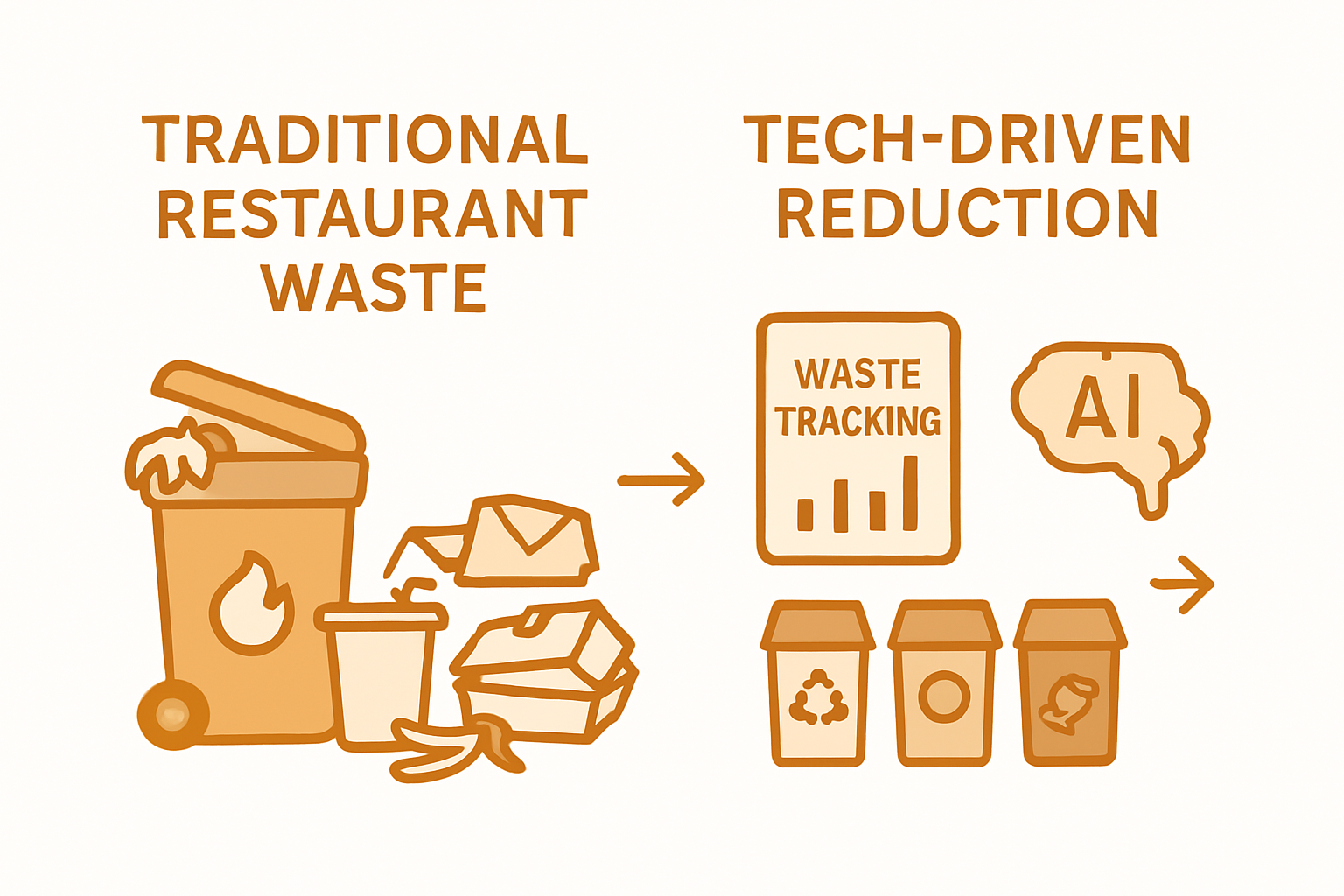
Research exploring alternative food strategies, such as implementing meat-free meal options, demonstrates the complex interactions between technological interventions and operational outcomes. While such initiatives can significantly reduce greenhouse gas emissions, they also present nuanced challenges like potential changes in meal sales and nutritional balance. Successful implementation requires sophisticated technological approaches that balance environmental goals with operational effectiveness and customer satisfaction.
For Canadian hospitality businesses, embracing tech-driven waste reduction is no longer a choice but a strategic necessity. By integrating advanced technologies like biodigesters, AI-powered inventory management, and data-driven consumption analysis, restaurants and daycares can create more sustainable, efficient, and economically viable operations that respond dynamically to environmental challenges and changing consumer expectations.
Prestigious green certifications are transforming the Canadian hospitality landscape, providing restaurants and daycares with structured frameworks to demonstrate their commitment to environmental sustainability. These certifications serve as more than mere accolades; they represent comprehensive assessments of an organisation’s ecological practices, operational efficiency, and commitment to reducing environmental impact.
International eco-labels like Green Key Global operate across multiple countries, offering rigorous standards for environmental stewardship. These certification programs evaluate businesses on multiple dimensions, including energy consumption, waste management, water usage, and overall environmental management. By participating in such programs, hospitality organisations not only validate their sustainability efforts but also gain valuable insights into improving their environmental performance.
Regulatory responsibilities extend beyond voluntary certifications. Canadian businesses must navigate increasingly complex environmental regulations that mandate specific sustainability practices. These requirements often include detailed reporting on carbon emissions, waste reduction strategies, and energy efficiency measures. Proactive organisations view these regulations not as burdensome constraints but as opportunities to innovate, differentiate themselves in the marketplace, and demonstrate corporate social responsibility.
For Canadian restaurants and daycares, green certification is no longer a peripheral concern but a core strategic priority. By embracing comprehensive certification programs, maintaining rigorous environmental standards, and staying ahead of regulatory requirements, businesses can simultaneously reduce their ecological footprint, enhance their reputation, and create meaningful value for environmentally conscious consumers and stakeholders.
Canadian restaurants and daycares striving to implement energy efficiency innovations, tech-driven waste reduction, and circular economy principles face the critical challenge of ensuring staff are fully trained in safety and compliance. Without proper knowledge of food safety, WHMIS, and transportation of dangerous goods, sustainable efforts risk falling short of regulatory expectations and operational effectiveness. Embracing these sustainability trends means also investing in your team’s expertise to reduce risks and improve overall environmental performance.

Discover how Probe It Food Safety.ca can support your environmental sustainability goals with flexible, government-accredited food safety courses designed for Canadian hospitality businesses. Our self-paced training is available 24/7, providing instant certification to help your staff meet compliance requirements while fostering a culture of resource consciousness and safety. Take the next step now to empower your team by exploring our offerings at Probe It Food Safety.ca and ensure your sustainable operations are backed by trusted knowledge and expertise.
Key sustainability trends include local sourcing of ingredients, circular economy practices, energy and water efficiency innovations, and tech-driven waste management solutions. These trends focus on reducing environmental impact while improving operational efficiency.
Canadian restaurants and daycares can implement local sourcing by building relationships with regional farmers and suppliers, curating menus that feature locally sourced ingredients, and prioritizing transparent dining experiences for consumers.
Technologies such as LED lighting, motion sensors, low-flow water fixtures, and advanced building management systems are used to optimize energy and water usage, reducing overall consumption and operational costs in hospitality settings.
Green certification is important as it provides a structured framework for businesses to demonstrate their commitment to sustainability. It helps validate environmental practices, enhance reputation, and comply with regulatory requirements while appealing to environmentally conscious consumers.
Exams are stressful, and the pressure of passing may leave you feeling overwhelmed and nervous that you won’t pass, even

Food safety is essential if you want to ensure safety and establish trust with your customers. Food handlers must be

Practicing good food safety habits is paramount to maintaining a healthy kitchen. Regardless of the size of your hotel business