No products in the cart.

10 Tips for Passing Your Food Handler’s Certificate Exam
Exams are stressful, and the pressure of passing may leave you feeling overwhelmed and nervous that you won’t pass, even


Finding the right talent for a Canadian hospitality business can feel like solving a complicated puzzle. With over 1.2 million workers in Canada’s hospitality sector, employers face fierce competition and evolving job market demands. For anyone navigating this fast-paced industry, understanding the latest hiring trends and compliance requirements is essential. Whether you are an employer or a job seeker, gaining clear insight into these hiring practices helps build stronger teams and drives lasting success.
| Point | Details |
| Strategic Hiring Approach | Employers should prioritize candidates with relevant certifications and robust technical skills to enhance safety and compliance in the hospitality sector. |
| Effective Recruitment Methods | A multifaceted recruitment strategy, including partnerships with educational institutions and leveraging digital platforms, is essential for attracting top talent. |
| Comprehensive Screening Processes | Employers must implement thorough screening methods to balance technical qualifications with interpersonal skills, ensuring a strong cultural fit. |
| Robust Onboarding Practices | Effective onboarding is key to employee engagement and retention, and it requires comprehensive training and alignment with the organization’s culture. |
Canada’s hospitality industry is a dynamic, competitive labour market that demands strategic hiring and comprehensive workforce development. According to OpenText BC, successful career planning in this sector requires thorough research of job market trends, understanding industry demands, and aligning professional skills with emerging opportunities.
The hospitality sector presents unique hiring challenges that require employers to focus on multiple key dimensions. Employers must prioritize candidates with robust technical skills, including essential certifications such as the Food Handlers Certificate and WHMIS. These credentials demonstrate a candidate’s commitment to workplace safety and regulatory compliance, which are critical in food service and hospitality environments. Understanding Pre-Employment Food Safety becomes particularly crucial when screening potential employees.
Navigating hospitality hiring in Canada involves several strategic considerations:
Understand current labour market dynamics
Prioritize candidates with relevant safety certifications
Assess both technical skills and interpersonal capabilities
Develop comprehensive onboarding processes
Create opportunities for continuous professional development
Successful recruitment in this sector goes beyond traditional hiring practices. Employers must create inclusive workplace cultures that attract talented professionals, offer competitive compensation packages, and provide clear career progression pathways. By investing in comprehensive hiring strategies that blend technical competence with strong interpersonal skills, Canadian hospitality businesses can build resilient and high-performing teams that deliver exceptional customer experiences.
Recruitment in the Canadian hospitality industry requires a multifaceted approach that leverages diverse channels and strategic methods. According to Read Press, successful recruitment involves exploring multiple pathways, including job fairs, educational partnerships, employment agencies, professional referrals, and targeted outreach through industry associations.
Effective sourcing strategies demand a comprehensive understanding of both traditional and modern recruitment techniques. Employers should consider a strategic recruitment mix that combines digital platforms, professional networking, and targeted community engagement. Key recruitment channels include online job boards specializing in hospitality roles, culinary school partnerships, local community colleges with hospitality programmes, and professional networks like LinkedIn that cater to food service and hospitality professionals.
The most successful recruitment approaches in hospitality typically involve a combination of methods:
Develop strong relationships with local culinary and hospitality training institutions
Leverage employee referral programmes with attractive incentives
Utilize online recruitment platforms specific to the hospitality sector
Attend regional job fairs and industry networking events
Create compelling job descriptions highlighting career development opportunities
Recruiting top talent requires more than just finding candidates with the proper Food Handlers Certificate or WHMIS certificate. Employers must also focus on candidates who demonstrate adaptability, strong interpersonal skills, and a genuine passion for customer service. By implementing a holistic recruitment strategy that balances technical qualifications with cultural fit, hospitality businesses can build resilient teams capable of delivering exceptional customer experiences in Canada’s dynamic service landscape.

Screening and interviewing candidates in the Canadian hospitality industry requires a systematic, comprehensive approach. According to Read Press, effective recruitment involves structured job analysis, detailed job descriptions, and a strategic selection process that goes beyond surface-level evaluation.
The screening process should prioritize several critical components essential to hospitality roles. Employers must carefully evaluate candidates’ technical certifications, such as the Food Handlers Certificate and WHMIS certificate, alongside soft skills, including customer service orientation, communication abilities, and adaptability. Understanding Pre-Employment Food Safety becomes a crucial screening criterion, ensuring candidates meet fundamental safety and regulatory requirements.
Key steps in an effective screening and interview process include:
Conduct thorough document verification
Review professional certifications meticulously
Perform structured behavioural interviews
Assess practical skills through scenario-based evaluations
Check references comprehensively
Validate work history and professional credentials
Successful candidate selection in hospitality requires a holistic approach that balances technical competence with interpersonal skills. By implementing a rigorous yet fair screening methodology, Canadian hospitality businesses can identify top talent who not only possess the necessary qualifications but also align with the organization’s culture and service standards. This approach ensures recruitment of professionals who can deliver exceptional customer experiences while maintaining workplace safety and regulatory compliance.
Navigating the complex landscape of legal hiring requirements is crucial for hospitality businesses in Canada. According to Read Press, employers must comply with comprehensive employment standards and human rights legislation throughout the recruitment and hiring process.
The legal compliance framework for hospitality hiring encompasses multiple critical dimensions. Employers must ensure non-discriminatory practices, respect provincial and federal employment regulations, and maintain rigorous documentation standards. Key legal considerations include protecting candidate privacy, avoiding discriminatory screening practices, and maintaining transparent hiring processes. Certifications such as the Food Handlers Certificate and WHMIS certificate must be verified while respecting human rights guidelines and avoiding unnecessary barriers to employment.
Essential legal compliance elements for hospitality employers include:
Adhering to federal and provincial human rights legislation
Implementing non-discriminatory hiring practices
Protecting the candidate’s personal information
Maintaining transparent recruitment documentation
Ensuring fair employment screening processes
Respecting workplace equity and inclusion standards
Verifying professional credentials without invasive practices
Successful legal compliance requires a proactive and comprehensive approach. Hospitality businesses must develop robust hiring policies that balance regulatory requirements with organizational needs. By creating clear, transparent, and fair hiring practices, employers can mitigate legal risks while building diverse, talented teams that represent the dynamic Canadian hospitality landscape. Understanding Pre-Employment Food Safety provides additional insights into navigating regulatory requirements in workplace recruitment.
Effective onboarding is crucial for integrating new employees into the dynamic hospitality industry. According to OpenText BC, successful onboarding programs are designed to align new hires with the organization’s culture, expectations, and operational standards, creating a foundation for long-term employee engagement and performance.
A comprehensive onboarding strategy in hospitality must address multiple critical dimensions. New employees require thorough training in essential safety certifications, such as the Food Handlers Certificate and WHMIS, as well as detailed orientation on workplace protocols, customer service expectations, and organizational culture. Understanding the Importance of Workplace Safety becomes a critical component of this initial integration process.
Key elements of an exceptional hospitality team onboarding process include:
Develop a structured, multi-day orientation programme
Provide comprehensive safety and compliance training
Assign dedicated mentors or buddy systems
Conduct role-specific technical skills workshops
Establish clear performance expectations
Create opportunities for immediate hands-on experience
Implement regular check-ins during the first 90 days
Successful onboarding transcends mere paperwork and procedural training. It represents a strategic opportunity to build employee confidence, foster team integration, and establish a strong cultural foundation. By investing in a holistic, supportive onboarding approach, hospitality businesses can significantly reduce turnover, accelerate new hire productivity, and create an environment where employees feel valued, supported, and motivated to excel.
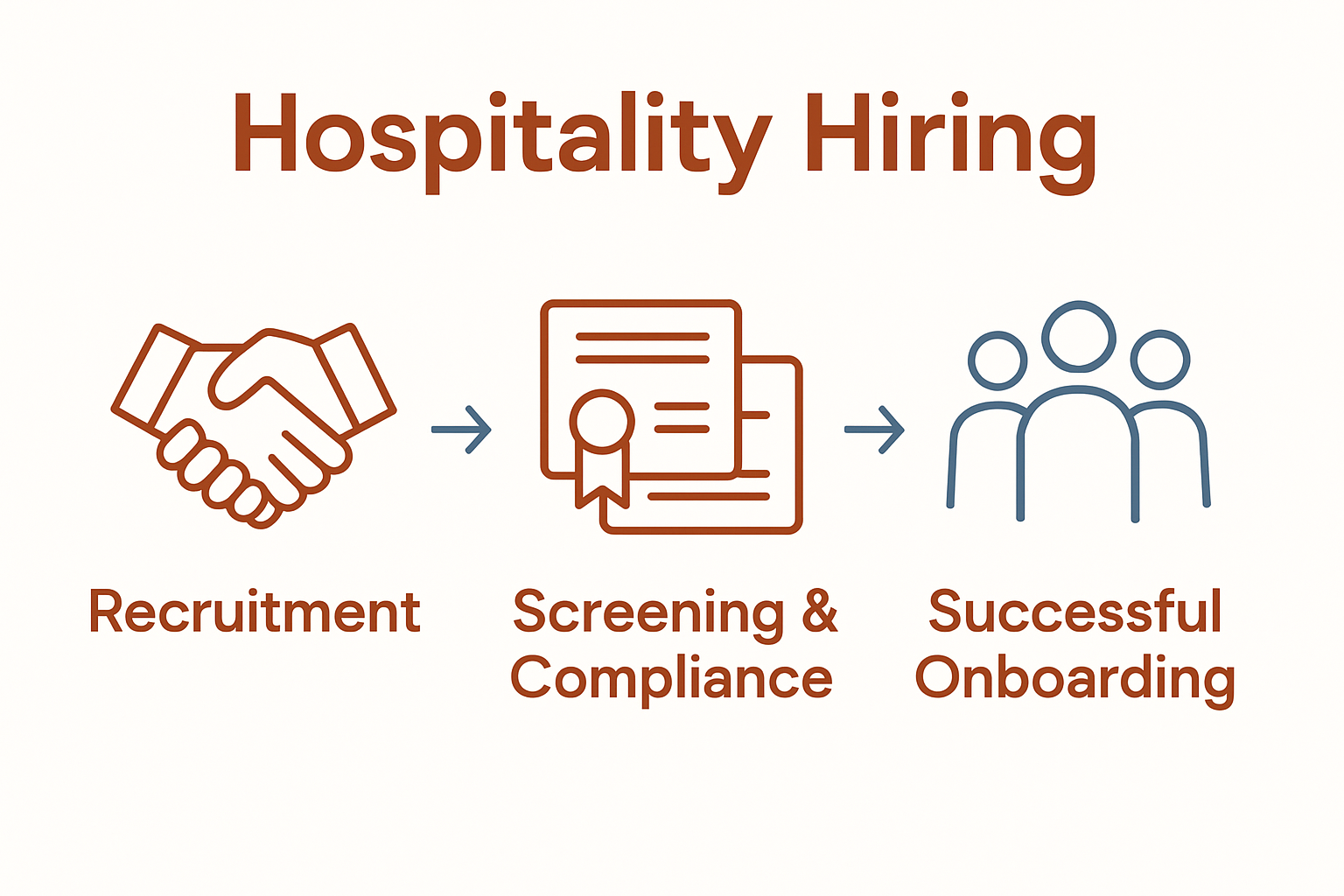
Navigating hospitality hiring in Canada means addressing critical challenges, such as ensuring that all team members hold valid Food Handlers and WHMIS certificates. Your goal is clear: build a safety-conscious, skilled workforce that meets legal requirements while enhancing the customer experience. At Probe It Food Safety.ca, we understand these pressing needs and offer a seamless way to equip your staff with government-accredited, flexible online training tailored to the hospitality sector.

Empower your recruitment and onboarding processes by choosing training that guarantees instant certification and 24/7 access. Don’t let compliance concerns slow your hiring success or risk workplace safety. Visit Probe It Food Safety.ca today to explore our comprehensive food safety and WHMIS courses. Ensure your team’s credentials are up to date and that your business thrives in Canada’s competitive hospitality market. Get started now and build a safer, more capable workforce.
Employers in the hospitality industry should prioritize candidates with essential certifications such as the Food Handlers Certificate and WHMIS certificate, alongside strong technical and interpersonal skills.
To enhance recruitment, consider a multifaceted approach that includes partnerships with local culinary schools, employee referral programs, and targeted outreach on hospitality-specific job boards.
Effective onboarding should involve structured orientation programs, comprehensive safety training, mentorship assignments, and opportunities for immediate hands-on experience to ensure new hires feel supported and integrated into the team.
Employers must adhere to non-discriminatory hiring practices, protect candidate privacy, and comply with federal and provincial employment regulations, ensuring a transparent hiring process while verifying necessary certifications.
Upskilling in Hospitality 2025: Complete Canadian Guide – Probe It Food Safety
Understanding the Importance of Workplace Safety in Hospitality – Probe It Food Safety
Understanding Occupational Health Hazards in Hospitality – Probe It Food Safety
Restaurant Marketing Basics: Complete Guide for Canada – Probe It Food Safety
Exams are stressful, and the pressure of passing may leave you feeling overwhelmed and nervous that you won’t pass, even

Food safety is essential if you want to ensure safety and establish trust with your customers. Food handlers must be

Practicing good food safety habits is paramount to maintaining a healthy kitchen. Regardless of the size of your hotel business