No products in the cart.

10 Tips for Passing Your Food Handler’s Certificate Exam
Exams are stressful, and the pressure of passing may leave you feeling overwhelmed and nervous that you won’t pass, even


Did you know restaurant kitchens in the Greater Toronto Area can reach temperatures above 50°C? This extreme heat puts kitchen workers at risk of serious health problems and increases the likelihood of on-the-job accidents. High temperatures, humid conditions, and demanding work routines combine to create a challenging environment. Understanding the real dangers of heat stress helps teams protect their staff, improve safety, and keep kitchens running smoothly.
| Point | Details |
| Understanding Heat Stress | Heat stress in kitchens can severely affect worker health, leading to fatigue and increasing the risk of accidents. Employers must address heat-related risks proactively. |
| Risk Factors and Symptoms | Key factors include high temperatures, humidity, and individual vulnerabilities, with symptoms ranging from heat rash to heat stroke. Awareness and response training are essential. |
| Legal Responsibilities | Canadian employers are legally obligated to implement heat stress prevention strategies, including training, hydration protocols, and monitoring systems. Failure to comply can result in legal repercussions. |
| Comprehensive Prevention Strategies | Effective management combines engineering controls, administrative policies, and individual protective measures to reduce heat exposure and promote worker safety. |
Heat stress in commercial kitchens represents a serious occupational hazard that can impact worker health, safety, and performance. Heat stress occurs when the human body cannot effectively regulate its internal temperature due to prolonged exposure to high environmental temperatures, particularly in kitchen environments.
According to workplace safety research by WSPS, restaurant kitchens in regions such as the Greater Toronto Area can reach temperatures exceeding 50°C, placing immense physiological strain on kitchen workers. In such extreme conditions, workers face significant risks:
Reduced mental concentration
Increased physical fatigue
Higher likelihood of workplace accidents
Potential for serious heat-related injuries
As detailed in Canadian government health and safety reports, hot environments force the body to redirect blood flow to the skin to dissipate heat. This biological response dramatically reduces blood supply to muscles and the brain, leading to mental and physical performance degradation. Compounded by continuous sweating and potential dehydration, kitchen workers become increasingly vulnerable to heat-related complications.
Understanding the risks of heat stress can compromise worker safety. This understanding is crucial for implementing effective preventive strategies in commercial kitchen environments.
Heat stress in kitchen environments emerges from a complex interaction of environmental conditions, job characteristics, and individual worker vulnerabilities. According to Canadian employment and social development reports, multiple interconnected factors contribute to heat stress risk.
Key environmental sources of heat stress include:
High ambient temperatures
Excessive humidity
Poor ventilation systems
Radiant heat from cooking equipment
Indoor heat sources like ovens and grills
Certain job-related elements significantly increase heat stress potential:
High physical work demands
Prolonged standing near heat sources
Wearing heat-retaining personal protective equipment (PPE)
Limited breaks in temperature-controlled environments
Toronto municipal heat stress guidelines highlight personal characteristics that amplify heat stress risks:
Age
Pre-existing health conditions
Medication interactions
Pregnancy
Lack of heat acclimatization
Individual hydration levels
Body composition
Understanding these multifaceted risk factors is crucial to developing comprehensive heat-stress prevention strategies in commercial kitchen settings.

Kitchen workers should be vigilant about identifying these escalating symptoms:
Initial mild skin irritation
Red, prickly skin patches
Typically occurs in humid, hot environments
Painful muscle spasms
Often in the legs and abdomen
Indicates early-stage heat stress
Headache and dizziness
Nausea
Clammy skin
Dark or reduced urine output
Significant decrease in physical performance
Confusion and disorientation
Potential seizures
Loss of consciousness
Medical emergency requiring immediate intervention
According to WorkSafe New Brunswick guidelines, Canadian workplace regulations mandate that employers train workers to recognize these symptoms and respond appropriately. This training is crucial for preventing serious health complications in high-temperature kitchen environments.
Immediate action and recognition can prevent heat stress from becoming a life-threatening situation.
Prevention requires a comprehensive approach: staying hydrated, taking regular breaks, wearing appropriate clothing, and maintaining awareness of one’s physical condition. Kitchen managers should implement buddy systems and establish protocols to monitor worker health during high-temperature shifts.
Canadian employers in kitchen and food service environments have critical legal obligations to protect workers from heat stress. Workplace Safety North research indicates that these responsibilities go beyond simple recommendations and are firmly established in provincial occupational health and safety regulations.
Under the Ontario Occupational Health and Safety Act, employers must implement comprehensive heat stress prevention strategies:
Develop documented heat stress prevention programs
Create systematic monitoring methods
Implement worker training protocols
Design hydration and rest strategies
Provide appropriate personal protective equipment
The federal Canada Labour Code mandates specific employer requirements for worker safety, including:
Providing potable drinking water
Establishing first-aid facilities
Supplying necessary safety equipment
Taking proactive preventive measures against workplace hazards
Employers who fail to address heat stress risks may face significant legal and financial consequences.
Effective heat stress management requires a proactive, multifaceted approach. This means not just responding to incidents, but systematically preventing them through training, environmental controls, and ongoing worker support. Our workplace safety compliance guide offers additional insights into creating robust safety protocols that protect both workers and businesses.
Engineering controls represent the most proactive approach to mitigating heat stress in kitchen environments. Toronto municipal heat stress guidelines outline strategic methods for reducing thermal workplace risks through systematic environmental modifications.
Effective engineering solutions focus on multiple intervention points:
Mechanizing labour-intensive tasks
Reducing ambient temperature and humidity
Enhancing workplace ventilation systems
Redirecting heat and steam away from worker zones
Installing targeted cooling mechanisms
Workplace Safety and Prevention Services research recommends implementing specialized cooling technologies:
Centralized cooling
Consistent temperature management
Humidity control
Portable fans
Evaporative coolers
Localized air circulators
Direct heat extraction
Targeted removal near high-temperature equipment
Strategically placed over grills, fryers, and ovens
Strategic engineering controls can reduce workplace temperature by up to 10-15 degrees Celsius.
Implementing comprehensive ventilation strategies requires thoughtful design and ongoing maintenance. Kitchen managers must continuously assess and adapt their cooling systems to maintain optimal working conditions and protect employee health.
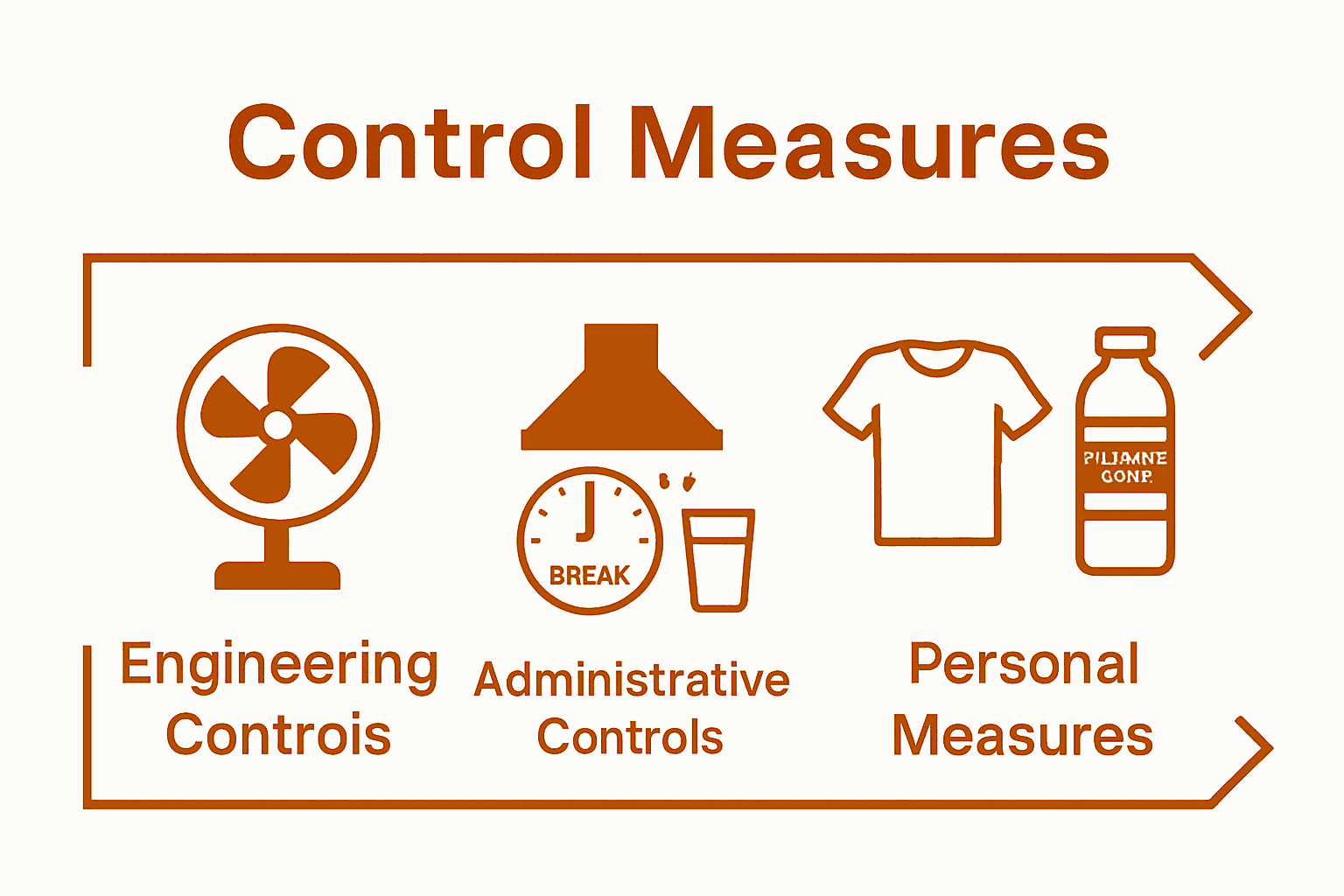
Here’s a comparison of key measures for preventing heat stress in commercial kitchens:
| Control Type | Purpose | Examples |
| Engineering Controls | Reduce heat exposure at the source | Improved ventilation Air conditioning Exhaust vents |
| Administrative Controls | Manage worker exposure and routines | Hydration policies Scheduled breaks Worker rotation |
| Personal Protective Measures | Protect individual workers | Lightweight uniforms Cooling PPE Electrolyte solutions |
Administrative controls play a crucial role in preventing heat stress in kitchen environments. Workplace Safety and Prevention Services research emphasizes the importance of systematic workplace interventions that protect worker health.
Effective hydration goes beyond simply drinking water. Canadian government health guidelines recommend:
Drink 2-4 glasses of rehydration solution per hour
Consume fluids even when not feeling thirsty
Avoid caffeine and alcohol
Use sports drinks with electrolytes
Kitchen managers should implement comprehensive protective measures:
Gradually expose workers to heat
Start with shorter shifts
Monitor individual adaptation
Schedule frequent cool-down breaks
Rotate workers through cooler areas
Limit continuous exposure to high-heat zones
Educate staff on heat stress signs
Encourage symptom reporting
Develop clear response protocols
Proactive hydration and administrative measures can prevent up to 90% of heat-related workplace incidents.
Successful heat stress management requires a holistic approach combining individual awareness, organizational support, and continuous monitoring.
 Kitchen leaders must create a culture of safety that prioritizes worker well-being over productivity.
When your team’s safety is on the line, knowledge is power. Heat stress in Canadian kitchens can lead to mental fatigue, accidents, and serious medical emergencies. You have a responsibility to protect your workplace and ensure that every staff member recognizes symptoms, understands their legal obligations, and takes effective preventive action.

Empower your team with government-accredited food safety training that goes beyond the basics. Probe It Food Safety.ca delivers flexible, self-paced courses on Food Handler Certification, WHMIS, and more so your kitchen is always in compliance. Start now to build a safer workplace and ensure your business is ready for a healthier, more productive future. Visit Probe It Food Safety.ca today and take the next step to workplace safety.
Heat stress in kitchen environments arises from factors such as high ambient temperatures, excessive humidity, poor ventilation, and radiant heat from cooking equipment. Job characteristics, like prolonged standing near heat sources and high physical demands, also contribute to the risk.
Kitchen workers should be vigilant for symptoms such as heat rash, muscle cramps, heat exhaustion (including headache, dizziness, nausea, and clammy skin), and the more severe condition, heat stroke, characterized by confusion, potential seizures, and loss of consciousness.
Employers can prevent heat stress by developing heat-stress prevention programs, ensuring proper hydration and rest breaks, providing training to identify symptoms, and implementing engineering controls such as improved ventilation and cooling systems.
Recommended hydration strategies include drinking 2-4 glasses of rehydration solution per hour, drinking fluids regularly (even without thirst), avoiding caffeine and alcohol, and using sports drinks with electrolytes to maintain hydration.
Food Safety Myths and Facts: Essential Guide for Canadian Kitchens 2025 – Probe It Food Safety
Food Safety Basics 2025: A Guide for Canadian Kitchens – Probe It Food Safety
How to Prevent Foodborne Illness: A 2025 Guide for Canadian Food Services – Probe It Food Safety
High Risk Foods Explained: A Guide for Canadian Food Services 2025 – Probe It Food Safety
Exams are stressful, and the pressure of passing may leave you feeling overwhelmed and nervous that you won’t pass, even

Food safety is essential if you want to ensure safety and establish trust with your customers. Food handlers must be

Practicing good food safety habits is paramount to maintaining a healthy kitchen. Regardless of the size of your hotel business