No products in the cart.

10 Tips for Passing Your Food Handler’s Certificate Exam
Exams are stressful, and the pressure of passing may leave you feeling overwhelmed and nervous that you won’t pass, even


Nearly one in five food recalls can be traced back to spoilage or mishandling. In a world where freshness determines safety and consumer trust, understanding the tools that keep food safe is critical. New technologies, such as innovative packaging and real-time freshness indicators, are giving food handlers and businesses powerful tools to track product quality, prevent waste, and build confidence at every step of the supply chain.
| Point | Details |
| Comprehensive Monitoring Solutions | Freshness, time-temperature, and spoilage indicators enhance food safety by providing real-time, non-invasive assessments of food quality. |
| Critical Role in Food Safety | These indicators support compliance with food safety regulations, reducing the risks of improper temperature management and spoilage. |
| Integration with Smart Packaging | Advanced monitoring technologies are increasingly being integrated into innovative packaging, improving consumer confidence and quality assurance. |
| Regulatory Compliance Importance | Adhering to legal standards is crucial for implementing freshness technologies, which require thorough testing and documentation to ensure consumer safety. |
Freshness indicators are sophisticated monitoring technologies that track and assess food quality in real time. According to Spacefrontiers, these intelligent packaging solutions provide non-destructive monitoring by detecting specific metabolites and environmental changes associated with food spoilage.
These innovative tools identify chemical transformations that signal potential food degradation. As explained by Rsisinternational, freshness indicators can detect key markers such as ethanol, organic acids, and biogenic amines—crucial signals that food quality is declining.
Key characteristics of effective freshness indicators include:
Real-time monitoring capabilities
Non-invasive detection methods
Ability to track multiple spoilage indicators
Integration with packaging systems
Quick and accurate quality assessment
The primary goal of these technologies is to enhance food safety, reduce waste, and provide consumers and food handlers with reliable information about product freshness. By leveraging advanced sensing technologies, freshness indicators represent a critical innovation in food quality management, supporting both consumer health and industry efficiency.
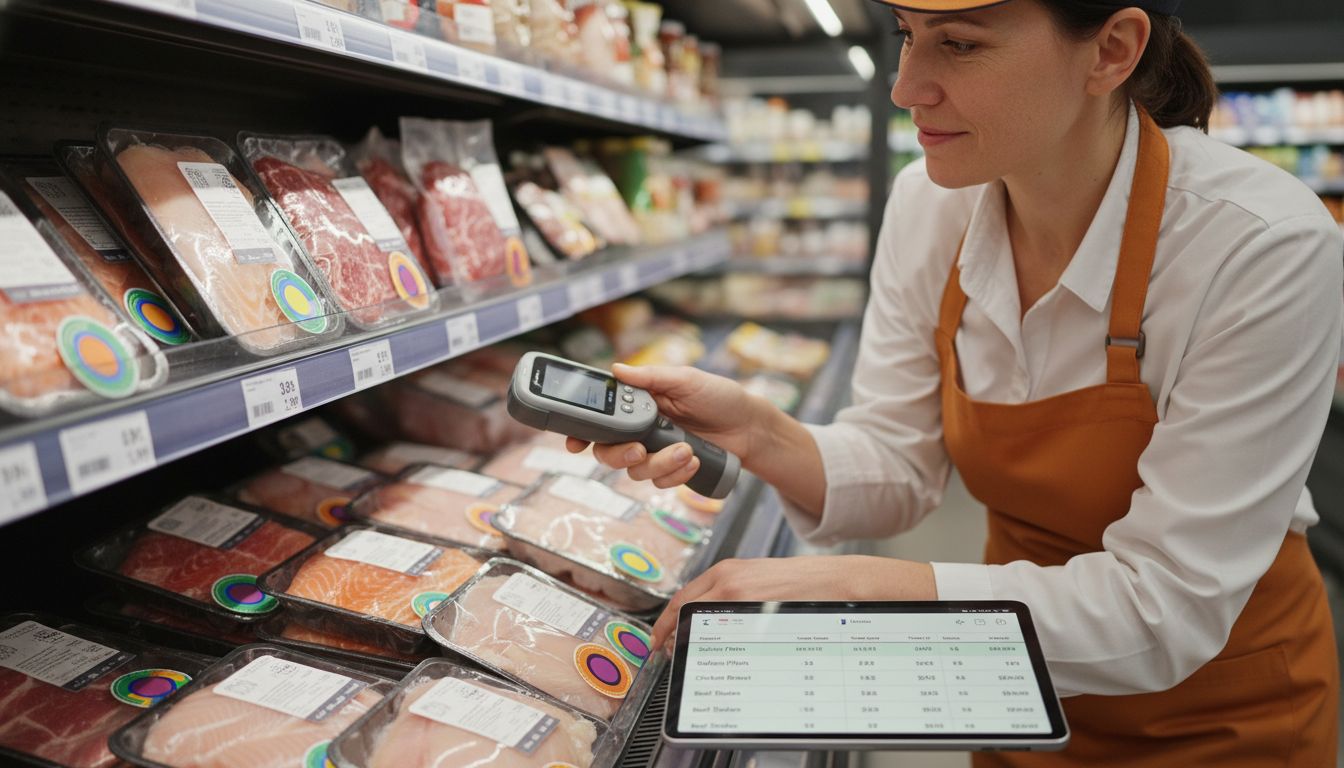
Time‑temperature indicators are specialized monitoring tools designed to track and record the thermal history of perishable food products during storage and transportation. These critical devices help food handlers and businesses understand how temperature fluctuations might compromise food safety and quality.
The fundamental principle behind time‑temperature indicators is their ability to visually or electronically demonstrate cumulative temperature exposure. When a food product experiences temperature ranges outside its safe storage parameters, these indicators change colour, display a signal, or generate an electronic warning. This mechanism allows immediate identification of potential food safety risks before the product reaches consumers.
Key characteristics of effective time‑temperature indicators include:
Precise temperature tracking capabilities
Visual or digital reporting mechanisms
Ability to record temperature, duratio,n and intensity
Compatibility with various food packaging systems
Quick and accurate temperature change detection
For food service professionals, these indicators are crucial in maintaining food handler standards. They provide an objective, scientific method for assessing food quality and safety, reducing the risk of serving compromised products. By offering real‑time monitoring, time‑temperature indicators support compliance with food safety regulations and help prevent potential health hazards associated with improper temperature management.
Spoilage and ripeness indicators are advanced technologies that monitor the quality and progression of food products using visual and chemical tracking methods. According to PubMed, researchers have developed innovative Maillard reaction-based time-temperature indicators that can visually monitor seafood freshness by correlating colour changes with specific spoilage markers like total volatile basic nitrogen content.
These sophisticated indicators provide food handlers with real-time insights into product quality. PubMed highlights the development of betacyanin-based bioindicators that function as time-temperature integrators in smart packaging, enabling precise assessment of product quality by observing colour changes that directly correspond to spoilage levels.
Key applications of spoilage and ripeness indicators include:
Tracking chemical changes during food degradation
Providing visual cues about product freshness
Enabling non-destructive quality assessment
Supporting food safety protocols
Reducing food waste through early detection
For food service professionals, these indicators serve as a critical tool for maintaining food handler standards. They transform complex biochemical processes into simple, actionable visual signals, allowing immediate identification of potential quality issues. By bridging scientific complexity with practical usability, spoilage and ripeness indicators support safer, more efficient food management practices across various industries.
Here’s a comparison of the main types of food freshness indicators discussed:
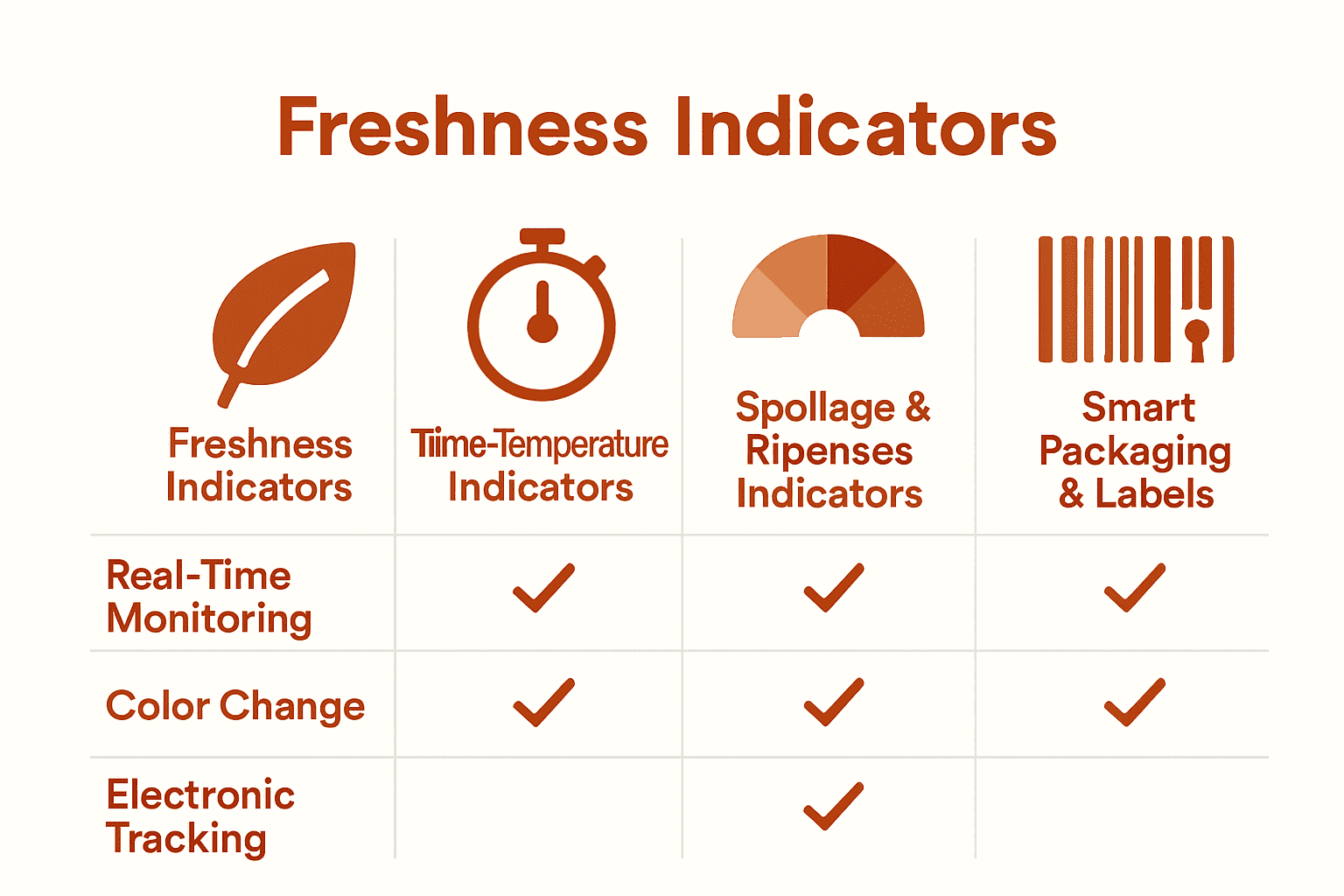
| Indicator Type | Key Features | Typical Applications |
| Freshness Indicators | Real-time monitoring Tracks multiple metabolites Non-invasive |
General food quality assessment |
| Time-Temperature Indicators | Temperature exposure tracking Visual/electronic signals Precise documentation |
Storage and transportation of perishables |
| Spoilage & Ripeness Indicators | Colour change cues Chemical degradation tracking Non-destructive |
Seafood freshness Ripeness monitoring |
| Smart Packaging & Labels | Advanced sensors Customizable parameters Integrated visual/electronic tracking |
Meat packaging Hermetically sealed foods |
Innovative packaging represents a cutting-edge technological approach to food safety and quality monitoring. According to PubMed, researchers have developed kinetically programmable time-temperature indicators using creative techniques such as silver overgrowth on gold nanorods, offering cost-effective, customizable solutions for tracking perishable product conditions.
Commercial labels with integrated innovative technologies provide real-time insights into food quality and safety. PubMed highlights the development of colour-changing indicators specifically designed to monitor time-temperature history during meat cooking, ensuring critical food safety temperatures are consistently achieved, particularly in hermetically sealed packages.
Key features of innovative packaging and commercial labels include:
Advanced sensor technologies
Real-time quality monitoring
Visual and electronic tracking mechanisms
Customizable detection parameters
Non-invasive measurement techniques
For food service professionals, these technologies are transformative. By integrating WHMIS labels and advanced monitoring systems, businesses can enhance food safety protocols, reduce waste, and provide transparent quality assurance. Innovative packaging bridges the gap between complex scientific monitoring and practical, user-friendly food management, supporting food handler standards and consumer confidence.
Regulatory compliance in food safety technology demands rigorous scientific and legal scrutiny. According to PubMed, developing time-temperature indicators for perishable products requires a comprehensive evaluation of critical factors, including cost, programmability, and potential toxicity, to secure regulatory approval and ensure consumer safety.
Food safety regulations mandate precise monitoring and documentation of product conditions. PubMed highlights the complex requirements for implementing colour-changing indicators, particularly in meat packaging, where indicators must accurately reflect cooking temperatures to inactivate dangerous pathogens such as the foot-and-mouth disease virus effectively.
Key regulatory considerations for freshness indicators include:
Comprehensive toxicity testing
Accurate performance documentation
Compliance with food safety standards
Transparent reporting mechanisms
Consumer safety protection protocols
For food service professionals, understanding these legal frameworks is crucial. By completing a food safety certification course, businesses can ensure they meet the stringent requirements for implementing innovative packaging technologies. Comprehensive training helps navigate the complex landscape of regulatory compliance, protecting both consumer health and business interests.
Food safety technologies are transforming Canada’s food supply chain management. According to Spacefrontiers, adopting freshness indicators can significantly enhance food safety and reduce waste by enabling real-time monitoring of perishable products, aligning with consumer preferences for quality assurance.
Nanotechnology is revolutionizing food monitoring approaches across Canadian industries. PubMed highlights the potential of colorimetric nanoparticle-based time-temperature indicators to improve tracking of cumulative temperature exposure, ensuring rigorous compliance with national safety standards and minimizing product spoilage.
Key implementation strategies for Canadian food settings include:
Integration with existing supply chain infrastructure
Training food service professionals
Developing standardized monitoring protocols
Investing in scalable technology solutions
Creating transparent reporting mechanisms
For food service professionals looking to adopt these advanced technologies, following a comprehensive food safety checklist becomes crucial. By systematically implementing innovative packaging technologies and maintaining rigorous monitoring standards, Canadian businesses can protect consumer health, reduce waste, and demonstrate commitment to cutting-edge food safety practices.
Managing perishable food products demands more than just careful handling. This comprehensive guide highlights the challenges food handlers face daily, such as ensuring accurate real-time freshness monitoring, understanding time-temperature indicators, and adhering to strict regulatory standards. These complex concepts require practical know-how to transform scientific data into effective food safety practices, reduce waste, and protect consumer health.
At Probe It Food Safety.ca, we understand these pain points and offer tailored solutions with our government-accredited Food Handler Certification and related courses designed by public health experts. Our flexible, self-paced training courses empower you to confidently implement freshness indicators and innovative packaging protocols while fully complying with Canadian regulations.

Take control of food safety in your operation today by enhancing your expertise in critical areas such as spoilage indicators, time-temperature tracking, and innovative packaging technology. Enroll now at Probe It Food Safety.ca to get instant certification and ensure your workplace meets the highest standards of food quality assurance.
Freshness indicators are monitoring technologies that track and assess food quality in real time by detecting metabolites and environmental factors associated with food spoilage. They help ensure food safety and reduce waste by providing reliable information on product freshness.
Time-temperature indicators track the thermal history of perishable food products during storage and transportation. They visually or electronically signal when temperature exposure exceeds safe storage parameters, helping to identify potential food safety risks.
Spoilage and ripeness indicators monitor food quality by tracking chemical changes and providing visual cues about freshness. They enable early identification of quality issues, support food safety protocols, and help reduce food waste through non-destructive quality assessment.
Innovative packaging integrates advanced sensor technologies that provide real-time quality monitoring and tracking of food products. This technology allows food service professionals to maintain high safety standards, reduce waste, and enhance consumer confidence in food quality.
Exams are stressful, and the pressure of passing may leave you feeling overwhelmed and nervous that you won’t pass, even

Food safety is essential if you want to ensure safety and establish trust with your customers. Food handlers must be

Practicing good food safety habits is paramount to maintaining a healthy kitchen. Regardless of the size of your hotel business