No products in the cart.

10 Tips for Passing Your Food Handler’s Certificate Exam
Exams are stressful, and the pressure of passing may leave you feeling overwhelmed and nervous that you won’t pass, even



Canadian food safety laws are getting stricter each year, and by 2025, every food business will need to step up. Here is what might surprise you. Non compliance with food safety regulations can result in hefty fines, forced closures, and even legal action. Most businesses assume passing a routine inspection is enough, but the real challenge is constantly keeping up with ever-changing rules and technology. The question is not just about staying open, it is about protecting your customers and your reputation at the same time.
| Takeaway | Explanation |
|---|---|
| Implement a Preventive Control Plan (PCP) | Food establishments must systematically identify and control potential food safety hazards through a PCP to comply with the Safe Food for Canadians Regulations (SFCR). |
| Ensure Comprehensive Staff Training | Proper training on food handling, hygiene, and allergen management for all staff is legally mandated and essential to prevent foodborne illnesses in restaurants and educational institutions. |
| Maintain Traceability Records | Establishments must keep detailed records that track food products along the supply chain, enabling quick identification and action during food safety incidents. |
| Adopt Good Manufacturing Practices (GMPs) | Implementing GMPs, including facility design and sanitation protocols, is vital for minimizing risks of cross-contamination in commercial kitchens. |
| Utilize Technology and Compliance Tools | Leveraging digital tools for tracking compliance, monitoring temperatures, and maintaining documentation enhances food safety management and operational efficiency. |
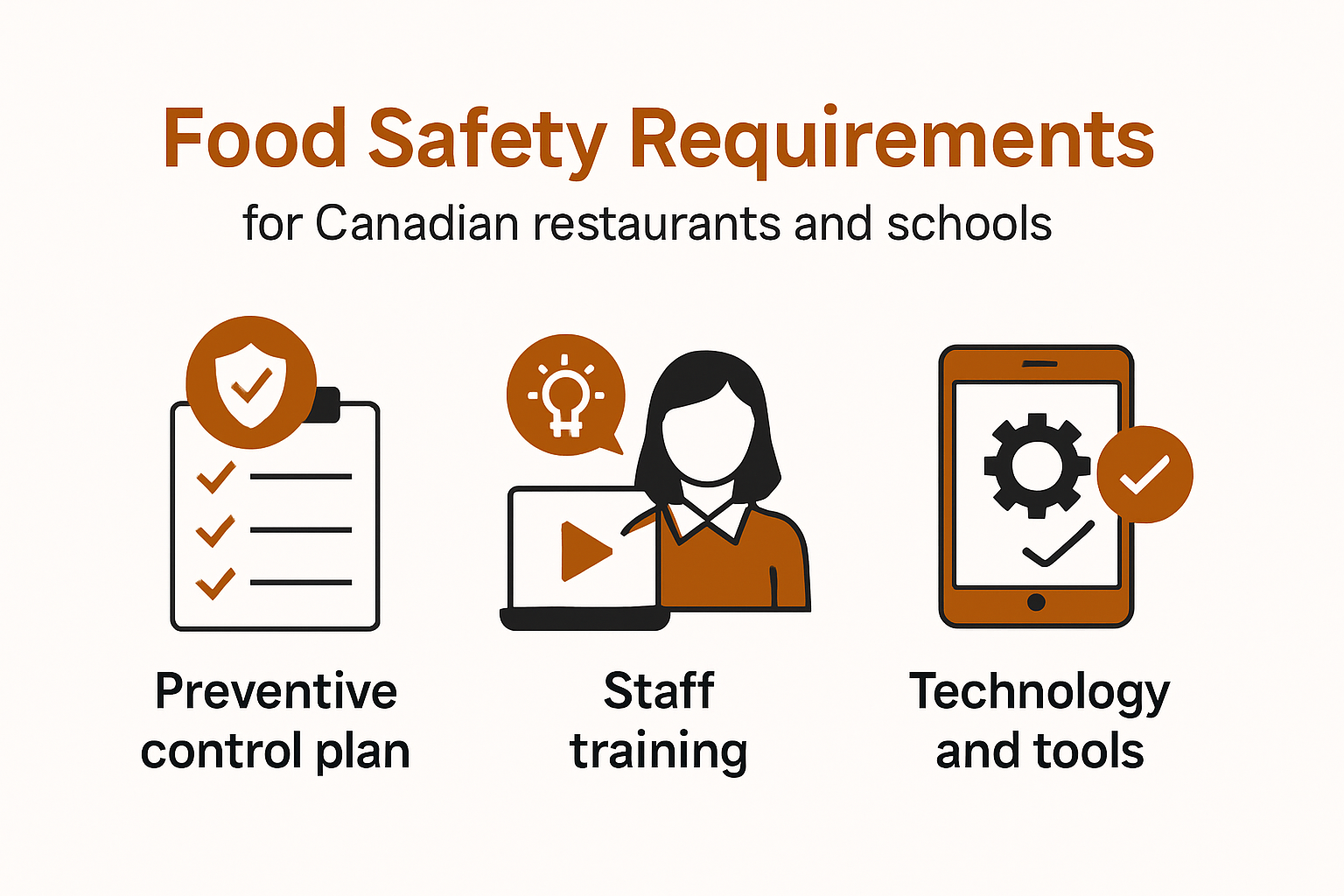
Food safety in Canada operates under a comprehensive regulatory framework designed to protect public health and ensure the highest standards of food production, handling, and distribution. The national food safety system involves multiple government agencies working together to establish and enforce rigorous standards that apply to restaurants, schools, and food service establishments across the country.
The cornerstone of Canada’s food safety regulations is the Safe Food for Canadians Regulations (SFCR), which came into full effect on January 15, 2019. This critical regulatory framework fundamentally transformed how food businesses approach safety and compliance. Comprehensive food safety guidelines now require food establishments to implement a Preventive Control Plan (PCP) that systematically identifies and controls potential food safety hazards.
Under the SFCR, food businesses must maintain comprehensive traceability records that document the immediate suppliers and customers of food products. This requirement enables rapid and efficient tracking during potential food safety incidents or product recalls. The Canadian Food Inspection Agency (CFIA) oversees these regulations, ensuring that businesses adhere to stringent standards that protect consumer health.
Canada’s food safety system is a collaborative effort between federal and provincial authorities. The Food and Drugs Act provides the foundational legal framework, with Health Canada developing specific regulations, policies, and guidelines. These cover critical areas such as nutrition labelling, health claims, food fortification, acceptable food additives, and acceptable levels of chemical contaminants.
Provincial health authorities complement federal regulations by conducting regular inspections, issuing food establishment permits, and enforcing local health codes. This multi-layered approach ensures that food safety standards are consistently applied and rigorously maintained across different regions and types of food service establishments.
Restaurants and schools must meet several critical compliance requirements to operate legally in Canada. These include maintaining proper temperature controls for food storage and preparation, implementing robust hygiene practices, ensuring staff are properly trained in food handling, and maintaining meticulous documentation of food safety procedures.
Critical control points in food preparation must be carefully monitored, including:
Non compliance with these regulations can result in significant penalties, including fines, mandatory closures, and potential legal action. Food establishments must stay current with evolving regulations and proactively implement comprehensive food safety management systems to protect public health and maintain operational licenses.
By understanding and rigorously applying these key food safety rules and regulations, Canadian restaurants and schools can create safe, healthy environments that meet the highest national standards of food handling and preparation.

Restaurants and hospitality businesses face complex food safety challenges that require strategic planning and rigorous implementation of best practices. Achieving and maintaining compliance demands a comprehensive approach that goes beyond basic regulatory requirements.
Good Manufacturing Practices form the foundation of food safety in commercial kitchens. According to Ontario’s Food Safety Guidelines, establishments must develop systematic approaches to facility management, equipment maintenance, and sanitation protocols.
Key GMP strategies include:
Demonstrating commitment to hygiene practices not only ensures regulatory compliance but also builds customer trust and confidence in your establishment.
Proper temperature management is critical in preventing foodborne illnesses. Health Canada recommends maintaining strict temperature controls for both hot and cold foods. Cold foods must be stored at or below 4°C (40°F), while hot foods should be maintained at or above 60°C (140°F) to inhibit bacterial growth.
To enhance food safety, restaurants should implement color-coded tool systems. As industry experts suggest, using different colored cutting boards and utensils for raw meats, produce, and cooked foods significantly reduces cross-contamination risks.
Comprehensive staff training is the most critical component of food safety compliance. Employees must understand and consistently apply food safety principles. This includes:
Maintaining detailed documentation of training, temperature logs, cleaning schedules, and supplier information demonstrates a proactive approach to food safety. These records are essential during health inspections and can protect the business from potential legal challenges.
Restaurants must also stay adaptable. Post pandemic considerations have introduced additional layers of complexity to food safety protocols, requiring continuous learning and flexibility.
By integrating these comprehensive strategies, restaurants and hospitality businesses can create a robust food safety culture that protects both customers and the business itself. Compliance is not just about meeting minimum standards but about commitment to public health and operational excellence.
Ensuring food safety in daycares and schools requires a multifaceted approach that goes beyond standard food handling procedures. These educational environments present unique challenges due to the vulnerability of young children and the potential for widespread health risks.
Canadian regulations mandate comprehensive food safety protocols for educational institutions. The Safe Food for Canadians Regulations (SFCR) specifically require food establishments supplying schools and daycares to implement rigorous preventive control plans. These plans must systematically identify and manage potential food safety risks.
Food safety training becomes critically important in these settings. Staff must receive comprehensive instruction on proper food handling, temperature control, and hygiene practices. This training is not just recommended but legally mandated, ensuring that every individual involved in food preparation understands their role in preventing foodborne illnesses.
Key training components include:
Traceability is a crucial aspect of food safety in educational institutions. According to SFCR guidelines, food suppliers must maintain detailed records that track food products one step forward and one step back in the supply chain. This requirement enables rapid identification and resolution of potential contamination issues.
Schools and daycares should implement robust procurement practices that include:
Special attention must be given to managing food allergies and dietary restrictions. This involves creating detailed documentation, implementing strict separation protocols, and ensuring all staff are trained to recognize and respond to potential allergic reactions.
Practical implementation of food safety standards requires a holistic approach. This means creating a culture of safety that extends beyond written procedures. Staff must be empowered to consistently apply food safety principles and report potential risks immediately.
Critical areas of focus include:
Regular internal audits and external health inspections help ensure ongoing compliance. These assessments provide opportunities to identify potential improvements and address any emerging food safety challenges.
By adopting a comprehensive and proactive approach to food safety, daycares and schools can create environments that protect children’s health and provide nutritious, safe meals. The key lies in continuous training, rigorous documentation, and a commitment to maintaining the highest standards of food handling and preparation.
Meeting food safety standards in Canada requires a comprehensive approach that involves utilizing multiple resources, understanding regulatory requirements, and implementing robust management systems. Food businesses must be proactive in developing strategies that protect public health and ensure compliance with national regulations.
The Canadian Food Inspection Agency (CFIA) provides critical resources for food establishments seeking to meet national food safety standards. According to the Safe Food for Canadians Regulations (SFCR), businesses must develop and maintain a comprehensive Preventive Control Plan (PCP) that systematically identifies and controls potential food safety hazards.
Key regulatory resources include:
Top food safety management strategies can help businesses navigate the complex landscape of food safety regulations and develop robust compliance mechanisms.
The Hazard Analysis Critical Control Point (HACCP) system represents a globally recognized approach to food safety management. According to international food safety experts, this systematic method helps businesses identify and control potential hazards throughout the food production process.
Implementing HACCP principles involves:
Businesses can leverage various resources to support HACCP implementation, including government guidelines, professional training programs, and industry-specific consultation services.
Technology plays an increasingly important role in food safety management. Digital tools can help businesses track compliance, monitor temperature controls, and maintain detailed documentation. Strategies for managing food safety during potential outbreaks highlight the importance of robust technological solutions.
Essential technological and training resources include:
Continuous staff training remains crucial. Businesses should invest in regular education programs that keep employees updated on the latest food safety standards, technological innovations, and best practices.
Successful food safety management requires a holistic approach that combines regulatory knowledge, systematic risk management, technological innovation, and ongoing staff education. By leveraging these essential resources, Canadian food businesses can create safer environments and build trust with consumers through demonstrated commitment to food safety standards.
To help summarize the main regulatory roles and responsibilities at the federal and provincial levels, the table below organizes these authorities and their functions:
| Authority | Level | Key Responsibilities |
|---|---|---|
| Canadian Food Inspection Agency (CFIA) | Federal | Enforces SFCR, oversees preventive control plans, ensures national food safety compliance |
| Health Canada | Federal | Develops food safety regulations, policies, and guidelines |
| Provincial Health Authorities | Provincial | Conduct regular inspections, issue permits, enforce local health codes |
For a clear view of the essential elements of a Hazard Analysis and Critical Control Point (HACCP) program as described in the content, see the summary table below:
| HACCP Step | Description |
|---|---|
| Hazard Analysis | Identify potential food safety hazards throughout production |
| Identify Critical Control Points | Pinpoint points where hazards can be controlled or prevented |
| Establish Monitoring Procedures | Set up methods to track control points consistently |
| Develop Corrective Actions | Plan steps to correct deviations from safety standards |
| Create Verification Mechanisms | Regularly check and validate all systems and controls |
| Maintain Detailed Documentation | Keep thorough records for review and compliance |
In Canada, key food safety regulations include the Safe Food for Canadians Regulations (SFCR), which require food businesses to implement a Preventive Control Plan (PCP), maintain traceability records, and ensure proper hygiene practices to protect consumer health.
Restaurants and schools can comply with food safety standards by implementing robust Good Manufacturing Practices (GMPs), maintaining strict temperature controls, providing comprehensive staff training, and documenting food safety procedures to ensure adherence to regulations.
Staff training is crucial in food safety compliance as it ensures that all employees understand proper food handling, hygiene practices, and allergen management, which helps prevent foodborne illnesses and maintains compliance with legal requirements.
Food establishments can access resources such as regulatory guidance from the Canadian Food Inspection Agency (CFIA), online training modules, and Hazard Analysis and Critical Control Point (HACCP) implementation tools to help them navigate food safety standards effectively.
Are you feeling overwhelmed by the fast-changing regulations and the pressure to avoid compliance mistakes? The article highlighted how crucial it is for Canadian restaurants and schools to implement Preventive Control Plans, keep reliable records, and ensure staff training is always up to date. If you are worried about passing inspections, avoiding penalties, or keeping your team prepared, you are not alone. Gaps in compliance and employee training can put your business or institution at serious risk.

Take control today with Probe It Food Safety.ca. Our government-accredited food safety courses, designed by public health experts, help you achieve full compliance and give you peace of mind. Get certified fast with our flexible, self-paced programs available 24/7. Do not wait until a regulator finds a weakness. Visit Probe It Food Safety.ca now to start training your team and secure your reputation before 2025.
WHMIS requirements evolve. This guide reflects the rules as of June 2026, and our team reviews the content when federal and provincial authorities update their requirements. Spot a change before we did? Email us at info@probeit.ca and our team will review it.
This guide simplifies complex rules for educational purposes. It does not replace the Hazardous Products Act, its Regulations, or provincial occupational health and safety requirements, and employers remain responsible for their own compliance. Always verify final requirements against the current official text.
Exams are stressful, and the pressure of passing may leave you feeling overwhelmed and nervous that you won’t pass, even

Food safety is essential if you want to ensure safety and establish trust with your customers. Food handlers must be

Practicing good food safety habits is paramount to maintaining a healthy kitchen. Regardless of the size of your hotel business