No products in the cart.

10 Tips for Passing Your Food Handler’s Certificate Exam
Exams are stressful, and the pressure of passing may leave you feeling overwhelmed and nervous that you won’t pass, even


More than 90 percent of Canadian shoppers rely on food labels to make safe and healthy choices. Clear labelling does more than list ingredients—it protects families from allergens and misleading claims, while helping businesses build consumer confidence. With strict federal rules and a mix of required details, understanding how Canada regulates food labelling is crucial for anyone selling or buying packaged foods. This guide unpacks what every business and consumer needs to know about staying compliant and informed.
| Point | Details |
| Regulatory Framework | Canadian food labelling regulations are governed by the Food and Drugs Act, enforced by Health Canada and the Canadian Food Inspection Agency (CFIA). |
| Mandatory Information | Essential labelling requirements include Nutrition Facts tables, ingredient lists, allergen declarations, and bilingual information to ensure consumer transparency. |
| Compliance Responsibility | Food manufacturers are primarily responsible for adherence to labelling regulations, which is vital for consumer safety and legal protection. |
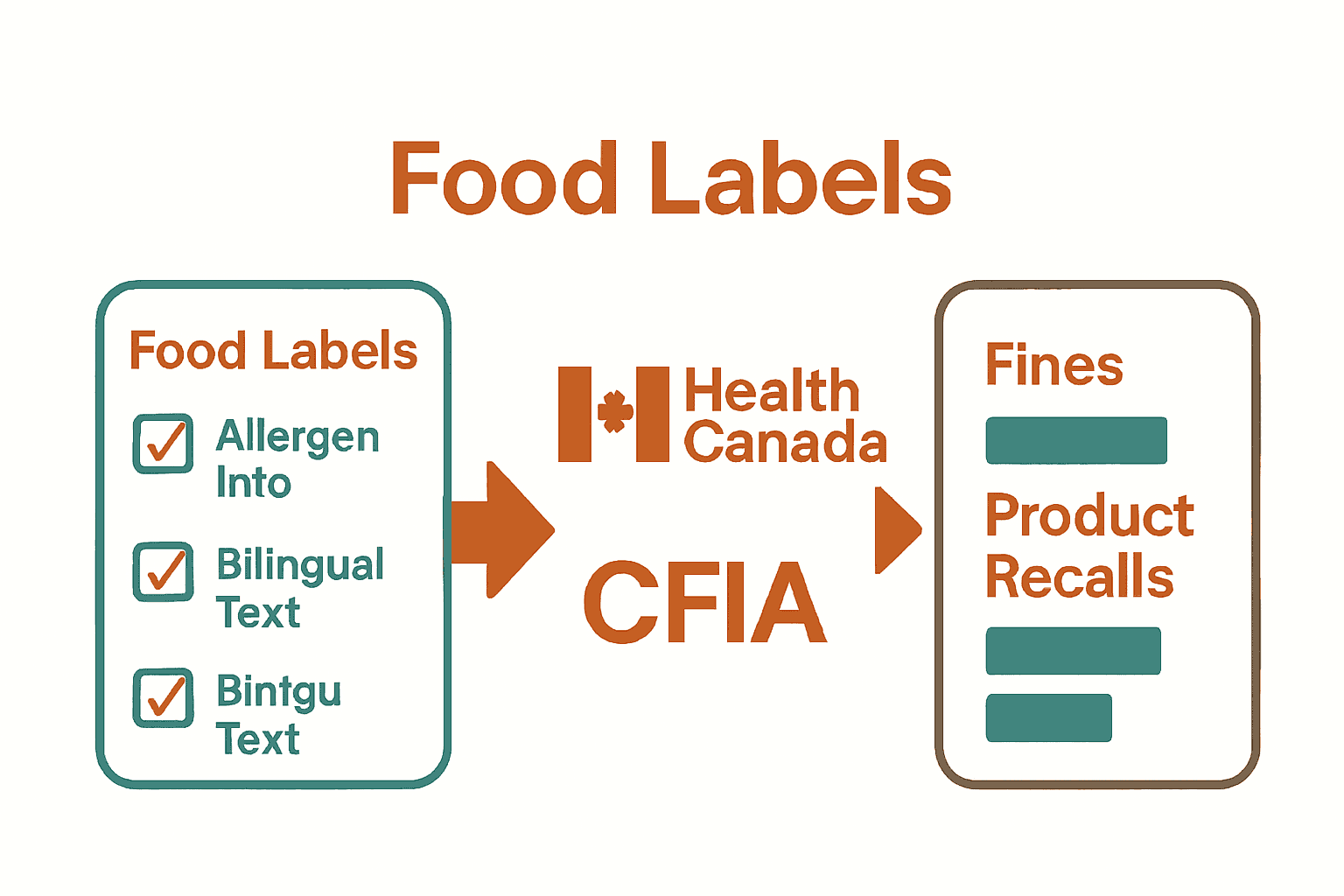
| Risks of Non-Compliance | Non-compliance can lead to product seizures, financial penalties, and legal actions, emphasizing the importance of rigorous adherence to standards. |
Canadian food labelling regulations are comprehensive guidelines established to protect consumer health and ensure transparency in food products. Canada has developed a robust system in which Health Canada sets standards for food safety and nutritional quality, while the Canadian Food Inspection Agency enforces these critical regulations.
The foundational legal framework for food labelling is the Food and Drugs Act, which serves multiple crucial purposes. The Canadian Inspection indicates that this act aims to protect Canadians against potential health hazards and fraudulent practices in food sales. The act includes specific provisions that strictly prohibit false or misleading food labelling, ensuring consumers receive accurate information about the products they purchase.
Key components of Canadian food labelling regulations include:
Mandatory nutrition facts panels
Ingredient lists in both English and French
Allergen declarations
Country of origin information
Accurate product descriptions
Standardized serving size representations
For businesses in the food industry, understanding and complying with these regulations is not just a legal requirement but a fundamental aspect of consumer trust. Proper food labelling helps consumers make informed dietary choices, manage potential health risks like allergies, and ensures transparency in food production and packaging.
Navigating these complex regulations can be challenging, which is why many businesses seek additional training. Our food safety guidelines provide comprehensive resources to help you understand and implement these critical labelling standards effectively.
Canada recognizes multiple types of food labels, each serving unique purposes in providing consumers with essential product information. Mandatory labels are legally required and include critical details that help consumers make informed purchasing decisions, while voluntary labels offer additional insights about product characteristics and nutritional benefits.
Canadian Inspection highlights that retail food labels must display specific mandatory information, with particular emphasis on the Nutrition Facts table. This table uses a standardized format to provide key details on serving sizes, caloric content, macronutrients, and micronutrient percentages, enabling consumers to understand the nutritional profile of their food products.
The primary types of food labels in Canada include:

Nutrition Facts Table: Detailed breakdown of nutritional content
Ingredient List: Complete listing of product ingredients in descending order
Allergen Declarations: Identifying potential allergy risks
Best Before/Expiration Dates: Indicating product freshness and safety
Country of Origin Labels: Showing where the product was manufactured
Front-of-Package Nutrition Symbols: Highlighting high levels of saturated fat, sugars, or sodium
Understanding these label variations is crucial for food industry professionals and consumers alike. Proper labelling not only ensures regulatory compliance but also builds trust by providing transparent, accurate product information. For professionals seeking deeper insights into food safety and labelling requirements, our WHMIS training provides comprehensive guidance on maintaining high standards for product information and safety.
The Canadian Food Inspection outlines comprehensive mandatory labelling requirements that ensure transparency and consumer protection. Mandatory labels are not just regulatory checkboxes but critical communication tools that provide essential information about food products, helping consumers make informed purchasing decisions.
Health Canada emphasizes strict regulations for prepackaged foods, requiring standardized Nutrition Facts tables that provide clear, consistent nutritional information. This mandatory table must include specific details to help consumers understand the nutritional content of their food products.
Core mandatory labelling requirements in Canada include:
Common Name of Food: Clearly identifying the product
Net Quantity: Exact amount of product in the package
Manufacturer Information: Name and address of the producer
Ingredient List: All ingredients listed in descending order
Allergen Declarations: Highlighting potential allergy risks
Nutrition Facts Table: Detailed nutritional breakdown
Best Before/Expiration Dates: Product safety and freshness indicators
Bilingual Labelling: Information in both English and French
For food industry professionals navigating these complex regulations, understanding the nuances of labelling requirements is crucial. Staying compliant not only prevents potential legal issues but also builds consumer trust. To help businesses master these standards, our WHMIS labels resources provide comprehensive guidance on maintaining accurate and comprehensive product labelling.
Health Canada plays a pivotal role in establishing the legal framework for food labelling regulations in Canada. The Food and Drugs Act serves as the foundational legislation, empowering federal agencies to set comprehensive standards that protect consumer health and ensure food safety nationwide.The
Canadian Food Inspection highlights the Safe Food for Canadians Act as a critical consolidation of food inspection regulations. This legislation enables the Canadian Food Inspection Agency (CFIA) to apply consistent regulatory requirements and inspection approaches across all food commodities, creating a unified and robust oversight system.
Key regulatory bodies and their responsibilities include:
Health Canada: Sets food safety and nutritional standards
Canadian Food Inspection Agency (CFIA): Enforces labelling regulations
Agriculture and Agri-Food Canada: Supports food industry development
Canadian Border Services Agency: Monitors imported food products
Provincial Health Authorities: Implement local food safety protocols
Navigating the complex landscape of food labelling regulations requires a comprehensive understanding and ongoing education. For food industry professionals seeking to stay compliant and informed, our WHMIS regulations resources provide essential guidance on maintaining the highest standards of food safety and regulatory compliance.
Health Canada emphasizes that food manufacturers bear the primary responsibility for ensuring complete compliance with labelling regulations. This means going beyond mere technical adherence and actively maintaining the accuracy and transparency of product information to protect consumer interests and avoid potential legal consequences.
Canadian Food Inspection identifies several common compliance pitfalls that can trigger regulatory scrutiny. These issues often stem from unintentional oversights, such as incorrect ingredient listings, incomplete allergen declarations, or improperly formatted Nutrition Facts tables, which can result in immediate enforcement actions.
Key compliance responsibilities and potential pitfalls include:
Accurate Ingredient Reporting: Precise and complete ingredient listings
Allergen Declaration: Comprehensive and clear allergen warnings
Nutrition Facts Formatting: Strict adherence to standardized table requirements
Bilingual Labelling: Ensuring information is provided in both English and French
Date Marking: Correct display of best before and expiration dates
Product Origin Transparency: Clear manufacturer and origin information
For food industry professionals seeking to navigate these complex regulatory landscapes, continuous education is critical. Our food safety certification course provides comprehensive training to help businesses understand and implement rigorous labelling standards, ultimately protecting both consumers and businesses from potential compliance risks.
The Canadian Food Inspection Agency provides clear guidelines on the serious consequences of non-compliance with food labelling requirements. The regulatory framework empowers agencies to take swift, decisive action against businesses that fail to meet established standards, ranging from product seizures to significant financial penalties and potential legal prosecution.
Health Canada emphasizes that non-compliance is not merely an administrative issue but a critical consumer protection mechanism. Enforcement actions can escalate quickly, potentially damaging a company’s reputation and exposing it to substantial financial and legal risks.
Key risks and potential enforcement actions include:
Product Seizures: Immediate removal of non-compliant products from the market
Monetary Fines: Significant financial penalties for regulatory violations
Legal Prosecution: Potential criminal charges for severe or repeated infractions
Business License Suspension: Temporary or permanent operational restrictions
Mandatory Recalls: Forced product withdrawal from consumer markets
Public Disclosure: Potential public reporting of compliance failures
To mitigate these risks, food industry professionals must prioritize a comprehensive understanding of labelling regulations. Our FoodSafe Level 1 online training provides essential knowledge to help businesses navigate complex regulatory requirements and maintain full compliance, protecting both consumer safety and business interests.
Navigating Canada’s complex food labelling regulations can feel overwhelming. The article highlights key challenges, including meeting mandatory labelling requirements, ensuring accurate allergen declarations, and maintaining bilingual information. These responsibilities are critical to avoid costly enforcement actions and protect your brand’s reputation. If you want peace of mind and confidence in your compliance efforts, gaining detailed knowledge of topics such as the Nutrition Facts table and the legal framework is essential.

Take control of your compliance journey today by exploring our comprehensive courses at Probe It Food Safety.ca. From food safety certification courses to WHMIS training, our government-accredited, self-paced programs are designed by public health experts to fit your schedule. Get immediate certification and start safeguarding your business with the right knowledge now.
Key components of food labelling regulations in Canada include mandatory nutrition facts panels, ingredient lists in both English and French, allergen declarations, country-of-origin information, accurate product descriptions, and standardized serving-size representations.
Food manufacturers are primarily responsible for ensuring complete compliance with labelling regulations, which involves maintaining accurate and transparent product information, including correct ingredient listings and allergen declarations.
The consequences of non-compliance with food labelling can include product seizures, monetary fines, legal prosecution, business license suspension, mandatory recalls, and public disclosure of compliance failures.
Businesses can navigate food labelling regulations by seeking additional training and resources, such as food safety guidelines, WHMIS training, and food safety certification courses, to understand and implement rigorous labelling standards.
Exams are stressful, and the pressure of passing may leave you feeling overwhelmed and nervous that you won’t pass, even

Food safety is essential if you want to ensure safety and establish trust with your customers. Food handlers must be

Practicing good food safety habits is paramount to maintaining a healthy kitchen. Regardless of the size of your hotel business