No products in the cart.

10 Tips for Passing Your Food Handler’s Certificate Exam
Exams are stressful, and the pressure of passing may leave you feeling overwhelmed and nervous that you won’t pass, even


Every Canadian restaurant and daycare faces daily challenges with managing food safety and waste. Keeping track of expiry dates can feel overwhelming, especially when regulations differ between ‘best before’ and expiration dates. Understanding these labels is more than just a compliance issue, it directly affects both consumer health and business reputation. This guide will clarify how expiry date rules apply, making it easier to protect your clients and control unnecessary food waste.
| Point | Details |
|---|---|
| Understanding Date Labels | Recognise the difference between ‘Best Before’ and ‘Expiration’ dates to make informed food choices and reduce waste. |
| Legal Requirements | All packaged foods with a shelf life of 90 days or less must have clear date labels and storage instructions to ensure consumer safety. |
| Risks of Ignoring Dates | Disregarding expiry dates can lead to health risks, legal penalties, and damage to consumer trust and business reputation. |
| Compliance Roles | Food manufacturers, regulatory agencies, and retailers share responsibilities in ensuring compliance with safety standards regarding expiry dates. |
Expiry dates are critical labels on food products that communicate essential information about a food item’s quality and potential safety. Canadian food safety authorities define these dates as indicators helping consumers understand when food remains at its optimal condition.
These labels typically come in two primary formats:
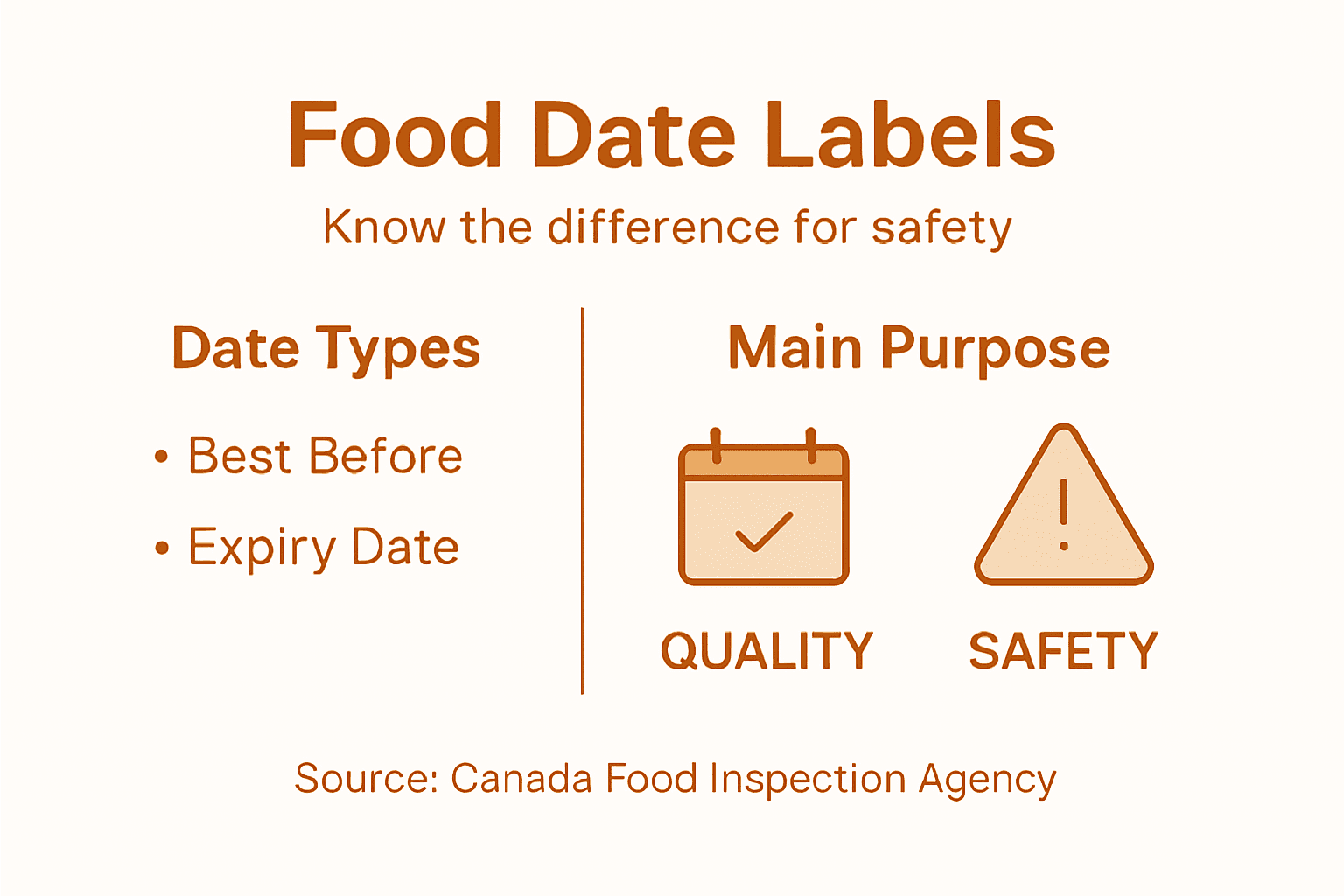
A best before date provides guidance about a product’s peak freshness, nutritional value, and taste. This does not automatically mean the food becomes unsafe immediately after that date. The date suggests when the manufacturer expects the product to maintain its highest quality under proper storage conditions.
In contrast, expiration dates are more stringent. These dates specifically warn consumers about potential health risks if the product is consumed beyond that point. Certain products like infant formula have strict expiration dates that should never be ignored.
Not all food products require expiration dates. Regulations vary depending on the type of food and its potential microbial risks.
Food safety experts recommend understanding the nuanced differences between these date labels to make informed consumption decisions. Proper interpretation can help reduce food waste while maintaining personal health standards.
Pro tip: Always inspect food visually and smell it before consuming, regardless of the printed date label.
Food date labels in Canada serve multiple purposes, helping consumers make informed decisions about product safety and quality. Canadian food inspection guidelines outline several distinct types of date markings that provide critical information for shoppers.
The primary date labels include:
Best Before dates represent the period when food maintains peak quality and optimal characteristics. This label does not necessarily indicate a safety risk, but suggests when the product is at its freshest. Manufacturers use this date to communicate the expected duration of maximum taste, texture, and nutritional value.
Expiration dates are far more strict and critical. These mandatory labels appear on specific products like infant formula and meal replacements, signalling when a product might no longer meet safety or nutritional standards. Consuming a product past its expiration date could pose potential health risks.
Not all food products require the same type of date labelling, and regulations can vary depending on the specific food category.
Packaged On dates provide an alternative approach, especially for foods packaged at retail locations. These labels offer additional context about a product’s shelf life and help consumers track the freshness timeline more precisely.
Here’s a quick comparison of common date labels and how they affect consumer choices in Canada:
| Date Label Type | Primary Purpose | Impact on Safety | Example Products |
|---|---|---|---|
| Best Before | Quality indication | No direct safety threat | Bread, dairy, snacks |
| Expiration Date | Safety and nutrition | Product may become unsafe | Infant formula, meal replacements |
| Packaged On | Tracking freshness | No safety indication | Fresh meats, deli items |
Pro tip: Always compare multiple date labels and understand their specific meanings to make the most informed food purchasing and consumption decisions.
Canadian food labelling regulations are comprehensive and designed to protect consumer safety and provide clear product information. Canadian food inspection guidelines establish specific legal requirements for date markings on packaged foods.
The key legal requirements include:
Prepackaged foods with a durable life of 90 days or less must display a clear ‘best before’ date and any necessary storage instructions. These regulations ensure consumers receive accurate information about product freshness and optimal consumption timeframes.
Specific product categories have unique labelling requirements. Infant formulas and meal replacements, for instance, require strict expiration dates that indicate when the product no longer meets safety and nutritional standards. This approach helps protect vulnerable populations from potential health risks.
Not all food products are subject to the same date labelling rules, and regulations can vary based on the specific food type and packaging method.
Retail-packaged foods have additional flexibility, with options to use either a ‘packaged on’ date or a ‘best before’ date. These variations allow manufacturers to provide the most relevant freshness information while maintaining compliance with Canadian food safety regulations.
Pro tip: Always verify the specific date labelling requirements for your particular food product to ensure full compliance with Canadian food safety standards.
Food safety compliance in Canada involves complex responsibilities across multiple stakeholders. Food safety guidelines establish clear expectations for businesses handling food products and managing expiry date regulations.
The primary roles and responsibilities include:
Food manufacturers bear the primary responsibility for determining and documenting product shelf life. They must conduct systematic shelf life studies that evaluate how long a product maintains its quality and safety under different storage conditions. These studies help establish accurate ‘best before’ dates and ensure consumers receive reliable information.
Regulatory agencies like the Canadian Food Inspection Agency play a crucial enforcement role. They conduct systematic inspections to verify that food businesses comply with the Safe Food for Canadians Regulations. These inspections help maintain high standards of food safety and protect public health by ensuring businesses meet legal requirements.
Compliance is not just about following rules, but about actively protecting consumer health and maintaining industry integrity.
Retailers and distributors also share responsibility in the food safety ecosystem. They must ensure products are stored correctly, rotate stock appropriately, and remove items that have passed their expiration dates. Their vigilance helps prevent potentially unsafe products from reaching consumers.

The following summary outlines the main parties involved in food safety compliance and their key duties:
| Stakeholder | Main Responsibilities | Effect on Food Safety |
|---|---|---|
| Manufacturers | Shelf life studies, accurate labelling | Reliable expiry and quality info |
| Regulatory Agencies | Inspections, rule enforcement | Ensures legal and safety standards |
| Retailers | Stock rotation, removal of expired items | Prevents sale of unsafe products |
Pro tip: Develop a robust internal audit system that tracks and documents all food safety compliance activities to streamline regulatory inspections.
Ignoring expiry dates represents a significant risk for food businesses and consumers alike. Food safety guidelines highlight the potential consequences of disregarding these critical safety indicators.
The primary risks associated with ignoring expiry dates include:
Health risks are the most immediate concern when consuming expired products. Certain foods can develop harmful bacterial growth, toxins, or chemical changes that may cause serious foodborne illnesses. Vulnerable populations like children, elderly, and immunocompromised individuals face even greater health risks from consuming expired products.
Legal consequences can be particularly severe for food businesses. Regulatory agencies like the Canadian Food Inspection Agency can impose significant penalties for non-compliance. These may include hefty fines, mandatory recalls, and potential legal actions that could permanently damage a company’s reputation and operational capabilities.
Expiry date violations are not just regulatory infractions, but potential public health hazards that can have far-reaching consequences.
Financial implications extend beyond immediate penalties. Businesses may face substantial costs related to product recalls, potential litigation, and long-term reputation damage. Insurance rates could increase, and consumer confidence might be irreparably harmed by a single significant food safety incident.
Pro tip: Implement a robust tracking system that automatically flags and removes products approaching their expiry dates to mitigate potential risks.
Expiry dates are not just numbers on a package. They are critical signals that help protect consumers from foodborne illness and ensure nutritional quality. If you are a food handler, retailer, or business owner in Canada, keeping track of these dates and understanding their significance is a major challenge that impacts public health and your legal compliance. With responsibilities ranging from accurate labelling to stock rotation, it is essential to develop strong food safety knowledge and skills.
Take control of your food safety duties today by enrolling in accredited training designed for Canadian food professionals.

Discover flexible, self-paced courses at Probe It Food Safety.ca trusted nationwide for high-quality food safety education. Our government-accredited Food Handler Certification helps you confidently manage expiry dates and reduce risks associated with expired products. Gain instant certification upon completion and ensure your workplace complies with Canadian regulations. Don’t wait until issues arise. Start safeguarding your customers and your business now by visiting Probe It Food Safety.ca and exploring our food safety courses.
A ‘Best Before’ date indicates the period when food maintains its peak quality and taste, while an ‘Expiration’ date signifies when a product may no longer be safe to consume due to potential health risks.
Foods can often still be safe to eat after their ‘Best Before’ date, as this date is more about quality than safety. However, it’s essential to inspect the food visually and by smell before consuming.
A ‘Packaged On’ date helps consumers track freshness for products packaged at retail locations. It provides context about how long the product has been in stock, allowing for better assessment of its quality.
Consuming food past its expiration date can lead to foodborne illnesses due to harmful bacterial growth or toxins. It can also result in nutritional degradation, affecting the food’s health benefits.
Exams are stressful, and the pressure of passing may leave you feeling overwhelmed and nervous that you won’t pass, even

Food safety is essential if you want to ensure safety and establish trust with your customers. Food handlers must be

Practicing good food safety habits is paramount to maintaining a healthy kitchen. Regardless of the size of your hotel business