No products in the cart.

10 Tips for Passing Your Food Handler’s Certificate Exam
Exams are stressful, and the pressure of passing may leave you feeling overwhelmed and nervous that you won’t pass, even


Over half of Canadian diners say they are more likely to return to restaurants they trust to act ethically. For Canadian restaurant managers and owners, ethical practices are no longer optional as customer expectations and legal requirements continue to rise. Adopting clear values around fairness, safety, and dignity can set your business apart while supporting staff and avoiding costly compliance pitfalls.
| Point | Details |
|---|---|
| Ethical Principles | Core values such as transparency, accountability, and fairness are essential in guiding professional conduct in hospitality management. |
| Workplace Environment | Establishing a respectful and safe environment for both staff and guests is crucial for ethical hospitality practices. |
| Legal Compliance | Managers must navigate complex legal standards regarding employment rights and discrimination to maintain ethical operations. |
| Risk Awareness | Unethical behaviour can lead to severe financial and reputational damage, emphasizing the need for proactive ethical audits. |
Ethics in hospitality management represents the fundamental principles and standards that guide professional conduct within the restaurant and hospitality sector. These principles are not merely abstract concepts but practical frameworks that determine how businesses interact with employees, customers, and the broader community. Transparency, accountability, and fairness emerge as core values that underpin successful and responsible hospitality management.
At its core, ethical hospitality management involves creating an environment of mutual respect, dignity, and professional integrity. This means establishing clear guidelines for behaviour that protect both staff and guests, ensuring everyone feels valued and safe. Professional activities require politeness, tact, and appropriate appearance, which communicate respect and competence. These standards go beyond basic customer service—they represent a commitment to human dignity and organisational excellence.
Practical ethical considerations in hospitality management include developing robust policies around workplace behaviour, maintaining fair employment practices, protecting customer privacy, and ensuring food safety standards. Managers must create systems that prevent discrimination, sexual harassment, and unethical business practices. This involves comprehensive training programs, clear communication of expectations, and consistent enforcement of ethical standards across all levels of the organisation.
Pro Tip – Ethical Leadership: Regularly conduct anonymous employee surveys to identify potential ethical blind spots in your organisation and create a culture of open communication where team members feel safe reporting concerns without fear of retaliation.
Restaurant environments encounter numerous complex ethical challenges that require proactive management and strategic intervention. Hosts face significant ethical dilemmas, such as navigating potential conflicts of interest like accepting inappropriate seating bribes or showing undue favoritism towards specific waitstaff. These practices can rapidly erode customer trust and damage the restaurant’s professional reputation, undermining the fundamental principles of fair service.
Another critical ethical concern involves compensation and wage practices. Problematic tipping policies create systemic challenges where employees might be required to share tips or pay percentages of their sales, potentially leading to wage inequities and significant employee dissatisfaction. These practices not only impact staff morale but can also create legal and regulatory risks for restaurant management.
Ethical issues in restaurants also extend to food safety, workplace conduct, and employee treatment. This includes maintaining transparent hiring practices, preventing discrimination, ensuring safe working conditions, protecting employee privacy, and creating inclusive environments that respect individual dignity. Managers must develop comprehensive strategies that address potential ethical breaches through clear policies, regular training, and consistent enforcement mechanisms.

Pro Tip – Ethical Awareness: Develop a confidential reporting system that allows employees to anonymously report ethical concerns without fear of retaliation, demonstrating your commitment to maintaining a transparent and respectful workplace environment.
Here is a summary of typical ethical issues in Canadian restaurants and their potential impact:
| Ethical Issue | Real-World Example | Organisational Impact |
|---|---|---|
| Conflicts of Interest | Accepting seating bribes | Loss of customer trust |
| Wage Inequity | Unfair tip pooling or withheld pay | Employee dissatisfaction, legal risk |
| Discriminatory Practices | Biased hiring or promotions | Reputational and legal consequences |
| Food Safety Negligence | Ignoring hygiene standards | Health code violations, fines |
| Privacy Breaches | Poor data protection for guests/employees | Loss of confidence, possible lawsuits |
The Canadian hospitality industry operates within a robust legal framework designed to protect both employees and customers through comprehensive human rights standards. Restaurants Canada’s Supplier Code of Conduct establishes clear guidelines for legal compliance, emphasizing the importance of business integrity, environmental responsibility, and ethical practices across the sector. These standards go beyond mere regulatory requirements, representing a commitment to creating fair and respectful workplace environments.
Professional regulatory bodies play a crucial role in maintaining ethical standards within the hospitality industry. The Ordre des Administrateurs Agréés du Québec exemplifies how professional organisations enforce rigorous management standards, ensuring that administrators adhere to strict ethical guidelines. For restaurant managers, this means understanding and implementing human rights principles that protect against discrimination, harassment, and unfair treatment across all aspects of business operations.
Legal standards in Canadian restaurants encompass multiple critical areas, including employment rights, workplace safety, privacy protection, and equitable treatment. Managers must navigate complex regulations surrounding minimum wage, overtime compensation, workplace accommodations, and protection against discriminatory practices. This requires a comprehensive approach that integrates legal compliance with genuine respect for individual dignity and organisational values.
Pro Tip – Legal Compliance: Develop a comprehensive employee handbook that clearly outlines legal rights, company policies, and reporting mechanisms, ensuring all staff understand their protections and responsibilities within a legally compliant workplace.
Ethical restaurant operations require a holistic approach that integrates environmental responsibility, employee welfare, and sustainable business practices. Sustainable practices in the foodservice industry demand strategic commitment to reducing environmental impact while maintaining operational excellence. This involves implementing comprehensive waste reduction strategies, sourcing local and environmentally responsible ingredients, and developing systems that minimise ecological footprint.
Employee treatment stands as a cornerstone of ethical restaurant management. Ethical treatment of employees encompasses far more than basic wage compliance, requiring a comprehensive approach to worker dignity and professional development. This means creating transparent wage structures, offering meaningful training opportunities, ensuring safe working conditions, and establishing clear pathways for career advancement. Understanding restaurant staff uniform policies can also contribute to creating a professional and respectful workplace environment.
Effective ethical operations also demand robust training programs that continuously educate staff about legal requirements, industry standards, and organisational values. Restaurants must develop comprehensive policies that address potential ethical challenges, including harassment prevention, fair hiring practices, transparent communication channels, and consistent enforcement of ethical guidelines. This requires ongoing commitment to creating a culture of respect, accountability, and continuous improvement.
Pro Tip – Ethical Culture Building: Implement monthly team discussions focusing on ethical challenges, allowing staff to share insights, concerns, and potential improvements to your restaurant’s ethical practices, thereby creating a collaborative and transparent workplace environment.
Unethical behaviour in the hospitality industry carries profound financial, legal, and reputational consequences that can rapidly undermine an organisation’s entire operational foundation. McDonald’s Canada’s experiences with controversial practices illustrate how systemic ethical failures can trigger extensive legal investigations, public backlash, and significant financial penalties. These risks extend beyond immediate monetary losses, potentially destroying consumer trust and long-term brand credibility.
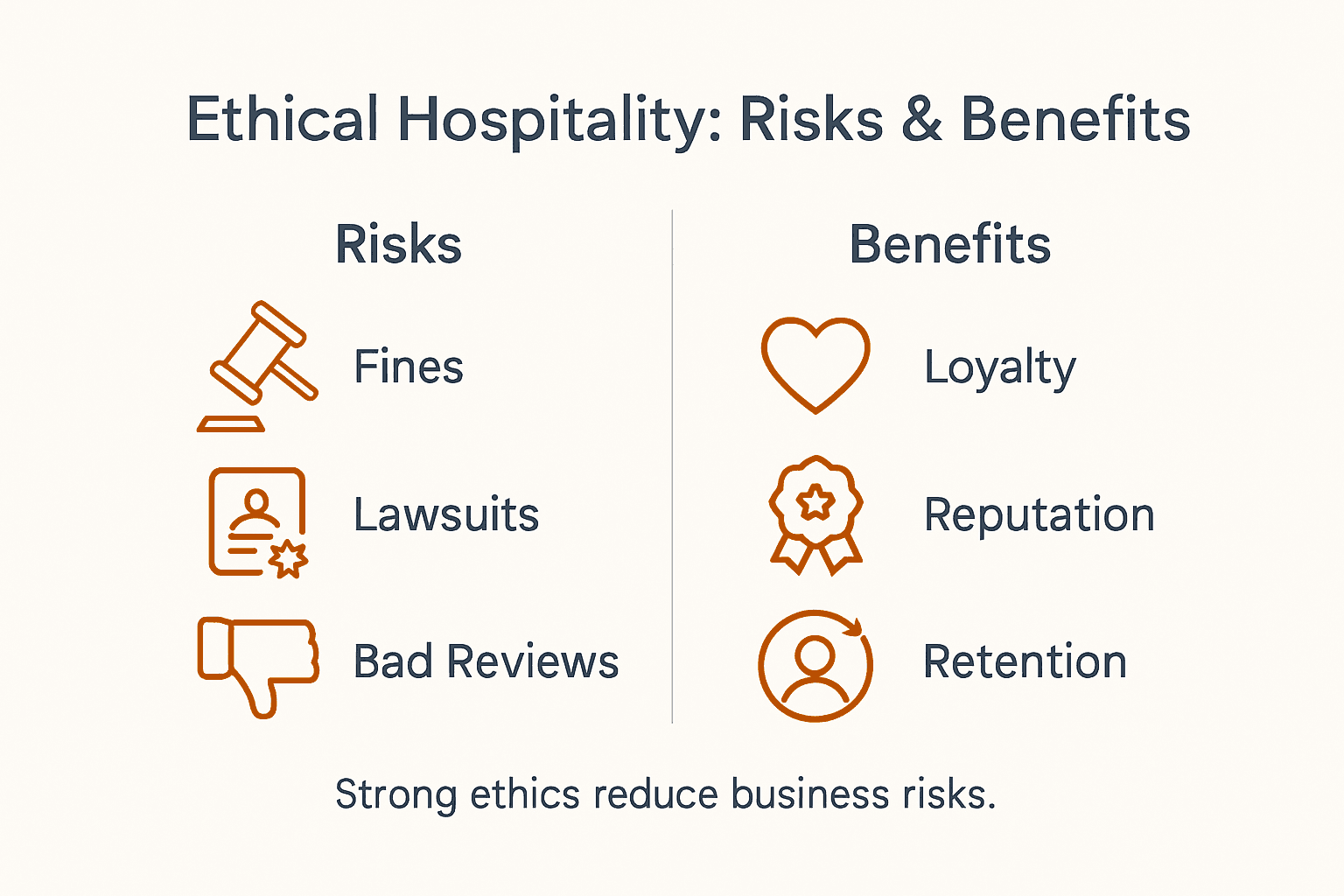
Labour law violations represent a particularly dangerous area of potential liability for restaurants. High-profile controversies involving restaurant leadership demonstrate how unpaid wage claims, discriminatory hiring practices, and workplace misconduct can result in devastating legal consequences. Such violations can trigger complex legal proceedings, substantial financial penalties, potential civil lawsuits, and irreparable damage to organisational reputation.
The risks of unethical behaviour encompass multiple dimensions beyond direct legal challenges. These include potential loss of business licences, increased regulatory scrutiny, negative media coverage, employee turnover, difficulty recruiting talented staff, and diminished customer confidence. Restaurants must recognize that ethical lapses are not isolated incidents but systemic risks that can fundamentally compromise organisational sustainability and competitive positioning.
Pro Tip – Risk Mitigation: Conduct quarterly comprehensive ethics audits that proactively identify potential compliance vulnerabilities, ensuring your restaurant maintains robust preventative mechanisms against potential ethical and legal challenges.
The following table contrasts key features of ethical versus unethical hospitality management:
| Characteristic | Ethical Management | Unethical Management |
|---|---|---|
| Employee Treatment | Fair compensation and respect | Exploitation and unsafe conditions |
| Customer Interaction | Transparency and politeness | Favouritism or dishonesty |
| Compliance Focus | Meets legal and human rights standards | Ignores regulations, risks penalties |
| Workplace Environment | Inclusive and open communication | Culture of fear or exclusion |
Navigating the complex ethical challenges in hospitality requires more than good intentions. From fair employee treatment to food safety compliance, your team needs reliable, government-accredited training tailored to Canadian standards. The article highlights how ethical leadership and adherence to legal frameworks build trust, prevent costly risks, and create a respectful workplace. At Probe It Food Safety.ca, we understand these critical pain points and offer flexible, self-paced courses such as Food Handler Certification and WHMIS training that empower your staff to meet these ethical demands confidently.

Take control of your restaurant’s ethical practices today by investing in training that supports transparency, legal compliance, and professional integrity. Visit Probe It Food Safety.ca to explore our full range of accredited courses and ensure your team is prepared to uphold the highest standards. Don’t wait for risks to affect your reputation — act now and build a culture of trust through education.
The core ethical principles in hospitality management include transparency, accountability, and fairness, which foster responsible interactions among employees, customers, and the community.
Restaurants can ensure fair treatment of employees by establishing clear policies around compensation, providing comprehensive training, and implementing transparent communication channels to uphold workplace dignity and respect.
Common ethical issues faced by restaurants include conflicts of interest, wage inequities due to problematic tipping policies, food safety negligence, and discriminatory hiring practices, all of which can impact reputation and employee morale.
Hospitality managers can promote an ethical culture by conducting regular training, implementing anonymous reporting systems for ethical concerns, and holding monthly discussions that encourage staff to address ethical challenges collaboratively.
Exams are stressful, and the pressure of passing may leave you feeling overwhelmed and nervous that you won’t pass, even

Food safety is essential if you want to ensure safety and establish trust with your customers. Food handlers must be

Practicing good food safety habits is paramount to maintaining a healthy kitchen. Regardless of the size of your hotel business