No products in the cart.

10 Tips for Passing Your Food Handler’s Certificate Exam
Exams are stressful, and the pressure of passing may leave you feeling overwhelmed and nervous that you won’t pass, even


Most Canadian companies underestimate the real impact of employee wellness, even as experts reveal that only about half of staff feel their workplace genuinely supports their health. Relying on gym memberships or trendy programs misses the bigger picture, leaving employees struggling with issues that go far beyond physical fitness. This guide breaks down common misconceptions and highlights what truly makes employee wellness effective in Canadian workplaces, helping leaders and staff build healthier, more supportive environments together.
| Point | Details |
|---|---|
| Holistic Approach to Wellness | Employee wellness encompasses physical, mental, and social well-being, requiring a supportive environment rather than just sporadic wellness programs. |
| Avoiding Well-being Washing | Organisations must engage in genuine commitment to wellness, avoiding superficial initiatives that do not address deeper systemic issues. |
| Importance of Inclusivity | Effective wellness programs should be personalized and inclusive, accommodating diverse employee backgrounds and needs. |
| Addressing Common Pitfalls | Workplace wellness strategies must avoid one-size-fits-all approaches and prioritise comprehensive understanding of employee needs to enhance engagement. |
Employee wellness is a holistic concept that extends far beyond traditional health benefits or gym memberships. At its core, it represents a comprehensive approach to supporting workers’ physical, mental, and social well-being within the workplace.
Contrary to popular belief, employee well-being isn’t just about offering sporadic wellness programs. It encompasses creating an environment where employees can truly flourish across multiple dimensions of their professional and personal lives. This means addressing not only physical health, but also psychological safety, work-life balance, professional development, and meaningful workplace relationships.
One significant challenge in understanding employee wellness is recognizing and avoiding well-being washing. This phenomenon occurs when organisations make superficial gestures towards employee health without addressing fundamental workplace issues. Well-being washing represents a performative approach where companies might introduce trendy wellness initiatives while simultaneously maintaining systemic problems like excessive workloads, limited autonomy, or unsupportive management structures.
Effective employee wellness strategies require genuine commitment and multifaceted approaches. Key elements include:
By understanding wellness as a comprehensive, integrated concept, Canadian workplaces can create environments that genuinely support employee thriving, rather than implementing tokenistic interventions that lack real substance and impact.
Health and wellness represent a complex, interconnected system that goes far beyond simplistic approaches to employee care. Health dimensions reveal that well-being is not a singular concept, but a multifaceted experience encompassing numerous interconnected aspects of human experience.
Mental wellness forms the critical foundation of overall employee health. This dimension involves psychological resilience, stress management, emotional intelligence, and the ability to maintain positive mental states even during challenging work environments. Strategies for supporting mental wellness include providing access to counselling services, creating psychologically safe workspaces, offering mindfulness training, and developing supportive management practices that prioritize employee psychological safety.
Nutrition profoundly impacts mental health, with specific nutrients playing crucial roles in brain function and emotional regulation. Key nutritional considerations for workplace wellness include:
Physical wellness encompasses more than just exercise, integrating elements of movement, proper rest, ergonomic workplace design, and preventative health strategies. A holistic approach means creating environments that support bodily health through active design, encouraging regular movement, providing ergonomic equipment, and promoting balanced lifestyle choices that respect individual physical capabilities and limitations.

Canadian workplaces are increasingly recognizing the importance of comprehensive wellness strategies that go beyond traditional health insurance models. Health and welfare trusts provide innovative tax-free vehicles for employers to finance healthcare costs, offering a structured approach to managing employee health benefits and demonstrating a commitment to workforce well-being.
The evolution of workplace wellness has led to more holistic benefit approaches that address multiple dimensions of employee health. Healthy Enterprise standards have emerged as a benchmark for Canadian companies committed to comprehensive wellness strategies, emphasizing not just medical coverage, but proactive health promotion and employee engagement.
Effective wellness tools and benefits in Canadian workplaces typically encompass a range of supportive resources:
Strategic wellness benefits require thoughtful implementation, focusing on personalized approaches that recognize the unique needs of diverse workforce populations. Staff health screening guide resources can help organizations develop targeted wellness initiatives that balance comprehensive coverage with individual employee requirements, ensuring a more responsive and effective approach to workplace health support.
Workplace inclusivity represents a fundamental shift from traditional one-size-fits-all wellness approaches to more nuanced, personalized strategies that recognize individual differences. Effective wellness programs must address diverse employee needs, integrating mental, emotional, and social dimensions to foster genuine engagement and meaningful support.
Inclusive wellness cultures require deliberate, multilayered strategies that go beyond surface-level interventions. This means creating environments where employees from different backgrounds, abilities, and life experiences feel genuinely valued and supported. Key considerations include designing flexible wellness initiatives that accommodate various cultural perspectives, physical capabilities, and personal health challenges.
Practical approaches to building an inclusive wellness culture involve multiple strategic elements:
Successful inclusive wellness strategies demand continuous dialogue, regular feedback mechanisms, and a genuine commitment to understanding and responding to the evolving needs of a diverse workforce. Staff health screening guide resources can provide foundational support in developing comprehensive, equitable approaches that respect individual differences while promoting collective well-being.
Workplace wellness programs often encounter significant challenges that can undermine their effectiveness and employee engagement. Common workplace wellness challenges include resource limitations, misalignment with organizational culture, and critical privacy concerns that can dramatically reduce program impact and employee participation.
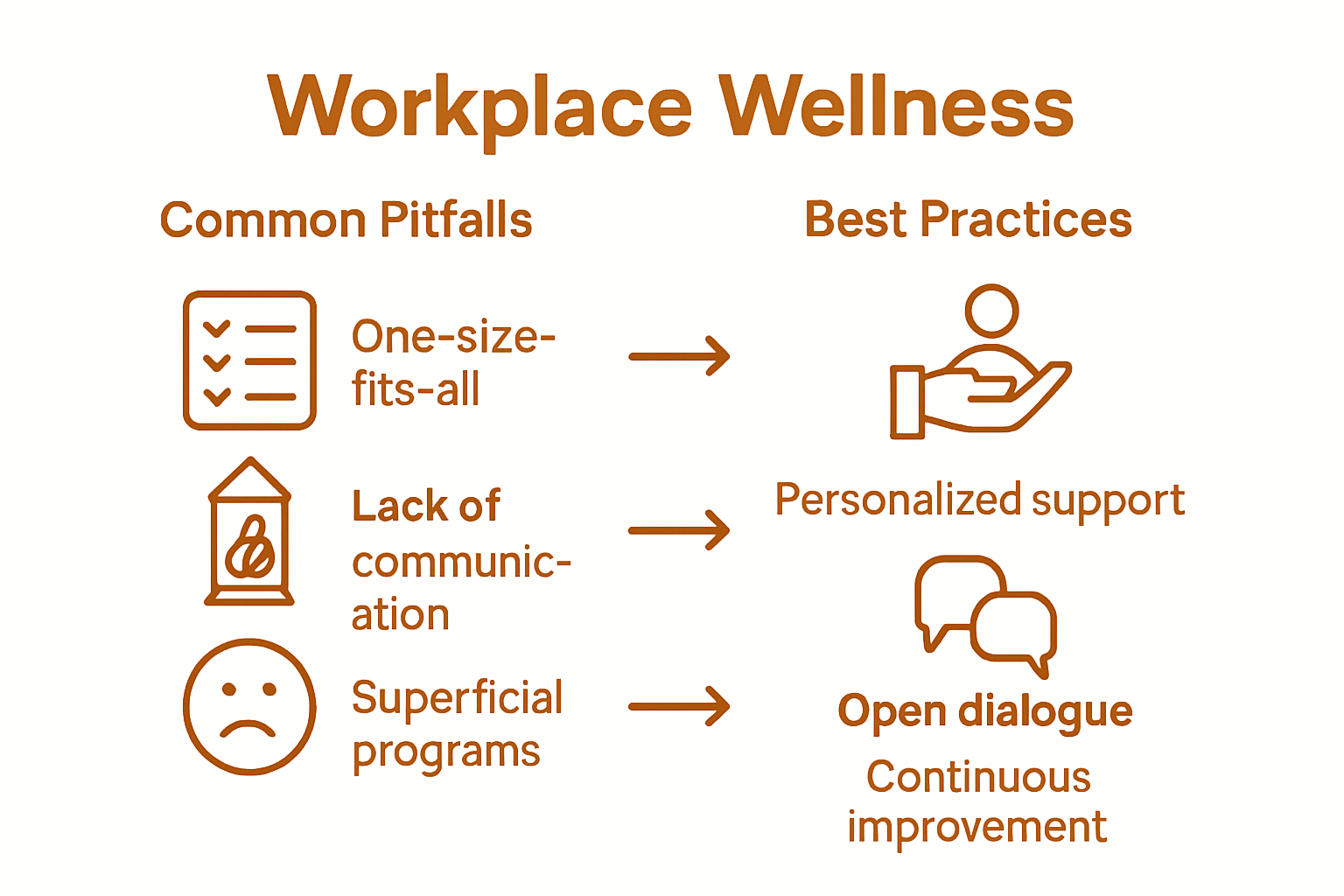
Misunderstanding employee needs represents one of the most profound pitfalls in wellness strategy development. Superficial initiatives that fail to address underlying work-life balance and mental health dynamics can lead to employee disengagement, creating a counterproductive environment that actually increases workplace stress instead of alleviating it.
Key wellness program pitfalls to avoid include:
Staff health screening guide resources can help organizations develop more nuanced, thoughtful wellness approaches that prioritize individual needs, maintain strict confidentiality, and create genuine opportunities for employee growth and well-being.
This article highlights the critical challenge of creating genuine employee wellness that goes beyond surface-level initiatives. Many Canadian workplaces struggle with maintaining mental health, nutrition, and physical well-being in a way that truly supports diverse employee needs. If your goal is to build an inclusive, effective wellness culture while avoiding common pitfalls such as well-being washing and misaligned programs, then practical, expert-led workplace training is essential. Offering accessible, government-accredited courses ensures compliance and boosts confidence in safety and health standards across your team.

Take action today by exploring how Probe It Food Safety.ca can empower your workforce with flexible, self-paced certifications that support workplace safety and wellness. From food safety courses to foundational knowledge that reinforces a healthy work environment, our platform is designed to help Canadian businesses meet wellness standards through trusted training. Visit Probe It Food Safety.ca to get started and make a real impact on your employee wellness strategy now.
Employee wellness refers to a comprehensive approach that supports the physical, mental, and social well-being of workers within the workplace, going beyond traditional health benefits and sporadic wellness programs.
To avoid well-being washing, organizations should focus on genuine commitment to employee well-being by addressing systemic workplace issues and ensuring that wellness initiatives are substantive and integrated into the company culture.
Key elements include transparent communication, flexible working arrangements, mental health support, professional growth opportunities, and meaningful recognition programs that align with employee needs and experiences.
Canadian companies can create an inclusive wellness culture by implementing strategies such as multilingual resources, culturally sensitive health programming, accessibility-focused designs, personalized health assessments, and comprehensive mental health support.
Exams are stressful, and the pressure of passing may leave you feeling overwhelmed and nervous that you won’t pass, even

Food safety is essential if you want to ensure safety and establish trust with your customers. Food handlers must be

Practicing good food safety habits is paramount to maintaining a healthy kitchen. Regardless of the size of your hotel business