No products in the cart.

10 Tips for Passing Your Food Handler’s Certificate Exam
Exams are stressful, and the pressure of passing may leave you feeling overwhelmed and nervous that you won’t pass, even


Every food manager wants to run a safe and efficient kitchen. You might think a quick online course or a single certificate is all you need. Yet, studies show that food safety training can reduce workplace incidents by up to 40 percent when it goes beyond the basics and targets fundamental skill gaps. There is a more innovative way to train food managers, and it does not look like what most expect.
| Key Point | Explanation |
| 1. Assess Your Current Skills | Conduct a self-inventory of your food management skills to identify specific areas for improvement. |
| 2. Identify Core Learning Needs | Analyze knowledge gaps relevant to your specific food service environment to tailor your learning strategy. |
| 3. Develop a Targeted Training Plan | Create a structured training roadmap with measurable objectives and timelines to enhance your skills. |
| 4. Implement Practical Training Sessions | Engage in hands-on training that simulates real-world food management challenges for effective skill acquisition. |
| 5. Monitor Progress Regularly | Establish a robust evaluation system to track ongoing development and adapt your training approach based on feedback. |
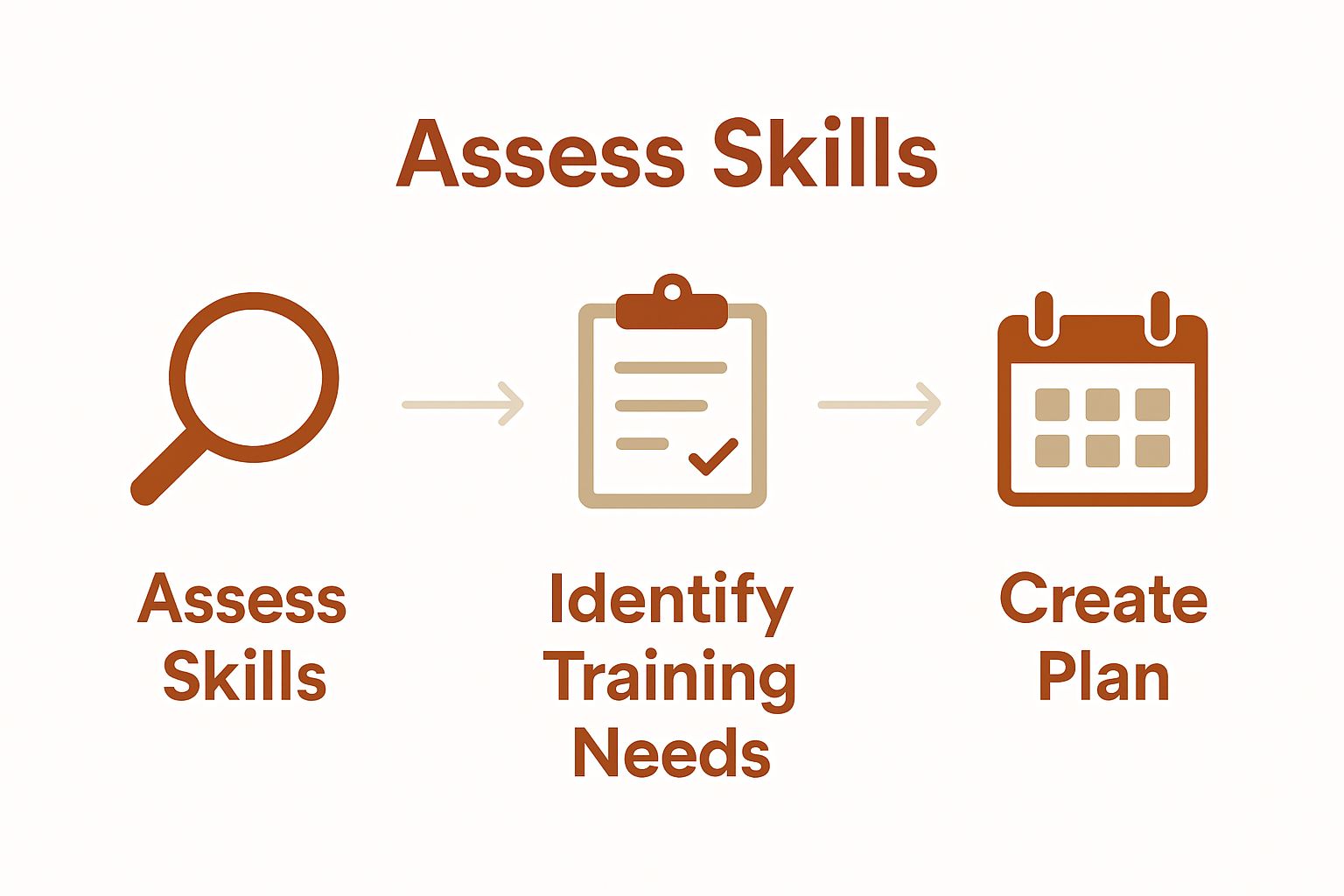
Successful training for food managers begins with a comprehensive self-assessment of your current professional capabilities. This crucial first step allows you to create a targeted learning strategy that addresses specific knowledge gaps and skill development needs within food safety management.
Start by conducting a thorough personal skills inventory that examines your existing competencies across key areas of food management. Reflect critically on your current understanding of food safety protocols, regulatory compliance, team management, and technical knowledge of food-handling procedures. Consider your practical experiences in restaurant or food service environments and identify areas where you feel less confident or require additional expertise.
To perform a practical skills assessment, create a structured evaluation framework. Document your current certifications, such as Food Handler Certificate, and assess your proficiency in critical areas like WHMIS standards, temperature control, sanitation practices, and workplace safety regulations. Review your past performance evaluations, feedback from supervisors, and instances where you encountered challenges in managing food safety protocols.
Key areas to evaluate include:
Technical food safety knowledge
Leadership and team management skills
Understanding of health regulations
Practical application of food handling procedures
Risk management capabilities
Consider scheduling a professional consultation or seeking guidance from experienced food safety trainers to obtain an objective assessment of your current skill levels. Many training institutions offer diagnostic assessments that can help you pinpoint precise areas for improvement. By approaching this step with honesty and a commitment to professional growth, you will establish a solid foundation for targeted skill development in food management training.
Below is an overview table summarizing each significant step for practical food manager training, including objectives, recommended timeframe, and expected outcomes for quick reference.
| Step | Objective | Recommended Timeframe | Expected Outcome |
| Step 1: Assess Current Skills | Identify strengths and areas for improvement | 1–2 weeks | Clear self-assessment and documented skill gaps |
| Step 2: Identify Core Training Needs | Target relevant professional development areas | 1 week | Prioritized list of key training needs |
| Step 3: Develop Training Plan | Structure learning with measurable goals | 2–3 days | Actionable and customized training roadmap |
| Step 4: Implement Practical Training | Acquire hands-on experience and apply knowledge | Several weeks | Improved practical food safety and management skills |
| Step 5: Monitor Progress | Track advancement and collect feedback | Ongoing; quarterly recommended | Progress documented and strategy adjusted as needed |
| Step 6: Evaluate Effectiveness | Assess results and impact of training | 4–6 months | Demonstrated skill growth and improved workplace outcomes |
Building upon your initial skills assessment, the next critical phase in adequate training for food managers involves strategically identifying your core learning requirements. This step transforms your self-evaluation into a precise roadmap for professional development, ensuring you target the most impactful areas of improvement in food safety management.
Transition from your initial skills inventory to a more detailed analysis of specific competency gaps. Regulatory compliance and technical food safety knowledge are paramount in this process. Examine current industry standards and provincial regulations governing food handling and management. The Probe It Food Safety recommends a comprehensive approach that goes beyond basic certification and focuses on practical, actionable skills.
To effectively identify training needs, conduct a systematic review of your professional requirements. Consider the specific demands of your work environment, whether you manage a restaurant kitchen, school cafeteria, or catering service. Each sector has unique challenges that require specialized knowledge. Pay close attention to areas where you feel less confident, such as advanced sanitation protocols, complex temperature management, or team leadership in high-pressure food service scenarios.
Key training focus areas to consider:
Food handler certification updates
WHMIS safety protocols
Advanced hygiene management
Allergen control procedures
Workplace risk assessment techniques
Engage with industry professionals, supervisors, and training experts to gain insights into emerging skill requirements. Many food service organizations conduct regular skills audits that can provide valuable benchmarks for your professional development. By approaching this step with strategic intent, you will create a targeted training plan that not only addresses current skill gaps but also positions you for future professional growth in the dynamic field of food management.
The following checklist table helps you track essential skills and certifications for food managers, making it easy to verify your readiness and highlight areas for further development.
| Skill/Certification | Description | Completed (Yes/No) |
| Food Handler Certificate | Valid provincial certification for food safety | |
| WHMIS Training | Knowledge of Workplace Hazardous Materials legislation | |
| Team Management Skills | Ability to lead and communicate effectively | |
| Temperature Control Proficiency | Skill in monitoring and documenting food temperatures | |
| Sanitation Practices Knowledge | Familiarity with proper cleaning and hygiene protocols | |
| Regulatory Compliance Awareness | Understanding of relevant health regulations | |
| Risk Management Capability | Ability to assess and address food safety risks |
With a clear understanding of your current skills and identified knowledge gaps, the next pivotal step is crafting a comprehensive training plan that transforms your professional development goals into actionable strategies. This phase requires strategic thinking, precision, and a commitment to continuous learning in food management.
Begin by establishing specific, measurable objectives that align with your professional needs and industry requirements. Your training plan should be a dynamic roadmap that addresses technical skills, regulatory compliance, and leadership capabilities. Learn more about our staff safety training to understand the foundational elements of comprehensive professional development in the food service sector.
Structure your training plan with a multi-dimensional approach that integrates various learning modalities. Consider a blend of online courses, in-person workshops, practical skill sessions, and self-directed learning opportunities. Prioritize certifications such as the Food Handler Certificate and WHMIS, which are critical to maintaining professional standards in food management. Allocate specific timelines for each training component to ensure a balanced, realistic progression of skill acquisition.
Essential elements to include in your training plan:
Targeted skill development modules
Mandatory certification requirements
Practical hands-on training sessions
Performance evaluation and feedback mechanisms
Continuous learning milestones
Remember that an effective training plan is not static but adaptable to emerging industry trends and personal growth trajectories. Schedule regular reviews of your plan, allowing flexibility to incorporate new learning opportunities or adjust the focus as workplace requirements change. By approaching your professional development with intention and strategic planning, you will create a robust framework for continuous improvement in food management expertise.
Transitioning from theoretical planning to hands-on skill development, implementing practical training sessions is a critical phase in your professional growth as a food manager. This step transforms conceptual knowledge into tangible workplace competencies through immersive and interactive learning experiences.
Real-world scenario training forms the cornerstone of effective skill acquisition.
VIDEO:video_content] Design training sessions that simulate actual workplace challenges, incorporating realistic food safety scenarios, equipment handling techniques, and complex management situations. According to the Canadian Food Inspection Agency, practical training should emphasize hands-on experience that directly translates to workplace performance.
Structure your practical training to encompass multiple learning dimensions. Integrate interactive workshops that allow direct manipulation of food safety equipment, practice with sanitation protocols, and scenario-based problem-solving exercises. Focus on developing muscle memory for critical procedures like temperature monitoring, cross-contamination prevention, and emergency response protocols. Ensure that each training session provides opportunities for immediate feedback and skill refinement.
Key practical training components to prioritize:
Hands-on equipment operation
Live sanitation demonstrations
Risk management scenario simulations
Team communication exercises
Emergency response skill development
Encourage active participation and create a supportive learning environment where food managers can practice skills without fear of judgment. Incorporate peer learning opportunities, where experienced professionals can mentor and guide newer team members through complex procedural challenges. By transforming training from passive instruction to dynamic, interactive experiences, you will develop confident, competent food management professionals who can navigate the complex landscape of food safety with expertise and precision.
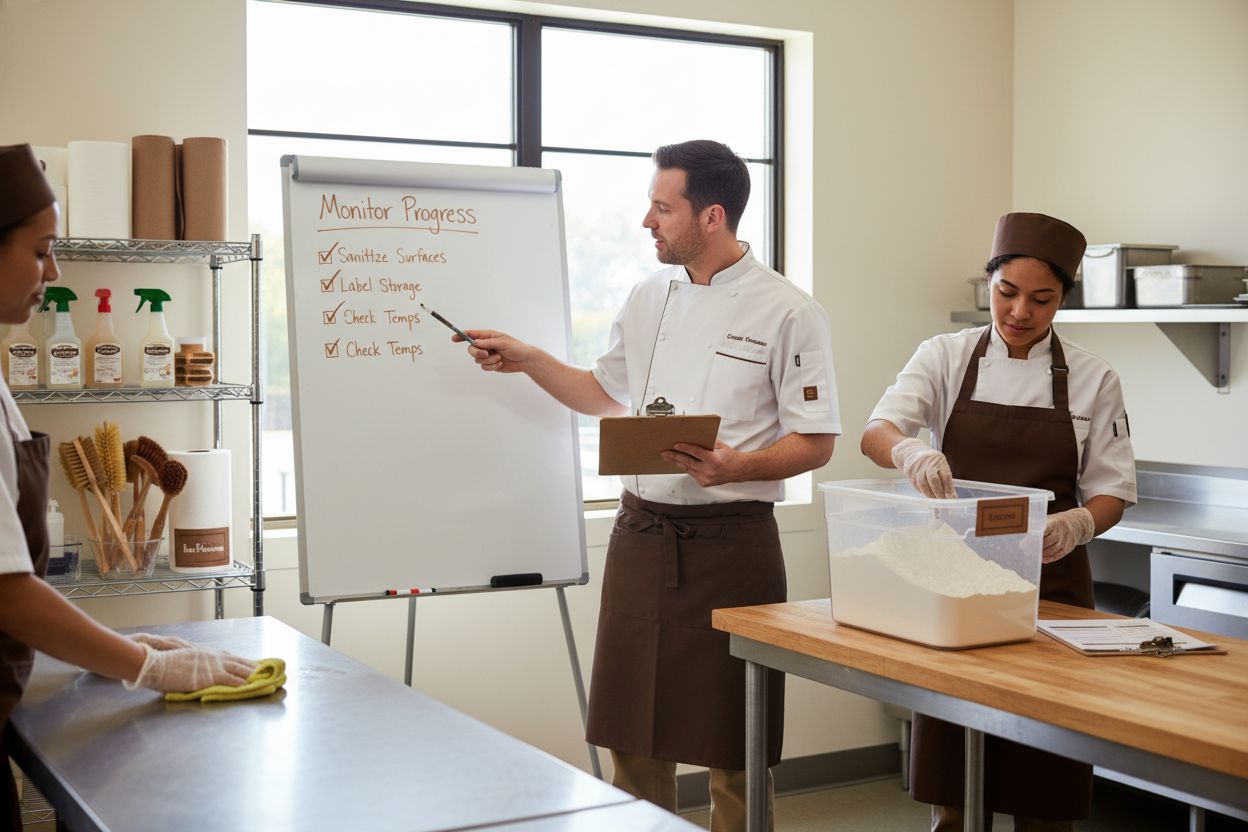
Continuous improvement requires consistent evaluation and strategic adaptation. Monitoring your professional development progress is not a passive activity but an active, dynamic process that demands careful attention and willingness to modify your approach based on real-world performance and emerging insights.
Performance tracking becomes your strategic compass in this phase of training for food managers. Implement a robust system of regular assessments that go beyond traditional metrics. Health Canada’s Food Safety Guidelines emphasize the importance of comprehensive evaluation mechanisms that capture both quantitative skill measurements and qualitative professional growth indicators.
Develop a multifaceted monitoring approach that combines self-reflection, external feedback, and objective performance metrics. Utilize tools like skills assessment checklists, peer review processes, and supervisor evaluations to create a holistic view of your professional development. Pay attention to subtle indicators of progress such as increased confidence in handling complex food safety scenarios, improved team communication, and more efficient risk management techniques.
Key monitoring strategies to implement:
Quarterly skills progression reviews
Performance benchmark comparisons
Detailed feedback collection mechanisms
Self-assessment documentation
Adaptive learning pathway adjustments
Remember that monitoring is not about identifying weaknesses but celebrating incremental improvements and identifying strategic growth opportunities. Approach each assessment as a constructive dialogue with yourself, viewing challenges as opportunities for refinement rather than obstacles. By maintaining a flexible, growth-oriented mindset, you transform monitoring from a mundane administrative task into a powerful tool for continuous professional development in food management.
The culmination of your professional development journey involves a comprehensive evaluation of training effectiveness, transforming raw learning experiences into measurable professional growth. This critical step goes beyond simple performance metrics, diving deep into the qualitative and quantitative impacts of your training investment.
Holistic assessment strategies become paramount in understanding the actual value of your training efforts. The Probe It Food Safety recommends a multidimensional approach that examines not just skill acquisition but also broader organizational and individual performance improvements. Develop a robust evaluation framework that captures tangible outcomes, including improved food safety compliance, reduced workplace incidents, and enhanced team productivity.
Construct your evaluation process using a combination of quantitative measurements and qualitative insights. Utilize standardized assessment tools, performance benchmarks, and detailed feedback mechanisms to create a comprehensive picture of training impact. Examine how newly acquired skills translate into practical workplace improvements, looking beyond surface-level knowledge to assess deeper competency development. Consider conducting before-and-after comparisons that highlight specific improvements in food handling procedures, risk management capabilities, and overall professional confidence.
Key evaluation components to consider:
Comparative performance metrics
Workplace safety incident tracking
Team competency level assessments
Return on training investment analysis
Long-term skill retention measurements
Recognize that actual training effectiveness extends beyond immediate skill acquisition. The most valuable outcomes often manifest as improved workplace culture, enhanced team communication, and a proactive approach to food safety management. Approach this evaluation step with curiosity and openness, viewing it as an opportunity for continuous improvement rather than a final judgment. By maintaining a growth-oriented perspective, you transform training evaluation from a mere administrative exercise into a powerful tool for ongoing professional development in food management.
Building your skills as a food manager is about more than just knowing the rules. It is about confidence in regulatory compliance, practical risk management, and effective team communication. If you are ready to fill those gaps and unlock your full professional potential, a structured approach with the right tools is essential. Probe It Food Safety.ca offers government-accredited online courses tailored to busy Canadians who want instant certification and lasting workplace results. Whether you are struggling with keeping up-to-date on certifications or searching for accessible, in-depth training, you will find step-by-step solutions that fit your schedule and your career goals.

Don’t wait for a compliance issue or workplace challenge to force your next move. Start your journey now with Food Handler Certification or explore our full range of online food safety training that covers WHMIS and more. Registration is open 24/7, and certification is available at your own pace. Visit Probe It Food Safety.ca today and see how easy it can be to boost your skills and safeguard your team—your next professional milestone is just one click away.
Start by conducting a self-assessment of your existing competencies in areas such as food safety protocols, regulatory compliance, and team management. Document specific certifications and evaluate your proficiency in critical areas within 1–2 weeks.
Identify key competency gaps in areas such as food-handling procedures and advanced sanitation protocols. Prioritize your training around these gaps to ensure you’re well-prepared for your specific work environment within 30 days.
Outline specific, measurable objectives that address your identified training needs. Develop a structured timeline, allocating time for online courses, workshops, and hands-on experience, aiming for completion of foundational training within 2–3 months.
Focus on real-world scenario training and hands-on demonstrations to engage actively with food safety challenges. Implement training sessions that allow you and your team to practice skills, such as temperature control and sanitation procedures, over several weeks.
Implement a consistent evaluation system that combines self-reflection, peer reviews, and performance metrics. Schedule periodic assessments every quarter to track your skill development and adjust your training strategy as needed.
Conduct a holistic assessment that includes both quantitative metrics and qualitative feedback on your training outcomes. Review factors such as improved compliance and team productivity to gauge success, aiming for significant improvements within 4–6 months.
Exams are stressful, and the pressure of passing may leave you feeling overwhelmed and nervous that you won’t pass, even

Food safety is essential if you want to ensure safety and establish trust with your customers. Food handlers must be

Practicing good food safety habits is paramount to maintaining a healthy kitchen. Regardless of the size of your hotel business